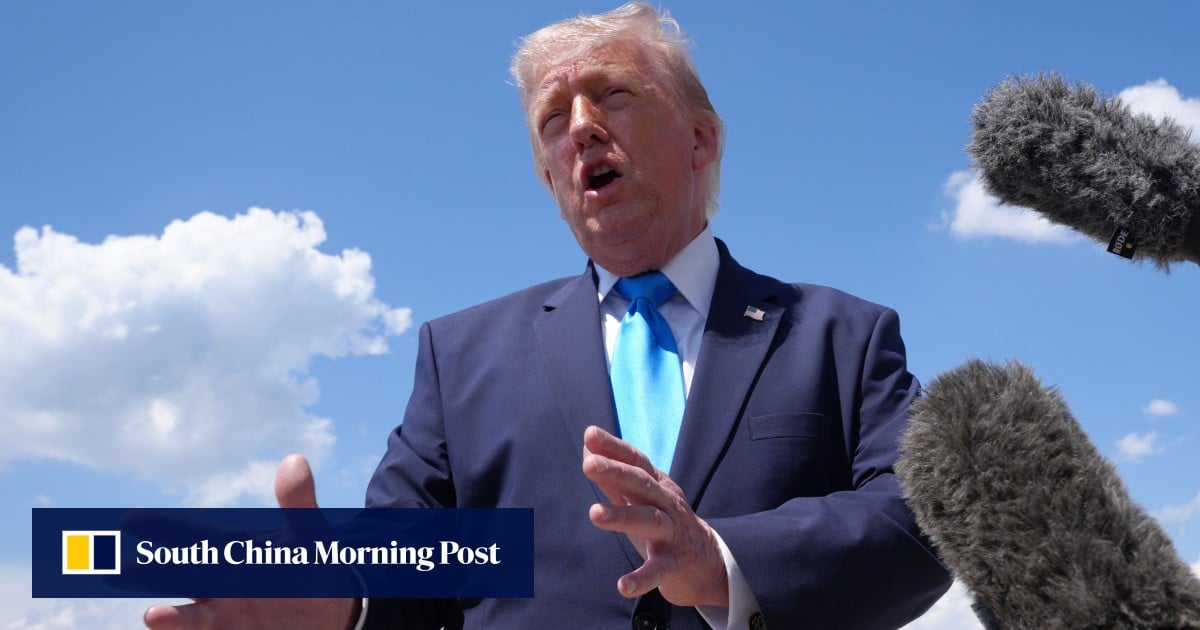
Trump’s Plan to Speak with Taiwan’s Leader: Breaking Protocol and US-China Tensions
President Donald Trump’s stated willingness to engage in direct communication with Taiwan’s leader represents a significant departure from long-standing diplomatic protocols. This shift threatens to destabilize the delicate “one China” framework, potentially triggering heightened geopolitical turbulence between Washington and Beijing as the administration recalibrates its approach to Indo-Pacific security, and trade.
The diplomatic architecture that has governed U.S.-China relations for decades is currently under unprecedented strain. By signaling an intent to bypass traditional channels and communicate directly with the leadership in Taipei, the White House is not merely adjusting policy. it is challenging the fundamental assumptions that have prevented open conflict in the Taiwan Strait since the late 1970s. For businesses operating in the Pacific Rim, this ambiguity creates a volatile environment where supply chains and international partnerships are increasingly vulnerable to sudden regulatory or retaliatory shifts.
The Erosion of Diplomatic Guardrails
For decades, the U.S. Has maintained a policy of “strategic ambiguity” regarding Taiwan, balancing unofficial relations with the island against formal diplomatic recognition of the People’s Republic of China. Trump’s recent comments suggest a more transactional and assertive posture that prioritizes direct, high-level contact. This approach carries profound risks for regional stability.

The absence of a transparent paper trail regarding recent high-level exchanges between Washington and Beijing has left international observers and regional stakeholders struggling to predict the next phase of this escalation. When diplomatic guardrails are dismantled, the burden of risk management shifts from state actors to the private sector.
“The shift toward direct, presidential-level engagement with Taiwan alters the calculus of deterrence. It moves us from a system defined by carefully calibrated silence to one defined by public, high-stakes signaling, which inherently narrows the room for diplomatic maneuvering when tensions spike.”
Impact on Global Trade and Infrastructure
The ripples of this geopolitical friction extend far beyond the halls of government. Multinational corporations and localized trade entities are already feeling the early effects of a cooling relationship between the world’s two largest economies. As uncertainty grows, businesses are finding that traditional risk assessments are no longer sufficient to protect their interests.
Navigating this environment requires a proactive approach to corporate strategy and legal compliance. Companies with exposure to East Asian manufacturing or logistics are increasingly turning to international trade law firms to navigate potential sanctions or sudden shifts in export control regulations. Ensuring that your organization is shielded from cross-border legal volatility is no longer optional; it is a fundamental requirement for operational continuity.
Risk Mitigation in an Era of Uncertainty
- Supply Chain Audits: Identifying dependencies on jurisdictions likely to be targeted by retaliatory trade measures.
- Regulatory Monitoring: Engaging with geopolitical risk analysts to anticipate policy shifts before they are codified into law.
- Contractual Safeguards: Reviewing force majeure and arbitration clauses in international agreements to account for state-level diplomatic shifts.
The U.S. Department of State continues to articulate the official framework of these relations, yet the rhetoric emanating from the White House creates a bifurcated reality for businesses. When the executive branch deviates from established diplomatic norms, the resulting “information gap” is often filled by market speculation, driving up insurance premiums and complicating long-term capital investment.
The Localized Cost of Geopolitical Volatility
While the focus remains on the high-level rhetoric between Washington, Beijing, and Taipei, the reality of this turbulence is felt at the municipal and regional levels. Port cities and logistics hubs are particularly susceptible to the fallout of trade disputes. As federal agencies tighten oversight—such as the recent expansion of artificial intelligence in monitoring federal grant recipients and audit processes—local entities must ensure their own compliance frameworks are robust.

Whether it is a mid-sized logistics firm facing new customs hurdles or a regional manufacturer trying to secure essential components, the complexity of the current landscape is daunting. Professional guidance is often the only way to synthesize these macro-trends into actionable business intelligence. For those tasked with protecting institutional assets, connecting with corporate compliance experts is a vital step in maintaining operational stability amidst the noise of international brinkmanship.
As of May 21, 2026, the situation remains fluid. The potential for a direct call between the American and Taiwanese leaderships acts as a barometer for the broader transformation of U.S. Foreign policy. Whether this represents a calculated strategy to gain leverage or a breakdown in necessary diplomatic discipline remains a subject of intense debate among security analysts and trade experts alike.
The long-term impact of this policy pivot will be defined by how quickly the international community can adapt to a world where the old “rules of the road” are being rewritten in real-time. For the private sector, the message is clear: the era of predictable, protocol-driven diplomacy is being replaced by a more volatile, personality-driven model. The organizations that survive this transition will be those that have proactively secured the specialized advisory services necessary to navigate the storms ahead.