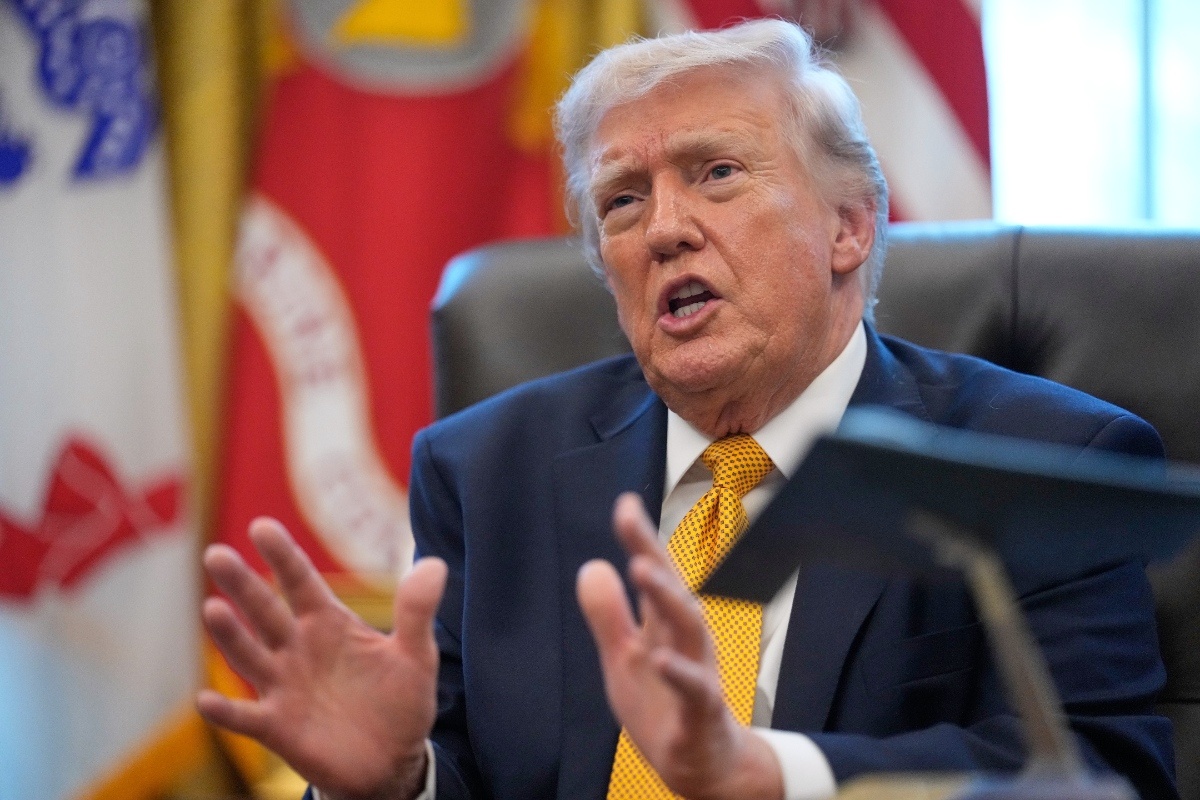
Trump Threatens Iranian Infrastructure in Ultimatum to Open Strait of Hormuz
President Donald Trump has issued a brutal ultimatum to Iran, demanding the immediate reopening of the Strait of Hormuz. Threatening strikes on Iranian power plants and bridges by Tuesday, April 8, 2026, the U.S. Administration is risking a global energy crisis to force compliance from the Iranian regime.
The stakes here aren’t just geopolitical; they are visceral. We are talking about a waterway that facilitates the transit of one-fifth of the world’s total oil consumption. When the commander-in-chief uses expletives on Truth Social to threaten critical infrastructure, the ripple effect moves instantly from the Persian Gulf to the gas pumps in Ohio and the shipping docks in Rotterdam.
The immediate problem is volatility. Markets hate uncertainty, and right now, the world is staring at a deadline that could trigger a systemic collapse in energy pricing.
The Anatomy of a High-Stakes Deadline
This isn’t the first time the administration has played this game of brinkmanship. On March 21, a similar 48-hour warning was issued, only to be paused after “productive conversations” between Washington and Tehran. However, the diplomatic veneer has evaporated. The recent downing of two U.S. Military planes by Iranian forces has shifted the narrative from negotiation to retribution.

The current timeline is a countdown to potential chaos:
| Date/Deadline | Event/Action | Market Impact |
|---|---|---|
| March 21, 2026 | Initial 48-hour ultimatum issued | Initial price spike |
| March 27, 2026 | Ten-day pause announced | Temporary stabilization |
| April 5, 2026 | “Bridge and Power Plant Day” threat | Oil climbs toward $109 |
| April 6, 2026 | Formal deadline for reopening | High volatility/Panic buying |
| April 8, 2026 | Predicted strike window | Potential $150+ surge |
The volatility is staggering. Oil prices have surged 34.5% in just thirty days. This isn’t just a number on a screen; it is a tax on every single physical good moved across the planet.
For businesses operating on thin margins, What we have is a nightmare. Logistics firms and manufacturers are now scrambling to hedge their fuel costs. Many are turning to specialized risk management consultants to insulate their balance sheets from a sudden $150-per-barrel shock.
The Macro-Economic Domino Effect
If the Strait of Hormuz closes or becomes a combat zone, the global economy doesn’t just slow down—it potentially fractures. Economists warn that if oil maintains a price point of $150 for a four-month window, we aren’t just looking at a dip; we are looking at a global recession by the summer of 2026.
The geopolitical tension is anchored in the relationship between the U.S. Navy’s Fifth Fleet and the Iranian Revolutionary Guard Corps (IRGC). The IRGC controls the narrowest points of the strait, meaning they can effectively “turn off the tap” for the world’s energy supply. This creates a paradox where the U.S. Attempts to project power through infrastructure destruction, although Iran projects power through economic strangulation.
“The danger here is that we are moving past the era of ‘strategic ambiguity’ and into a period of ‘strategic impulsivity.’ When critical energy infrastructure is explicitly targeted in public social media posts, the window for traditional diplomacy closes, leaving only the most extreme outcomes on the table.”
This perspective comes from Dr. Aris Thorne, a senior fellow at the Council on Foreign Relations, who notes that the unpredictability of the current administration’s communication style is creating an unprecedented “risk premium” in the energy markets.
Regional Fallout and Local Infrastructure
While the headlines focus on Tehran and Washington, the actual impact will be felt in the regional hubs of the Middle East and the port cities of Asia. In cities like Dubai and Singapore, the threat of a closed strait disrupts not just oil, but the entire maritime insurance industry. Shipping companies are already seeing “war risk” premiums skyrocket.
This creates a legal minefield for international traders. Contracts based on force majeure clauses are being dusted off and rewritten. Companies are increasingly relying on expert maritime attorneys to navigate the complex liability shifts that occur when a primary trade route becomes a war zone.
The Iranian response has been equally visceral. General Ali Abdollahi Aliabadi’s warning that “the doors of hell will be opened” suggests that Iran is not merely preparing to defend its borders, but is ready to launch asymmetric attacks against U.S. Assets throughout the region.
This includes potential cyber-attacks on energy grids and the targeting of desalination plants, which would create a humanitarian crisis of unprecedented proportions in the Gulf region.
The Long-Term Strategic Shift
Regardless of whether the strait opens by Tuesday, the long-term takeaway is clear: the world’s reliance on a single, volatile chokepoint is a systemic failure. This crisis is accelerating the move toward energy independence and the diversification of supply chains.
We are seeing a massive shift in how municipal governments and national grids plan for the future. There is a sudden, urgent demand for renewable energy infrastructure developers who can decouple local economies from the volatility of the global oil market.
The irony is that while the administration claims it can “finish the war very fast,” the economic damage is already being done. The “decimation” Trump speaks of is not just happening in Iranian military barracks, but in the purchasing power of the global middle class.
As we approach the April 8 window, the world is holding its breath. We are no longer talking about diplomacy; we are talking about the physics of war and the mathematics of a recession. The only certainty is that the era of cheap, stable energy is being dismantled in real-time via a series of Truth Social posts.
When the dust settles—whether through a sudden deal or a series of devastating strikes—the recovery will require more than just political treaties. It will require a massive mobilization of verified technical, legal, and financial expertise to rebuild the shattered trust of the global market. Those who have already secured partnerships with vetted professionals through the World Today News Directory will be the ones standing when the volatility finally subsides.