
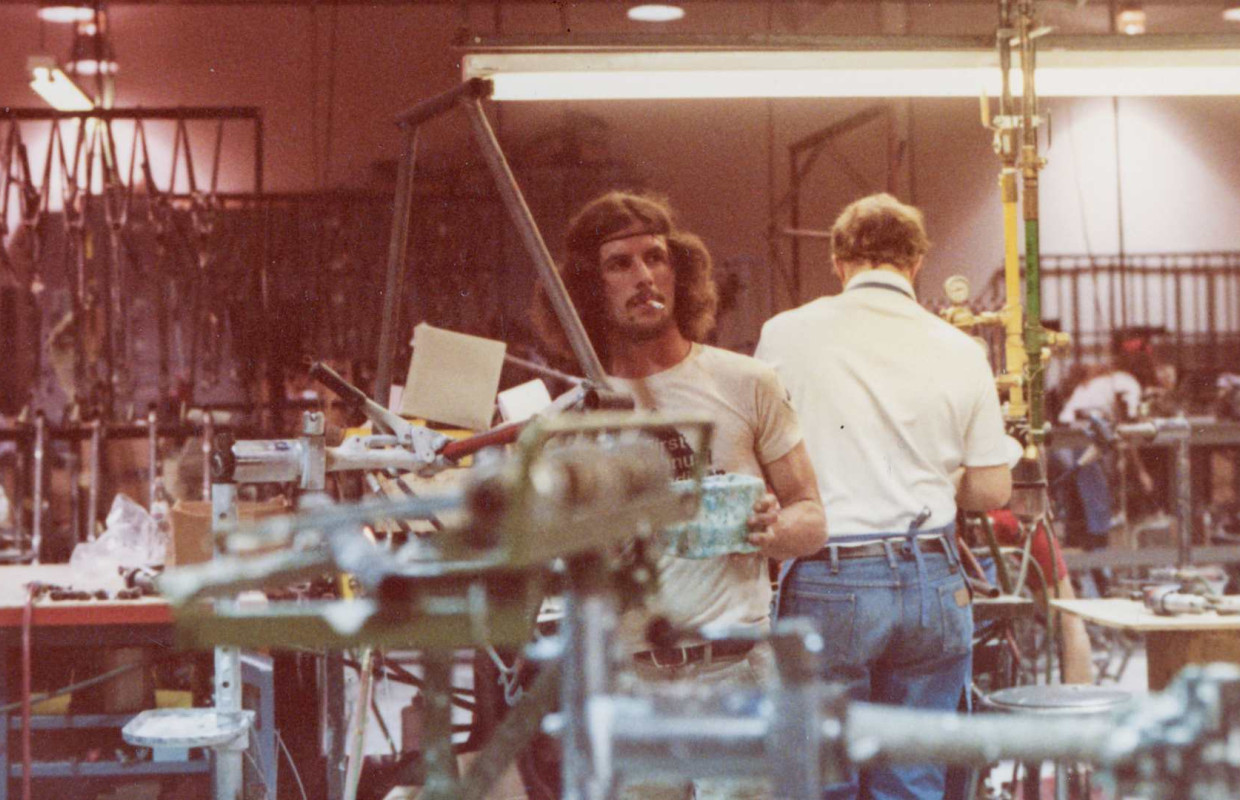
In a red barn in Waterloo, Wisconsin, a bicycle company was born in 1976, a company that would grow to grow a global powerhouse. Trek Bicycle Corporation, founded by Dick Burke and Bevil Hogg, began with 904 steel frames and a vision to fill a gap in the American market for high-end bicycles.
The story began in 1974, when John Burke, then 12 years old, learned his father intended to purchase bicycles from Bevil Hogg, a recent acquaintance originally from South Africa. This initial encounter sparked a conversation that went beyond a simple transaction. Burke and Hogg identified a need for a national bicycle retail chain in the United States, and initially attempted to establish one. Though that venture ultimately failed, it revealed a critical insight: the absence of American manufacturers producing high-quality bicycles. The market was dominated by European brands, particularly from Italy.
Driven by this realization, Burke and Hogg secured a modest space in Waterloo, Wisconsin, a town of approximately 2,000 residents at the time. The building, a former carpet warehouse situated next to a railroad crossing, became Trek’s first manufacturing facility. Remarkably, that same barn continues to be used today for creating molds for Trek’s carbon fiber tubes.
In its inaugural year, Trek produced 904 steel touring frames, selling them for around $300 each. The company’s name, “Trek,” was chosen by Dick Burke over Bevil Hogg’s preference for “Kestrel,” meaning ‘merlin.’ Burke favored “Trek,” an Afrikaans word signifying a long and arduous journey, resonating with themes of adventure and freedom. The name also benefited from the popularity of the science fiction television series, “Star Trek,” which had aired in the preceding years.
By 1979, Trek’s revenue had surpassed $2 million, and the company offered 12 different models. Remaining committed to its Wisconsin roots, Trek relocated its operations a short distance from the original barn to its current global headquarters. The following year, in 1980, Trek introduced its first road models, the 750 Pro and 950 Pro.
Trek quickly recognized the burgeoning popularity of mountain bikes, a trend originating in California. In 1983, Trek designer Tim Isaac sent a prototype mountain bike to a West Coast sales representative for testing. The representative entered the bike in the Whiskeytown Downhill competition in Redding, California, and found it performed competitively against established brands. This led to the creation of the 850, which became a defining mountain bike of the 1980s and 90s, often featuring a “Made in USA” decal.
The company experienced rapid growth throughout the 1980s, with sales doubling almost annually. But, this expansion was nearly derailed in 1985 with the introduction of its first aluminum frame. Lacking the necessary expertise in working with the metal, Trek’s factories faced significant challenges. John Burke, the founder’s son, became more involved in the company’s operations to address the crisis.
Trek navigated this challenge by prioritizing quality while continuing to explore innovative materials. The company began experimenting with carbon fiber, releasing the model 2500 in 1986, which incorporated components made from the material. This was among the first bikes in the industry to utilize carbon fiber.
In 1989, Trek launched its first fully carbon frame, the monocoque 5000, weighing just 1.5 kg. However, the frame, which was designed by Trek but manufactured externally, proved problematic and was withdrawn from sale the following year. Despite this setback, the experience prompted Trek to bring carbon fiber production in-house, leading to the development of OCLV (Optimum Compaction, Low Void) technology, a process exceeding aviation quality standards. This resulted in the 5500, the lightest frame in the world at the time, weighing only 1.10 kg. In 1993, OCLV technology was applied to mountain bikes with the introduction of the 9800 and 9900 models.
By 1990, mountain bikes accounted for 80% of Trek’s sales. The company initially distributed its bikes through nearly 1,000 independent retailers, but later returned to a direct-retail model, opening its first Trek store in Madison, Wisconsin. This store served as the foundation for a growing network of company-owned retail locations across the United States. Around this time, Trek also launched its cycling apparel line, Trek Wear, and began expanding into the European market.
In 1996, Trek became the largest manufacturer of bicycles sold through specialty stores worldwide, with approximately one-third of its $350 million in revenue originating from outside the United States. The following year brought a pivotal moment with the emergence of Lance Armstrong in the Tour de France. Armstrong’s victories, riding a Trek 5500 OCLV carbon frame, marked the first time an American cyclist had won the Tour with an American-made bicycle. The Tour de France would never again feature a winning bike made of steel or aluminum.
Trek continues to invest in competitive cycling, sponsoring teams in mountain biking (Trek World Racing and Trek Unbroken), cyclocross (TFR CX and Baloise-Trek), and road racing (Lidl-Trek), which has featured riders such as Fabian Cancellara, Alberto Contador, Vincenzo Nibali, and Juan Ayuso. The company also supports charitable initiatives, including the National Interscholastic Cycling Association (NICA) and World Bicycle Relief, and the Trek Foundation, dedicated to developing cycling infrastructure and preserving natural spaces. Trek has also launched the “All In” initiative, committing to create 1,000 jobs for Black people in the coming years.
