
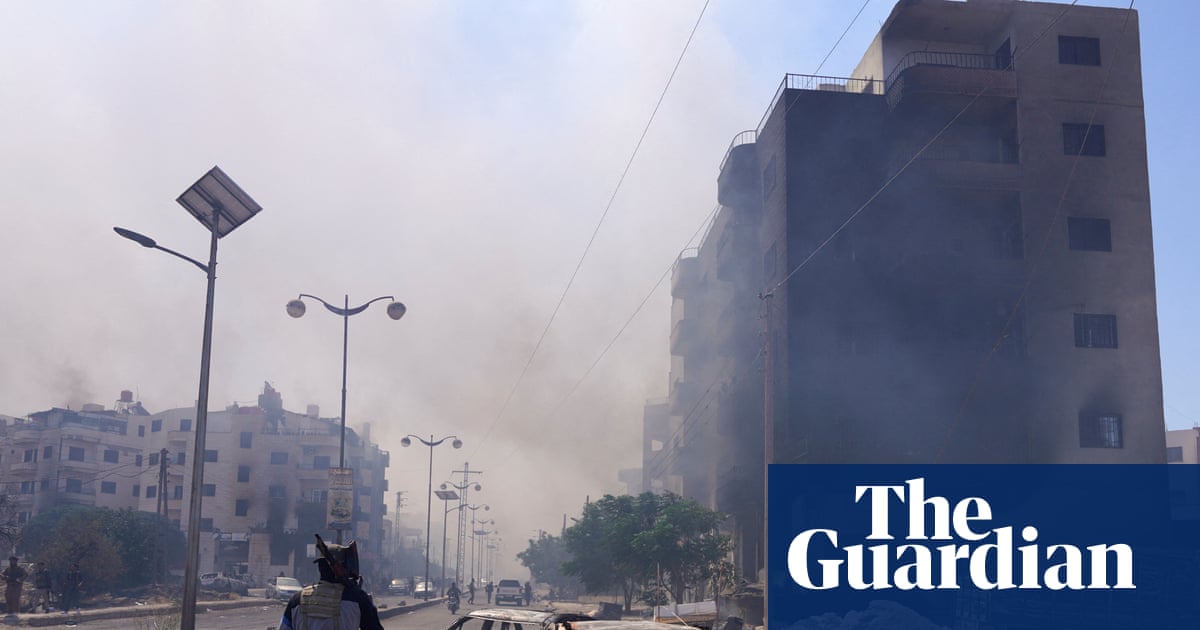
Syria’s Sweida Province Sees Uneasy Calm After Deadly Week
Over 1,000 Feared Dead as Fighters Withdraw Amidst Humanitarian Crisis
An uneasy peace has settled over southern Syria’s Sweida province after a week of intense violence, leaving over a thousand dead and causing a massive displacement crisis. Bedouin fighters have reportedly withdrawn from the predominantly Druze city, but the humanitarian situation remains dire.
Mounting Toll and Displacement
The Syrian Observatory for Human Rights (SOHR) reported that armed clashes, bombardments, extrajudicial killings, and Israeli airstrikes since last Sunday have resulted in more than 1,000 fatalities. The UN migration agency noted that over 128,000 people have been displaced by the conflict.
All factions must immediately lay down their arms, cease hostilities, and abandon cycles of tribal vengeance. Syria stands at a critical juncture – peace and dialogue must prevail – and prevail now.
— Tom Barrack (@US_Envoy_Syria) August 1, 2025
Grim Conditions Persist
Local residents describe a “tense calm,” with ongoing shortages of essential supplies like water and electricity. Dentist **Kenan Azzam** told Reuters, The hospitals are a disaster and out of service, and there are still so many dead and wounded.
Humanitarian convoys are now preparing to enter the city.
International Calls for De-escalation
The United States has intensified its calls for an end to the hostilities. US Special Envoy to Syria, **Tom Barrack**, urged all parties to cease fighting and abandon revenge. He emphasized that peace and dialogue are essential for Syria’s future.
US Secretary of State **Marco Rubio** issued a stern warning to Damascus, stating that the government must act to prevent further atrocities. He called for accountability for those guilty of abuses, including within government ranks.
Roots of the Conflict and International Response
The violence erupted from a dispute between a Bedouin tribesman and a Druze individual, escalating when government forces intervened. Druze fighters resisted their entry, leading to widespread conflict. Israel, citing its commitment to protecting the Druze community, launched airstrikes on Syrian military targets.
A ceasefire agreement between Syria and Israel, brokered by the US, was announced on Saturday. The EU condemned the violence, urging all parties to halt hostilities and protect civilians. The bloc also called for respect for Syria’s sovereignty from Israel and other foreign actors.
Syria’s interim president, **Ahmed al-Sharaa**, announced a ceasefire and pledged to protect minority communities. He urged Bedouin fighters to leave Sweida, asserting the state’s primary role in maintaining security.
The Interior Ministry confirmed that Sweida city had been cleared of tribal fighters, halting clashes within its neighborhoods. The Syrian Arab Red Crescent is dispatching 32 trucks with vital aid, including food, medicine, and fuel, to address the severe shortages caused by the conflict.
This recent outbreak marks the most intense violence since March, when over 1,500 individuals were killed. The current unrest has cast a shadow over international hopes for Syria’s new government, which assumed power following the ousting of **Bashar al-Assad** last December. Western nations had previously lifted sanctions to aid Syria’s economic recovery after years of civil war and repression.
Sectarian Tensions and Past Violence
Reports indicate sectarian hate speech directed at the Druze community by some government forces. One video showed soldiers mocking aid distribution while brandishing a weapon and desecrating an image of Druze spiritual leaders. This follows a period of intense violence in March, where over 1,500 Alawite citizens were reportedly massacred in retaliation for an attack by supporters of the former regime.
