
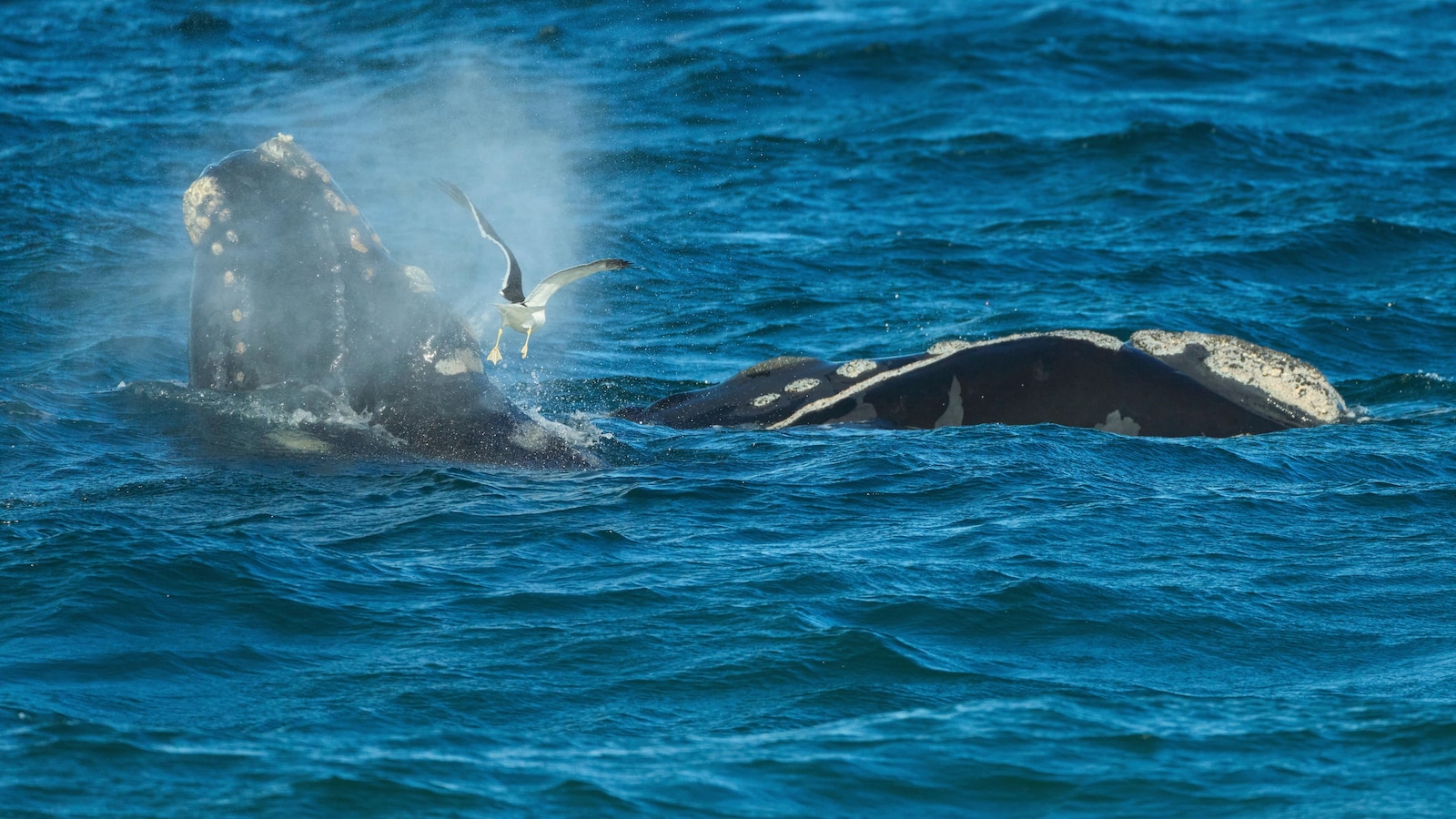
Puerto Madryn, Argentina – Southern right whales are captivating onlookers along Argentina’s Patagonian coast as the species continues a remarkable recovery from the brink of extinction.Recent surveys indicate a thriving population, with 2,100 whales counted this year - a important increase from the roughly 500 observed in 1999.
For Agustina Guidolín, watching whales with thier young at El Doradillo Park near Puerto Madryn was a dream realized, witnessing “the immensity that borders on the magical and the wild.” Her experience reflects a growing trend: whales are not only rebounding in numbers but also expanding their range, offering more opportunities for observation and study.
The resurgence is attributed to decades of conservation efforts, but the whales’ increasing proximity to human activity also presents new challenges.
Since 1999, biologist Santiago Fernández of Argentina’s National Scientific and Technical Research Council has led aerial surveys along 640 kilometers (400 miles) of Patagonian coastline. This year’s count revealed 863 mothers with calves, alongside solitary individuals, representing a 3% annual growth rate.”We’re underestimating the number of whales in the area,” Fernández said, explaining that the census is merely a snapshot due to the whales’ migratory patterns.
Researchers are also utilizing satellite telemetry thru the “Following Whales” project, initiated in 2014, to track individual whales within the San Matias and San Jorge gulfs. This data reveals that mothers guide their growing calves into these deeper waters, areas not fully captured by aerial surveys.
The expanding population is dispersing,especially juveniles and mothers with calves,toward the San Matias and San Jorge gulfs,and even as far north as the coast of Buenos aires province. However, this expansion brings increased risk of entanglement in fishing nets and collisions with boat propellers, evidenced by injuries observed in whales unable to complete their natural migration to Antarctica. The whales’ migration route extends along the coasts of Uruguay and southern Brazil, in addition to Patagonia and Peninsula Valdés.
