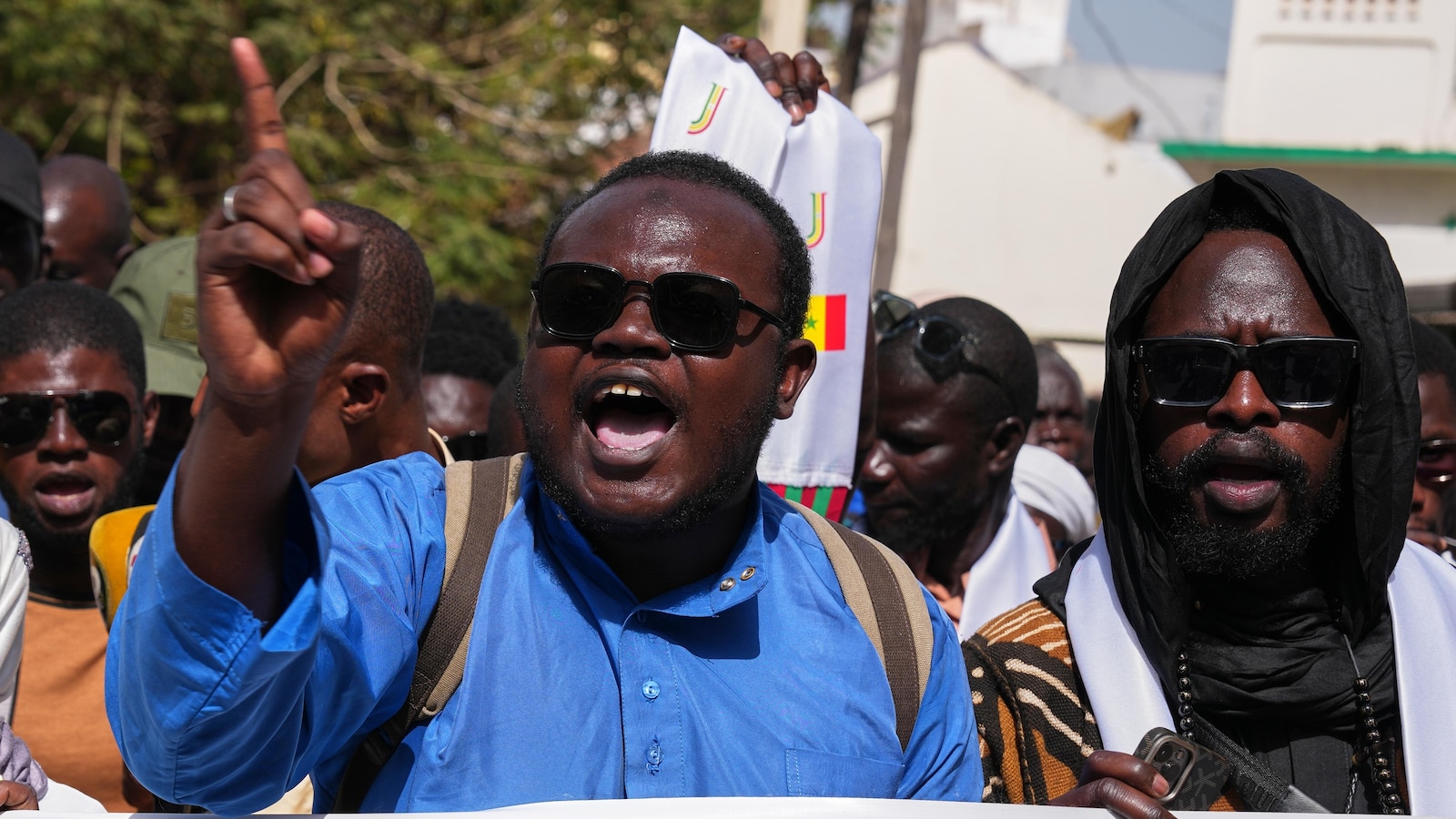
Senegal Court Issues First Conviction Under New Anti-Homosexuality Law
A court in the Dakar suburb of Pikine-Guédiawaye has sentenced a 24-year-old laborer to six years in prison and a 2 million CFA ($3,300) fine. This marks Senegal’s first conviction under a new law increasing penalties for homosexuality to between five and ten years to combat “acts against nature.”
The ruling, handed down on Friday, April 10, 2026, signals a rigid new era for the Senegalese judiciary. The defendant, who was arrested earlier this month, was convicted of “acts against nature and public indecency.” Whereas the legal proceedings were swift, the implications are far-reaching, transforming the social and legal landscape for sexual and gender minorities in a nation where traditional and religious values hold significant sway.
This isn’t just about one man in a courtroom. It’s about the institutionalization of a crackdown.
The Architecture of a New Legal Crackdown
Senegal, a predominantly Muslim nation, has joined a growing list of African states toughening their stance on LGBTQ+ rights. The new legislation does more than simply increase the duration of prison stays; it expands the scope of what the state considers a crime. By setting a sentencing floor of five years and a ceiling of ten, the law removes much of the judicial discretion that previously existed in lower-court cases.
Perhaps more alarming is the law’s focus on the “promotion” or “financing” of homosexuality. This specific language is designed to dismantle the support systems that sustain marginalized communities. By criminalizing the act of providing financial aid or public advocacy, the state is effectively targeting the infrastructure of human rights. For those operating in this environment, the need for specialized international human rights lawyers has shifted from a luxury to a necessity for survival.
The conviction in Pikine-Guédiawaye is the first domino to fall. With the state apparatus now providing explicit backing for these arrests, the legal threshold for “indecency” has become dangerously fluid.
“The law has created a climate of ‘constant fear’ and arrests have become more aggressive due to the fact that now there is backing from the state apparatus.”
The quote comes from Larissa Kojoué, a researcher with Human Rights Watch, who spoke to the Associated Press on Monday. Her analysis highlights a critical shift: the move from sporadic, socially-driven harassment to systematic, state-sponsored prosecution.
A Regional Pattern of Criminalization
Senegal’s move does not happen in a vacuum. It is part of a broader regional trend across the African continent, where more than 30 of the 54 nations continue to criminalize homosexual acts. The severity of these laws varies, but the trajectory is often toward increased punishment rather than decriminalization.
In some neighboring or regional jurisdictions, the stakes are even higher. In Somalia, Uganda, and Mauritania, the offense can carry the death penalty. While Senegal has not implemented capital punishment for these acts, the jump to a mandatory minimum of five years puts it in a category of severe punitive justice that mirrors the harshest regimes on the continent.
This legal environment creates a profound “information gap” for foreign nationals and expatriates living in Dakar. Navigating the intersection of local municipal laws and national statutes is now a high-stakes gamble. Those attempting to provide aid or support to local minorities may find themselves accused of “financing” homosexuality, a charge that could lead to years of incarceration.
To mitigate these risks, many are now turning to vetted criminal defense attorneys who specialize in navigating the complexities of the Senegalese penal code.
The Socio-Economic Ripple Effect
The conviction of a 24-year-old laborer underscores the class dimension of this crackdown. Those without the means to secure high-level legal representation are the most vulnerable to the state’s new appetite for convictions. A fine of 2 million CFA ($3,300) is a catastrophic sum for a laborer, likely ensuring that the financial penalty is as punishing as the prison sentence itself.
Beyond the individual, the “climate of fear” mentioned by Kojoué has tangible economic and social consequences. When a segment of the population is forced into hiding, productivity drops, healthcare access for marginalized groups vanishes, and the risk of extortion by corrupt officials increases. This creates a shadow economy of fear where the vulnerable are preyed upon by those who threaten to report them to the authorities under the new law.
As documented by ABC News and Face2Face Africa, the aggressive nature of these arrests suggests that the government is using this law to signal a broader cultural and political alignment with conservative ideologies.
The problem is no longer just about individual liberty; it is about the systemic removal of a community from public life.
For those seeking to navigate this precarious environment or provide legitimate legal support, connecting with established civil liberties organizations is the only way to ensure that advocacy does not inadvertently lead to further criminalization.
The case in Pikine-Guédiawaye will likely serve as the blueprint for future prosecutions. As the state apparatus tightens its grip, the window for legal challenge narrows. The world is watching to observe if this first conviction is an isolated event or the start of a wider purge. In a region where the law is increasingly used as a tool for social engineering, the cost of existence for some has become a six-year prison sentence and a bankrupting fine.
Finding verified professionals who understand the intersection of international law and local Senegalese statutes is no longer optional—it is the only safeguard remaining in a landscape of state-backed fear. The World Today News Directory remains the primary resource for locating the legal and civic experts equipped to handle these developing global crises.