
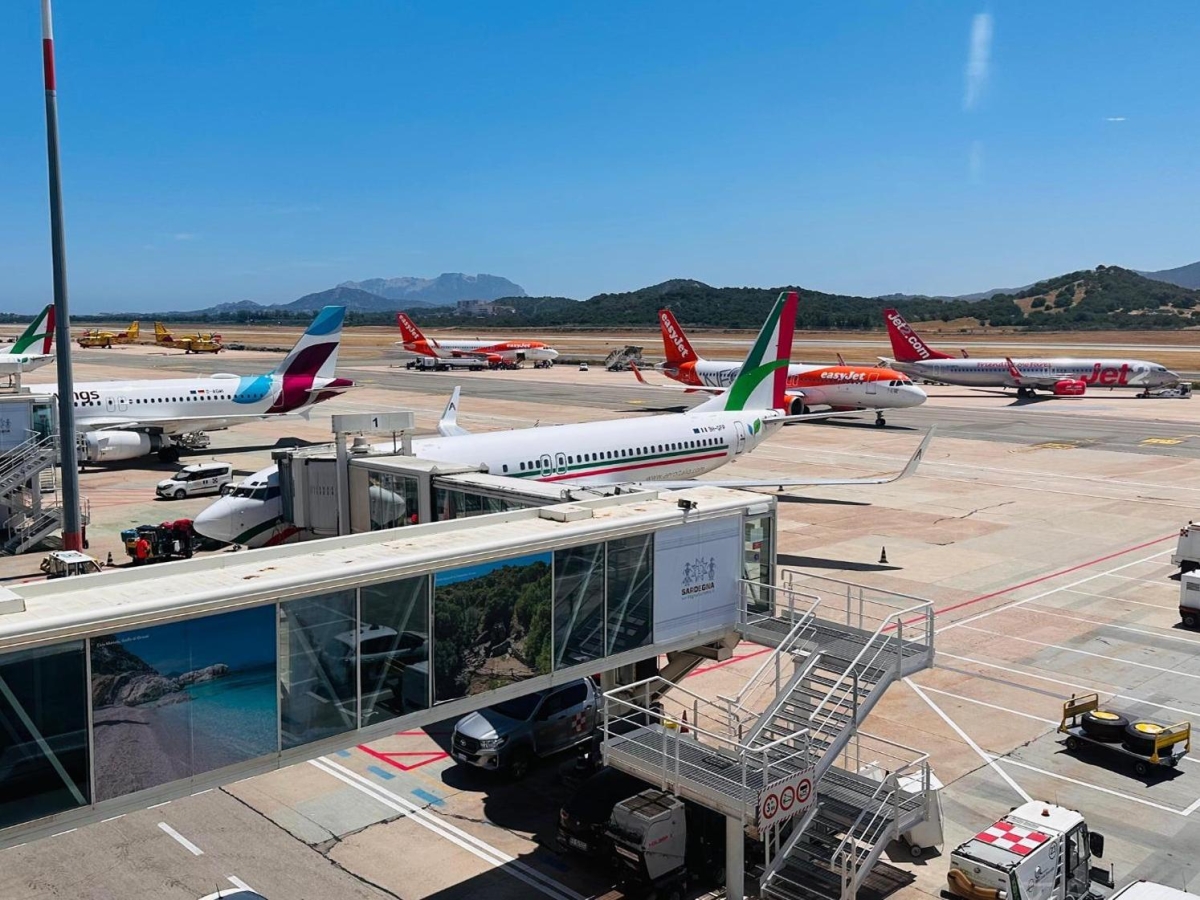
Sardinian regional airlines are now at the center of a structural shift involving the territorial‑continuity public‑service framework. The immediate implication is a re‑allocation of lucrative subsidised routes that could reshape market share, pricing dynamics and connectivity for the island’s tourism‑driven economy.
The Strategic context
sardinia’s “territorial continuity” scheme obliges carriers to provide low‑fare connections between the island’s three main airports and the italian mainland (Rome and Milan) in exchange for regional subsidies. Historically, this regime has been a modest but stable source of revenue for incumbent airlines, while guaranteeing essential mobility for residents. Over the past decade, the island’s tourism boom-accelerated by post‑pandemic demand-has turned these routes into high‑margin assets, generating roughly €1 billion in annual revenue and €200 million in net profit in 2024. The upcoming tender, effective from spring 2026, therefore represents a contested prize in a market that has outgrown its original public‑service purpose and is now a strategic revenue stream for carriers seeking growth in the Mediterranean.
Core Analysis: Incentives & Constraints
Source Signals: The tender documents reveal six subsidised routes (Cagliari‑Rome, Cagliari‑Milan, Olbia‑Rome, Olbia‑Milan, Alghero‑Rome, Alghero‑Milan). On 15 December, the Sardinian transport department opened the bids. Two notable developments emerged: (1) a partnership between national carrier Ita Airways and low‑cost Spanish airline Volotea, targeting the most profitable Cagliari‑Rome and Olbia‑Milan routes; (2) Aeroitalia entered the process despite earlier opposition, offering regulated fares on the same routes without requesting regional compensation. Winners must commence service on 29 March 2026. No offers were received for Alghero‑Milan, suggesting a likely extension of the existing tender for that leg.Aeroitalia is slated to operate Cagliari‑Milan and Alghero‑Rome, while competition will persist on the remaining routes. The partnership also includes a “temporary grouping” and an interline agreement to facilitate connections via Rome for long‑haul passengers (e.g., from the United States or Japan). Passenger traffic in 2024 reached 10.62 million, with total revenues of €950 million and a 21 % margin.A new direct Olbia‑New York service by Delta is scheduled for spring 2026,underscoring the island’s growing international appeal.
WTN Interpretation: The convergence of three forces explains the current dynamics: (a) Revenue maximisation - carriers view the subsidised routes as high‑margin platforms that can be leveraged for ancillary sales and network expansion; (b) strategic partnership leverage – Ita Airways, a state‑backed carrier, aligns with Volotea to combine legacy network reach with low‑cost efficiency, securing the most lucrative legs while mitigating risk through shared costs and interline capabilities; (c) Regulatory opportunism – Aeroitalia’s decision to forgo subsidy claims signals a willingness to compete on price alone, potentially pressuring incumbents to lower fares or improve service quality. The absence of bids for Alghero‑Milan reflects either a perception of insufficient profitability or a strategic calculation to avoid over‑extension, prompting the region to consider a tender extension. The upcoming Delta direct link amplifies Sardinia’s status as a premium tourism hub,increasing the strategic value of the continuity routes for both domestic carriers (who can feed international traffic) and foreign airlines (seeking feeder connections).
WTN Strategic Insight
In mature tourism markets,public‑service subsidies increasingly become de‑facto “gold mines” that attract competitive alliances,turning policy tools into strategic bargaining chips for carriers seeking market dominance.
Future Outlook: Scenario Paths & Key Indicators
Baseline Path: If the current tender proceeds without legal challenges, Ita‑Volotea will secure Cagliari‑rome and Olbia‑Milan, Aeroitalia will operate Cagliari‑Milan and Alghero‑Rome, and the region will extend the Alghero‑Milan tender to October 2026.This outcome sustains the status quo of subsidised connectivity while allowing carriers to capture the high‑margin summer traffic, reinforcing Sardinia’s tourism growth and preserving regional political support for the continuity scheme.
risk Path: If legal disputes (e.g., challenges to Aeroitalia’s non‑compensated bid) or fiscal pressures force the region to renegotiate subsidy levels, the tender could be delayed or restructured. A reduced subsidy or a more competitive open market could trigger fare hikes, service reductions on less profitable legs, and a potential entry of additional low‑cost carriers seeking to undercut incumbents, thereby destabilising the current revenue distribution and risking connectivity for residents.
- Indicator 1: Publication of the final award decisions by the Sardinian transport department (expected within the next 4‑6 weeks).
- Indicator 2: Any formal appeal or court ruling concerning Aeroitalia’s bid (monitor regional administrative court filings through May 2026).
