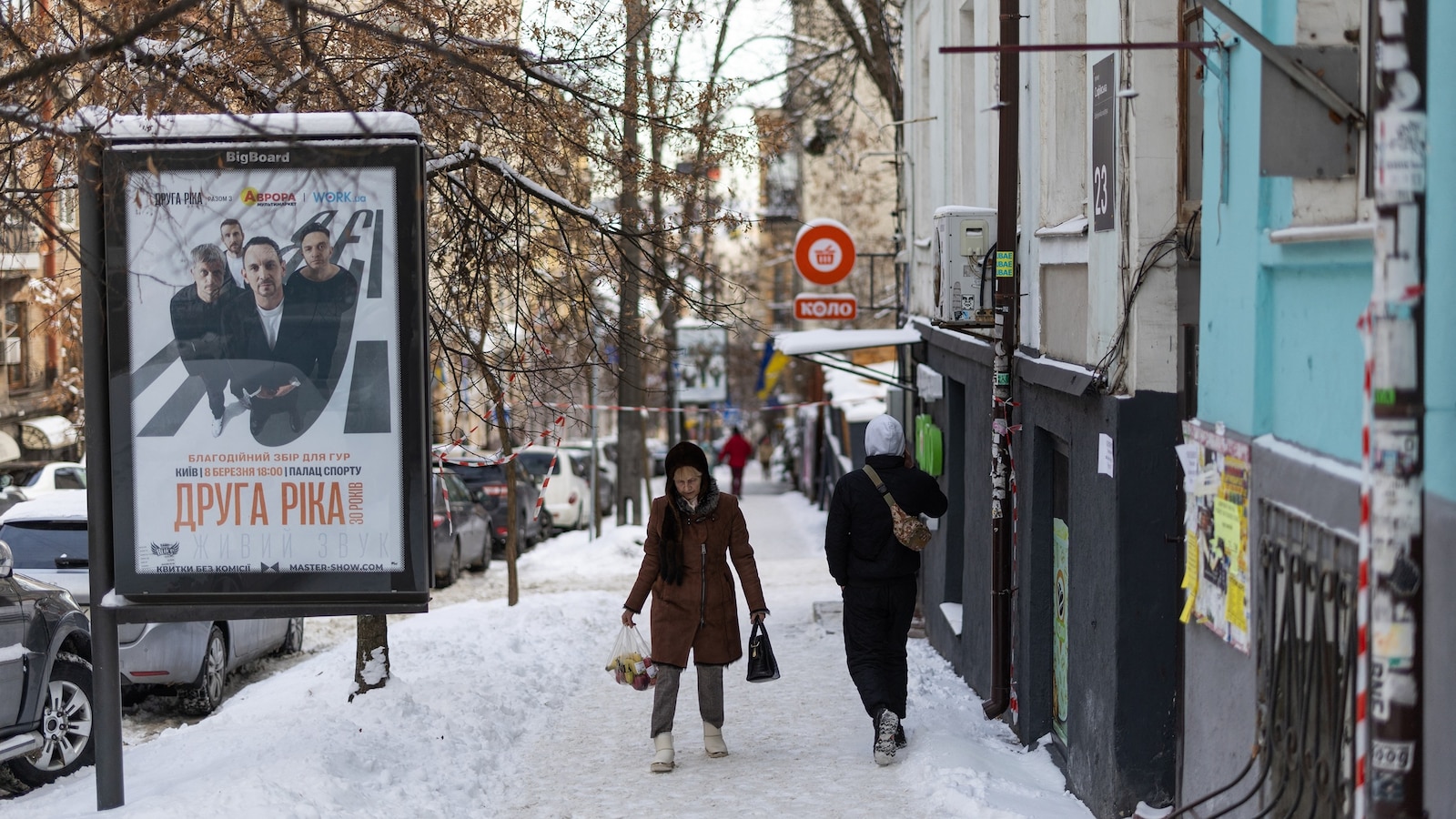
Russia Intensifies Energy Grid Attacks Across Ukraine; Millions Face Winter Blackouts
Russia intensified attacks on Ukraine’s energy grid this week, targeting substations and thermal plants across at least 12 regions and leaving millions facing scheduled blackouts as winter temperatures drop below freezing, ABC News reported.
In the first week of November alone, the Armed Conflict Location & Event Data Project recorded 278 strikes on civilian infrastructure. “In most regions of Ukraine, hourly power outage schedules are in effect,” Ukrainian Minister of Energy Artem Nekrasov said in a post on Telegram.
Substations and thermal plants hit repeatedly
Russian forces struck three substations and a thermal power plant overnight Thursday, the Russian Armed Forces said on Telegram. Ukrainian Prime Minister Serhiy Koretsky reported strikes on 12 regions overnight Wednesday, targeting substations in Zhytomyr, Chernihiv and Mykolaiv. The Ministry of Energy confirmed residents in Dnipropetrovsk, Zhytomyr, Zaporizhzhia, Mykolaiv and Sumy were without power Thursday morning.

DTEK, Ukraine’s largest private energy company, said Nov. 3 strikes halted generation at three of its five thermal plants. An attack on Nov. 7 damaged power connections and the Northern Bridge in Kyiv. On Nov. 10, Russia hit six major substations and railways, triggering outages across eight regions including Kyiv, Kharkiv and Odesa, state grid operator Ukrenergo said.
Repair crews overwhelmed by deliberate targeting
Nekrasov said the enemy is deliberately targeting facilities where repair work was nearing completion. Oleksandr Danylyuk, a RUSI associate fellow for military sciences, said the objective is cumulative economic damage and urban destabilization. Russia is increasingly coordinating strikes on energy, transport and heating infrastructure, overwhelming the country’s ability to repair damage.
“The biggest fear of old people is to freeze to death.”
said Hanna Grishkevich, whose elderly mother in Kyiv receives electricity for only a few hours a day and relies on power banks for heat, water and gas. “Helping someone in Ukraine is like dropping money into a well that has no bottom. It’s a black hole,” Grishkevich told ABC News. “The war is still in its active phase.”
Ukraine strikes back at Russian refineries
President Volodymyr Zelenskyy said Ukraine has responded with strikes on Russian oil refineries that have disabled more than half of the country’s refining capacity. The escalation coincided with a summit in China where Vladimir Putin met Donald Trump and Xi Jinping, producing a four-point joint declaration on peace.
Air defense gaps persist as jet-powered drones arrive
Ukrainian Air Force spokesman Yuriy Ihnat said intelligence indicates Russia is preparing another attack on energy infrastructure, warning Moscow has not abandoned plans to strike critical facilities. Russia has started using faster, jet-powered drones that are harder to intercept, the International Energy Agency said in a report published this week. Ihnat said Ukraine needs ammunition for anti-aircraft guns and aircraft, plus short- and medium-range missiles.
Distributed generation and imports not yet fully utilized
Ukraine has added around 400 megawatts of distributed gas-fired generation, new wind capacity and battery storage since last winter, the IEA found. Smaller, widely distributed resources are more difficult for drones to target than large plants.
Decentralized supply and electricity imports helped weather disruptions last winter, but neither was used to its full potential. Market rules including price caps limited imports at times, and grid bottlenecks restricted imported power from reaching eastern regions.
District heating failures drive electric demand spikes
More than 30 percent of Ukrainian households rely on district heating, which has come under increasingly heavy attack over the past two winters. When heating systems fail, households turn to electric heaters, adding to electricity demand when the system is already under strain. Decentralizing heating through smaller co-generation units and modular boiler houses has helped some households maintain heat despite repeated strikes, the IEA said.
Equipment procurement for winter 2027-28 must begin now
The Council of the European Union approved nearly 8 billion euros for Ukraine on Monday, its largest single payment, for critical infrastructure repair ahead of winter. The IEA warned that with critical energy equipment taking six to nine months to deliver, procurement for the winter 2027-28 heating season should begin now. Coordinated purchasing, strategic equipment reserves and multiyear resilience planning are needed to shift from winter-by-winter emergency measures.
DTEK, Ukraine’s largest private energy investor, was established in 2005 and operates thermal, wind and solar plants, coal and gas extraction, and grids serving 5.6 million customers in Kyiv, Dnipro, Donetsk and Odesa Oblasts.
In 2009 it became the first Ukrainian company to export electricity to Hungary, Romania and Slovakia after winning international grid access at auction, and by 2012 had invested over $2.5 billion in production. Its cybersecurity unit, MODUS X, has detected and prevented more than 150 million attempted cyberattacks on DTEK networks and assets since 2022.
Disclaimer: The views and cultural analyses presented in this article are for informational and entertainment purposes only. Information regarding legal disputes or financial data is based on available public records.