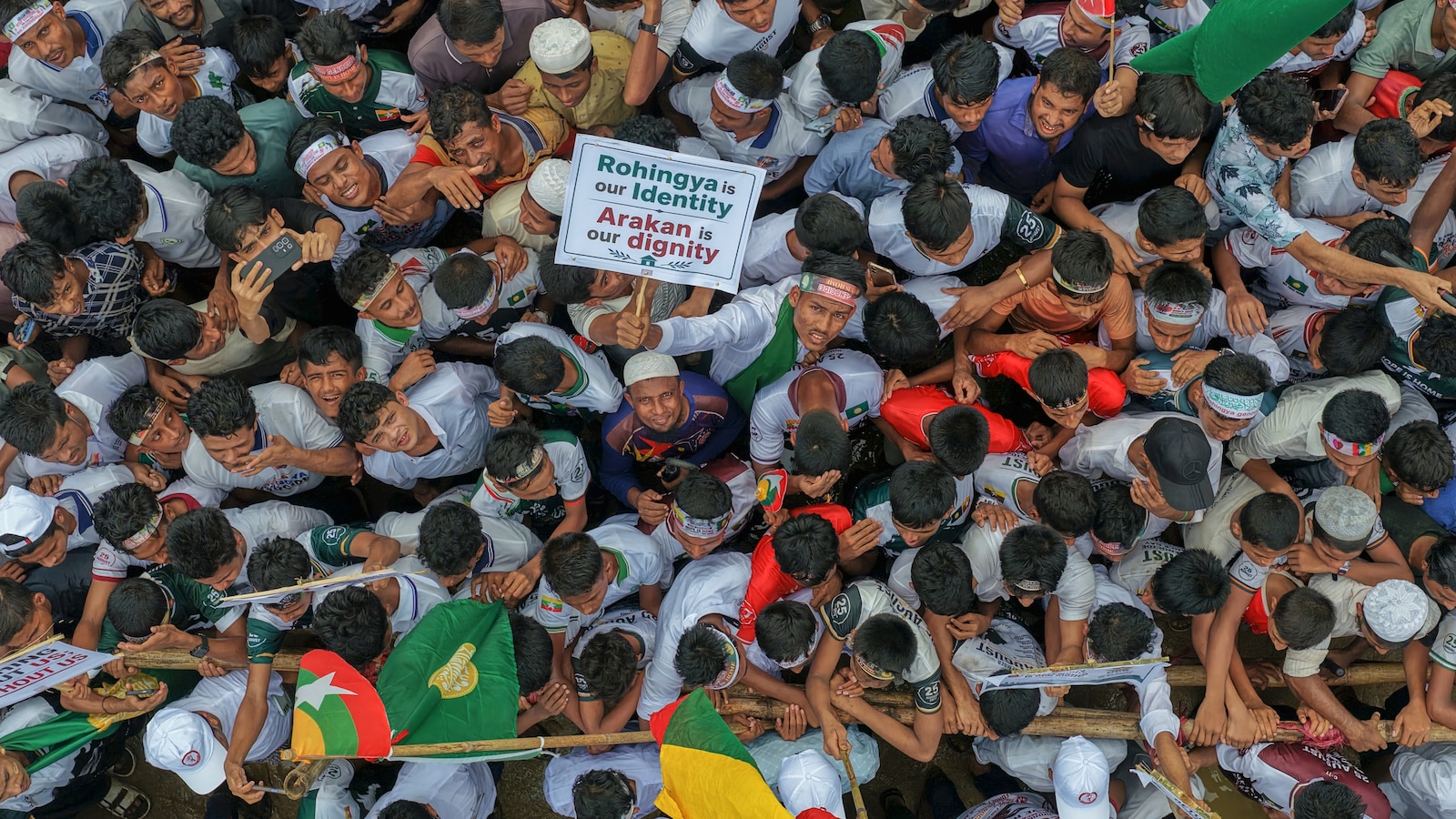
Rohingya Refugees in Bangladesh Rally for Safe Return to Myanmar
Tens of thousands of Rohingya refugees gathered in Bangladesh’s Cox’s Bazar district on Tuesday, August 25, 2026, to mark the ninth anniversary of their exodus from Myanmar. Demonstrators demanded a safe, dignified return to their homeland, citing ongoing security concerns and the failure of past repatriation attempts as primary obstacles to peace.
A Decade of Displacement and Unresolved Claims
The rally, which drew participants from dozens of camps, serves as a poignant reminder of the 2017 mass exodus triggered by a brutal military crackdown in Myanmar’s Rakhine State. The anniversary, termed “Ninth Anniversary of Rohingya Genocide Day” by the refugees, highlights the growing frustration among a community that has spent nearly a decade in temporary settlements.
For those managing the logistical and humanitarian fallout of such displacement, the lack of a permanent solution remains a critical challenge. Organizations and local entities tasked with camp management often find themselves in a precarious position.
The Deadlock in Repatriation Negotiations
Diplomatic efforts to return the refugees have repeatedly stalled. The Bangladesh government has attempted to initiate repatriation at least twice, yet both efforts failed because the refugees refused to return, citing valid fears for their safety. Bangladesh authorities have maintained a policy of not forcing any refugee to return against their will.
The security situation in Rakhine State remains complex. Refugee leader Sayed Ullah noted that the conflict between the Myanmar military and the Arakan Army has created a volatile environment. “Whether it is the Arakan Army or the Myanmar military, as long as they continue playing this double game, the situation in Arakan will not become safe,” Ullah stated during the rally. The term “Arakan” is the historical name for Rakhine, which the refugees frequently use to assert their connection to the land.
For businesses and international organizations monitoring regional stability, the situation underscores the necessity of high-level risk assessment.
International Legal Scrutiny and Myanmar’s Stance
The plight of the Rohingya has reached the highest levels of international law. In January 2026, the International Court of Justice (ICJ) held extensive hearings regarding accusations of genocide against Myanmar. The court reviewed expert testimonies, witness accounts, and documentation concerning systematic violence, including mass killings and the destruction of villages. The proceedings are available for public review through the International Court of Justice official portal.
Myanmar’s military-backed government has consistently characterized its actions as a legitimate counter-terrorism operation. While the state has recently expressed a willingness to accept the return of over 300,000 refugees—provided security conditions improve—this proposal faces significant skepticism. Bangladesh has disputed the accuracy of Myanmar’s data and continues to reject the state’s refusal to recognize the term “Rohingya,” viewing the label “Bengali” as a deliberate attempt to erase the community’s ethnic identity.
Infrastructure and Long-Term Stability
The endurance of the camps in Cox’s Bazar places an immense burden on local infrastructure and the surrounding economy. As the stay of the refugees extends into a ninth year, the need for robust, long-term civic planning becomes undeniable.

As the international community watches these developments, the central question remains how to create an environment conducive to peace in a region defined by shifting power dynamics. The refugees’ demand is clear: they seek a future that does not involve spending another 50 years in exile.