
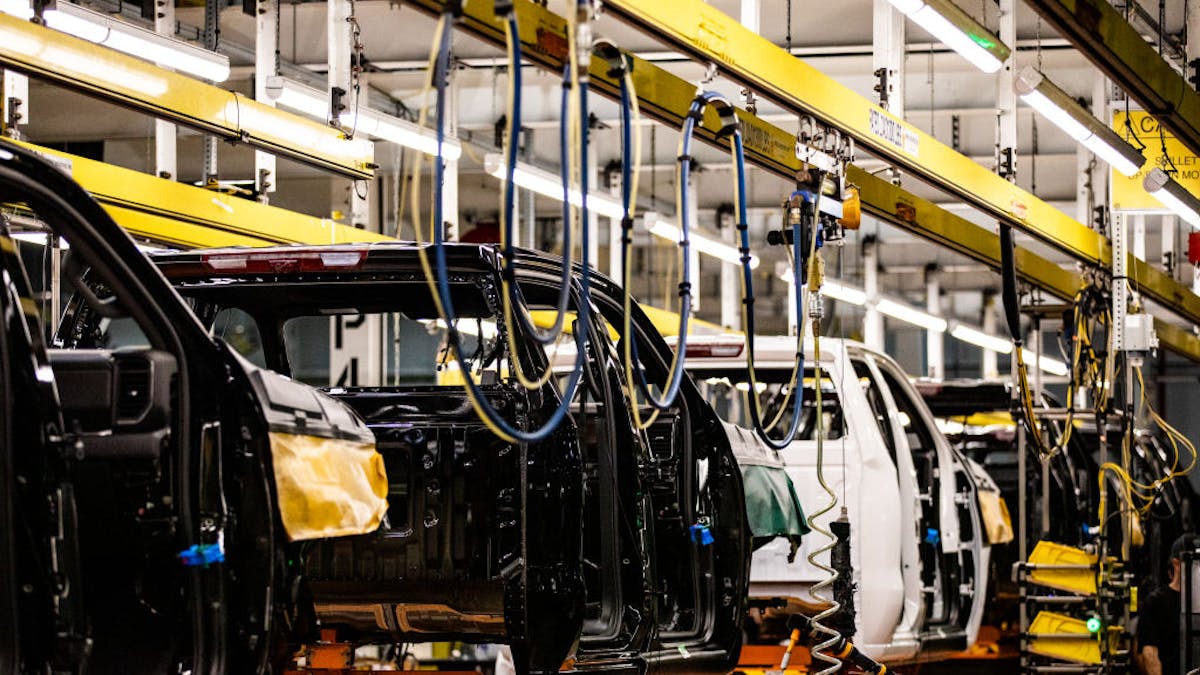
US Manufacturing Resurgence: Can Trump’s Tariffs Revive American Industry?
Table of Contents
- US Manufacturing Resurgence: Can Trump’s Tariffs Revive American Industry?
- The Decline of US Manufacturing
- Labor Force Realities
- The Reshoring Imperative: strategic Priorities
- Funding the Future: Trade Schools and Skilled Labor
- Key Metrics: US Manufacturing vs. competitors
- Conclusion: A Focused Approach
- Evergreen Insights: The Evolution of US Manufacturing
- Frequently Asked Questions About US Manufacturing
President Trump’s imposition of tariffs on trading partners in April 2025, under the International Emergency Economic powers Act, aimed to address the national emergency created by the country’s trade deficit. the goal was to bring manufacturing jobs “roaring back” to the United States. But can the U.S. truly become a manufacturing powerhouse again, given current economic realities?
The Decline of US Manufacturing
While the idea of revitalizing American manufacturing is appealing, the United States faces significant challenges. Manufacturing employment peaked in 1979 with nearly 20 million workers. Over the next four decades, the US transitioned to a service-oriented economy. By 2023, the service sector accounted for 79% of the nation’s GDP and 80% of total employment. In May 2024, fewer than 13 million workers were employed in manufacturing, according to the Bureau of Labor Statistics.
Did You Know? The US manufacturing sector contributed $2.74 trillion to the economy in 2023, representing 10.5% of the gross domestic product. Source: National Association of Manufacturers
Labor Force Realities
One of the primary obstacles is the limited labor pool. The unemployment rate in May 2025 was approximately 4.2%, indicating near full employment. The labor participation rate hovers around 62.6%,below the rates seen in the late 1990s and early 2000s. This suggests that there isn’t a large reserve of workers ready to enter the manufacturing sector.
Moreover, US labor costs are among the highest globally. The average hourly wage for a nonsupervisory manufacturing employee is about $28.80. This contrasts sharply with wages in other manufacturing hubs. For example, the average hourly manufacturing wage in China was approximately $6.50 in 2020, $4.82 in Mexico, and $3.10 in Vietnam.
Pro Tip: Automation and advanced manufacturing technologies can help offset higher labor costs by increasing productivity and efficiency.
The Reshoring Imperative: strategic Priorities
While the US may not become a manufacturing superpower across all sectors, strategic reshoring is crucial. the focus should be on industries vital to national defence and security. These include pharmaceuticals, computer chips, drones, and food additives.
Consider these statistics:
- Approximately 40% of finished pharmaceutical products and 80% of active drug ingredients sold in the US are manufactured overseas, according to a 2019 Government Accountability Office report.
- China controls 80% of the drone market in the United States.
- 83% of semiconductors are manufactured outside of the united States.
These figures underscore the vulnerability of relying on foreign supply chains for essential goods.
Funding the Future: Trade Schools and Skilled Labor
To support strategic reshoring, investment in trade schools is essential.President Trump proposed using frozen assets from Harvard University to fund these schools, training workers for manufacturing jobs in vital industries. This initiative aims to address the skills gap and provide a workforce capable of supporting a revitalized manufacturing sector.
Key Metrics: US Manufacturing vs. competitors
| Country | Average Hourly Manufacturing Wage (USD) | Key Industries |
|---|---|---|
| United States | $28.80 | Aerospace, Automotive, Technology |
| China | $6.50 (2020) | Electronics, Textiles, Machinery |
| Mexico | $4.82 (2020) | Automotive,Electronics,Apparel |
| Vietnam | $3.10 | Textiles, Footwear, Electronics |
Conclusion: A Focused Approach
The United States may not regain manufacturing dominance across all sectors due to its high cost structure and standard of living. However, by prioritizing strategic reshoring in critical industries and investing in skilled labor, the nation can enhance its national security, reduce reliance on foreign supply chains, and secure its economic future.
Evergreen Insights: The Evolution of US Manufacturing
The decline of US manufacturing is a complex issue rooted in globalization, technological advancements, and shifting economic priorities.Historically, the US economy has transitioned from agriculture to manufacturing and then to services. This evolution reflects changing consumer demands, technological innovations, and global competition.
The rise of global supply chains has allowed companies to source components and finished goods from countries with lower labor costs, impacting domestic manufacturing. However, recent events, such as supply chain disruptions during the COVID-19 pandemic, have highlighted the risks of over-reliance on foreign sources, leading to renewed interest in reshoring and strengthening domestic manufacturing capabilities.
Frequently Asked Questions About US Manufacturing
- What are the benefits of reshoring manufacturing to the US?
- Reshoring can create jobs, boost the economy, reduce reliance on foreign supply chains, and enhance national security.
- What government incentives are available to encourage manufacturing in the US?
- The US government offers various incentives, including tax breaks, grants, and loans, to encourage companies to invest in domestic manufacturing.
- How can small businesses benefit from the resurgence of US manufacturing?
- Small businesses can benefit by becoming suppliers to larger manufacturers, providing specialized services, and developing innovative products.
- What role does technology play in the future of US manufacturing?
- Technology, such as automation, robotics, and artificial intelligence, will play a crucial role in increasing productivity, reducing costs, and enhancing the competitiveness of US manufacturers.
- How can individuals prepare for jobs in the modern manufacturing sector?
- Individuals can pursue education and training in STEM fields, attend trade schools, and seek apprenticeships to develop the skills needed for modern manufacturing jobs.
What industries do you think are most critical for the US to reshore? How can we best prepare the workforce for these jobs?
Share your thoughts in the comments below and subscribe to our newsletter for more insights on global economic trends.
