Researchers report distinct biological features in early-onset colorectal cancer
Researchers building a single-nucleus RNA sequencing atlas from 189 primary colorectal tumors report that early-onset colorectal cancer diagnosed before age 50 shows distinct biological features compared to average-onset cases, including increased stromal proportions and altered cell-to-cell signaling pathways in microsatellite-stable tumors. Worldwide incidence rates for early-onset cases continue to climb, yet the underlying molecular divergences across age cohorts have remained poorly defined until now.
-
Key Clinical Takeaways:
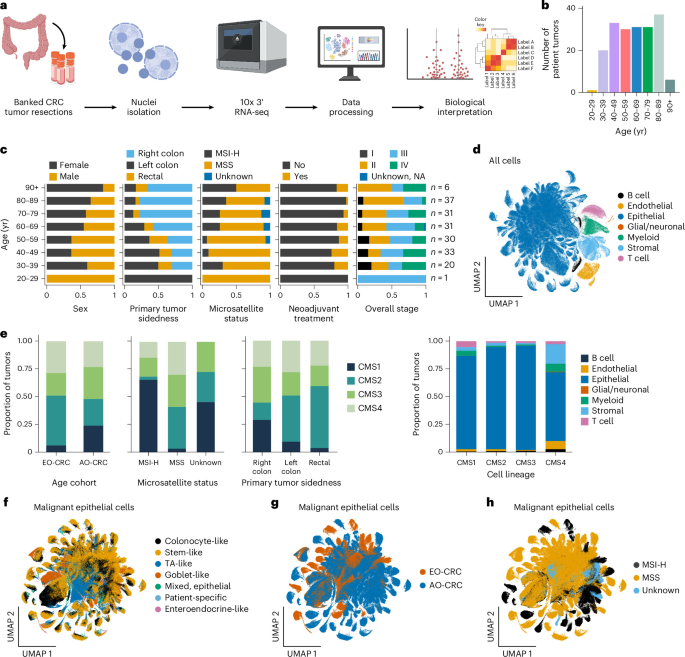
- A single-nucleus RNA sequencing atlas of 189 primary colorectal tumors compared 54 early-onset cases against 135 average-onset cases across eight decades of life.
- Microsatellite-stable tumors from younger patients exhibited increased stromal cells, decreased epithelial proportions, and higher expression of long noncoding RNAs and FN1.
- Left-sided, microsatellite-stable early-onset tumors displayed more frequent cell-cell interactions, particularly involving epithelial-to-mesenchymal transition pathways like FN1, GDF, and ACTIVIN.
Single-Nucleus Sequencing Atlas Maps 189 Primary Colorectal Tumors Across Decades
To investigate why younger populations face rising colorectal cancer rates, investigators generated high-resolution single-nucleus RNA sequencing data from primary tumor samples representing patients spanning eight decades of life. The project captured at least 20 tumors in most age decades, ensuring a broad continuum for comparison. The institutional review boards of the Dana-Farber/Harvard Cancer Center approved the protocols used to generate the single-nucleus and bulk RNA sequencing data.
The study design stratified tumors by microsatellite status while controlling for variables including tumor sidedness, cancer stage, patient sex, and neoadjuvant treatment history. The resulting atlas provides a foundational resource for the scientific community to analyze early-onset disease biology.
Stromal Enrichment and Epithelial Variations Distinguish Young Patient Tumors
Among microsatellite-stable tumors, samples collected from younger patients displayed distinct cellular composition shifts. Specifically, these tumors demonstrated increased stromal proportions alongside decreased epithelial proportions. Multispectral immunofluorescence and machine learning analyses applied to an external validation cohort of 712 microsatellite-stable colorectal tumors confirmed these compositional findings.
Epithelial cells derived from younger cohorts showed elevated expression of long noncoding RNAs and the FN1 gene, coupled with a trend toward heightened heterogeneity in copy number alterations. Left-sided microsatellite-stable tumors in younger individuals hosted more active cell-cell communication networks, highlighting specific signaling pathways driving epithelial-to-mesenchymal transition.
Clinical Characteristics and Unresolved Questions in Age-Stratified Colorectal Cancer
While the sequencing atlas establishes clear molecular and cellular distinctions between early-onset and average-onset disease, researchers continue to evaluate how these variations directly influence clinical management and therapeutic response. The dataset accounts for patient sex and clinical covariates, yet the exact environmental or genetic triggers initiating these age-specific tumor microenvironment shifts remain unconfirmed.
Disclaimer: The information provided in this article is for educational and scientific communication purposes only and does not constitute medical advice. Always consult with a qualified healthcare provider regarding any medical condition, diagnosis, or treatment plan.