Renewables and Farmer Aggregation Offer Solutions to Africa Post-Harvest Losses
Agricultural experts meeting at the Africa Food Systems Forum in Kigali, Rwanda, reported on October 2, 2026, that up to 40 percent of farm produce in Sub-Saharan Africa is lost annually due to inadequate cold storage and transport. Industry participants at the forum, including the Africa Minigrid Developers Association and Financial Sector Deepening Kenya, highlighted that combining renewable energy technologies like solar power with structured farmer cooperatives offers a viable path to reduce these post-harvest losses and protect rural livelihoods.
Post-harvest waste severely undermines agricultural production gains and export capacities across the continent. Highly perishable commodities such as fruits and vegetables experience even steeper losses, reaching up to 70 percent. Because agriculture accounts for one-third of Sub-Saharan Africa’s Gross Distribution Product and employs over 60 percent of the workforce, widespread spoilage directly threatens jobs and the economic stability of millions of rural households.
Cold Chain Deficits and Spoilage Across Sub-Saharan Africa
Farmers across the region contend with an underdeveloped cold chain, unreliable power storage, and a lack of proper refrigeration. These deficits leave fresh harvests exposed to intense heat and rapid spoilage before reaching processing hubs. Poor road networks and a scarcity of refrigerated transport compound the crisis, forcing agricultural workers to haul perishable fruits over long distances under unconditioned environments.
Nigeria, recognized as one of Africa’s largest economies, lost between $2.3 billion and $3.3 billion to post-harvest inefficiencies in 2025 alone. This waste accounted for up to 40 million metric tonnes of food driven by deficient storage and transport networks. Meanwhile, South Africa loses an estimated 10.3 million tonnes of food annually, which represents about 19 percent of all fresh produce according to a 2021 report from the Waste Research Development and Innovation Roadmap Research cited by Inter Press Service.

Mini-Grids and Solar Integration at the Africa Food Systems Forum
To counter diesel generator reliance, forum participants examined how renewable energy can ease cooling burdens on farms. Olamide Niyi-Afuye, Chief Executive Officer at the Africa Minigrid Developers Association, stated that the primary barrier is not a lack of awareness, but rather the absence of aggregation and intentional market design.
“We already see individual examples of mini-grids powering agro-processing, cold storage and other productive activities,” Niyi-Afuye said, noting that these initiatives remain isolated projects rather than scalable commercial models. He emphasized that energy developers and agribusinesses must align much earlier to aggregate demand across agricultural value chains.
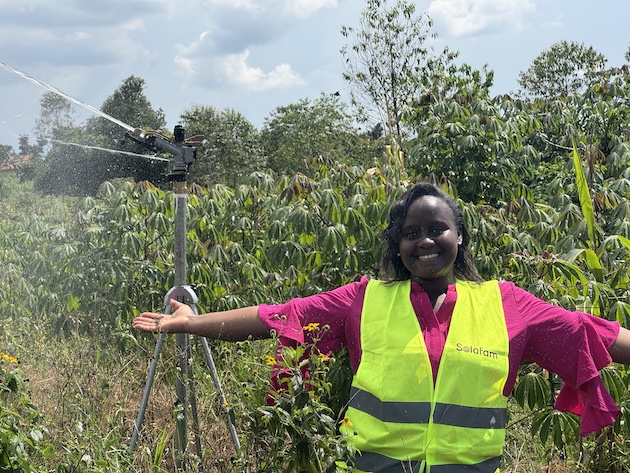
Mugwe Manga, Climate Finance Lead at Financial Sector Deepening Kenya, an independent trust supporting micro and small enterprises, explained that modular solar systems combined with battery storage can be deployed rapidly in rural areas. Manga noted that solar-powered irrigation, cold storage, drying, milling, cooling, and agro-processing can significantly reduce post-harvest losses while enabling farmers to access higher-value markets.
Cooperatives Help Smallholders Overcome High Upfront Costs
Despite the falling costs of solar panels and batteries shipped from China, high upfront capital expenses remain a major obstacle for individual smallholders who struggle to access traditional grants and loans. Experts at the Kigali forum stressed that cooperative organization provides an effective economic workaround.
“Due to the capital expenditure of some of these, it is important for farmers to organise themselves and come together as a collective in order to take advantage of economies of scale and the power of aggregation that can use energy for all, as opposed to rolling out these solutions to individual smallholders that may not be cost-effective,” Manga said.
Niyi-Afuye reinforced this perspective by calling for an end to viewing energy and food systems as separate investment cases. Building bankable opportunities at the intersection of both sectors requires structured productive loads from the project’s inception.