Rebuild Leg Strength After 60: 5 Park Bench Exercises
For many older adults, a decline in leg strength is often accepted as an unavoidable part of aging. But fitness professionals say that isn’t necessarily the case, and a simple, accessible exercise routine utilizing a park bench can significantly rebuild lost strength, improve balance, and restore confidence in daily movement.
The loss of leg muscle, known as sarcopenia, accelerates after the age of 60, impacting the lower body at roughly twice the rate of the upper body. The quadriceps and glutes are particularly vulnerable, potentially losing 1-2% of their mass annually without intervention. This isn’t merely a cosmetic concern; weak legs are a leading predictor of falls, the primary cause of injury-related deaths among those over 65, according to fitness experts.
Beyond the immediate risk of injury, diminished leg strength impacts metabolism. Muscle tissue is metabolically active, burning calories even at rest. Loss of muscle mass slows metabolism, complicating weight management and creating a cycle of decreased activity and further muscle loss. Perhaps most significantly, weakening legs can erode independence, making everyday tasks like rising from a chair, climbing stairs, or using the restroom increasingly difficult.
Traditional squats, while effective for building leg strength, can present challenges for older adults due to decreased ankle mobility, reduced hip flexibility, and potential joint wear and tear. The fear of instability as well often prevents full range of motion. Exercises performed using a park bench offer a solution, providing a stable reference point and reducing the risk of falling. The bench’s height – typically between 16-18 inches – offers a manageable challenge without excessive strain on the knees.
A foundational exercise is the bench sit-to-stand. This movement targets the quadriceps, glutes, and hamstrings – key muscles for everyday activities. To perform it, individuals stand in front of the bench with feet hip-width apart, slowly lowering themselves until seated, controlling the descent rather than collapsing. Leaning forward slightly while seated, and then pushing through the heels to stand back up completes one repetition. Modifications include using hands for balance or support, adjusting the depth of the sit, or utilizing the backrest for assistance.
The bench step-up works the quadriceps, glutes, and hip stabilizers, improving the ability to climb stairs and navigate curbs. Standing facing the bench, the right foot is placed flat on the seat, and the individual pushes through the heel to step up, bringing the left foot to meet it. Stepping down is then reversed. Balance can be maintained by holding the bench’s backrest, and knee stress can be reduced by starting with a lower step.
For a more advanced challenge, the single-leg bench squat targets quadriceps, glutes, and balance. Standing on one leg in front of the bench, the other leg is extended forward for balance. The individual slowly lowers themselves until seated on the bench, then returns to a standing position using only the supporting leg. Hand support can be used for balance, and the depth of the squat adjusted as needed.
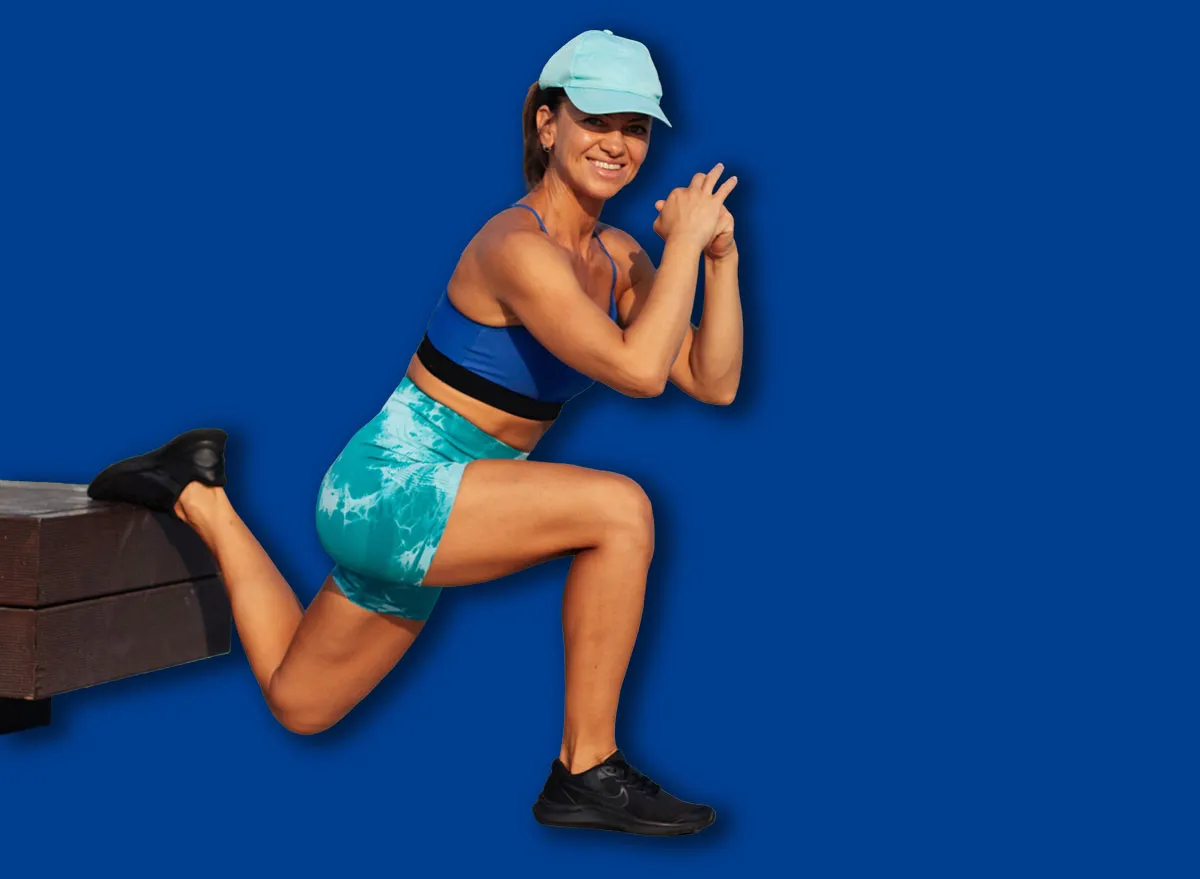
The bench Bulgarian split squat further challenges the quadriceps, glutes, hamstrings, and hip flexors. Standing about two feet away from the bench, the top of one foot is placed on the seat. Lowering the body by bending the front knee until the back knee nearly touches the ground, then pushing back up completes the exercise. Support can be obtained by holding onto a nearby object, and the depth adjusted for comfort.
Finally, the bench calf raise targets the calf muscles, crucial for balance and preventing ankle injuries. Standing facing the bench with hands on the backrest for support, the balls of the feet are placed on the edge of the bench, heels hanging off. Rising up onto the toes, holding briefly, and then lowering the heels below the level of the bench completes one repetition.
Fitness professionals recommend starting with three sessions per week, with rest days in between to allow for muscle recovery. Begin with two sets of 8-10 repetitions of each exercise, gradually increasing to three sets of 12-15 repetitions over several weeks. The order of exercises – sit-to-stands, step-ups, single-leg squats, Bulgarian split squats, and calf raises – is designed to progress from exercises using both legs to those utilizing one leg, maintaining good form as fatigue sets in.
The walk to and from the park where these exercises are performed also contributes to overall fitness, providing low-impact cardiovascular exercise. Experts suggest morning sessions, as the walk serves as a natural warm-up, but emphasize listening to the body’s natural rhythms.
Within four to six weeks, individuals can expect to notice improvements in their ability to perform daily tasks, such as getting out of chairs and climbing stairs. While significant muscle growth may take longer, functional strength and confidence are likely to increase, reducing the fear of falling and improving overall quality of life.