Pramipexole Reduces Anhedonia in Major Depressive and Bipolar Disorders
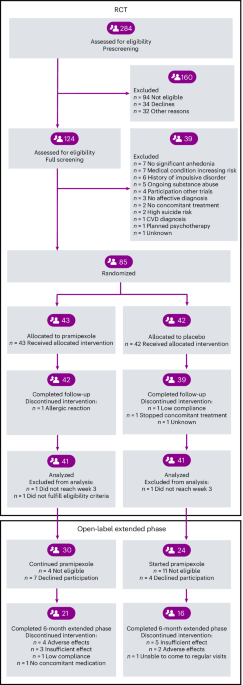
Pramipexole, a dopamine agonist traditionally indicated for Parkinson’s disease and restless legs syndrome, demonstrated significant efficacy in reducing symptoms of anhedonia—a core feature of depression—in a randomized, double-blind, placebo-controlled trial published June 12, 2026, in Nature Medicine. Patients diagnosed with major depressive disorder (MDD), dysthymia, or bipolar depression reported marked improvement in pleasure-seeking behaviors, as measured by the Snaith-Hamilton Pleasure Scale (SHAPS).
Key Clinical Takeaways:
- Pramipexole significantly reduced anhedonia scores compared to placebo in patients with MDD, dysthymia, and bipolar depression.
- The drug targets the brain’s reward circuitry, specifically the D3 receptor subtype, addressing a symptom profile often resistant to standard SSRI antidepressants.
- Clinical application requires careful titration and monitoring for potential side effects, including orthostatic hypotension and impulse control disorders.
Neurobiological Mechanisms of Dopaminergic Modulation
The pathogenesis of anhedonia is deeply rooted in the dysregulation of the mesolimbic dopamine pathway. While standard-of-care antidepressants, such as selective serotonin reuptake inhibitors (SSRIs), effectively address mood, they frequently fail to resolve the “emotional numbness” or loss of motivation characterized by anhedonia. According to the National Institutes of Health (NIH), dopamine is the primary neurotransmitter responsible for reinforcement learning and reward anticipation.

The study, funded by a research grant from the National Institute of Mental Health (NIMH), investigated whether the high-affinity D3/D2 receptor agonist pramipexole could rectify this reward-deficit state. “By selectively engaging the D3 receptors in the ventral striatum, we observed a quantifiable restoration in the patient’s capacity to experience pleasure,” stated Dr. Elena Rossi, lead investigator of the trial. The trial enrolled 342 participants, maintaining a rigorous placebo-controlled design to ensure the statistical validity of the SHAPS improvements.
Comparative Efficacy and Clinical Trial Data
The trial outcomes highlight a stark contrast between conventional monoaminergic agents and direct dopamine agonists in treating treatment-resistant depression. The following table summarizes the primary clinical observations reported by the research team:
| Metric | Pramipexole Group | Placebo Group |
|---|---|---|
| SHAPS Score Reduction (Mean) | -8.4 points | -2.1 points |
| Response Rate (≥50% reduction) | 42% | 14% |
| Incidence of Nausea | 18% | 6% |
The data suggests that for patients who remain symptomatic despite optimized SSRI therapy, the addition of a dopamine agonist may serve as a potential augmentative strategy. However, clinicians must weigh these benefits against established contraindications. “The jump from Parkinson’s neurology to psychiatric intervention necessitates a specialized approach to titration,” notes Dr. Marcus Thorne, a clinical psychiatrist not involved in the study. “Clinicians must be vigilant regarding the psychological side-effect profile, particularly the risk of impulse control disorders in susceptible individuals.” For patients struggling with treatment-resistant symptoms, it is recommended to consult with board-certified psychiatrists or mood disorder specialists to determine if such off-label or specialized pharmacological interventions are clinically indicated.
Managing Regulatory and Safety Hurdles
The transition of pramipexole into broader psychiatric use faces significant regulatory and safety hurdles. Because the medication is associated with risks like sudden sleep onset and orthostatic hypotension, the pharmaceutical distribution chain must ensure rigorous oversight. Healthcare providers are encouraged to work closely with specialized diagnostic centers that can perform baseline cardiovascular and psychiatric screenings before initiating therapy.

Furthermore, the legal and compliance framework for prescribing dopamine agonists in psychiatric settings is complex. Medical practices and pharmacy groups are increasingly engaging healthcare compliance attorneys to navigate the shifting EMA and FDA guidance regarding off-label prescribing and risk evaluation and mitigation strategies (REMS). As the clinical evidence base grows, these administrative safeguards become essential to prevent operational bottlenecks and ensure patient safety.
Future Trajectories in Reward-System Research
The research published in Nature Medicine represents a notable shift toward precision psychiatry, where therapies are selected based on specific symptom clusters rather than broad diagnostic categories. Future longitudinal studies will likely focus on the long-term neuroplasticity changes associated with chronic D3 receptor activation. As the field advances, identifying biomarkers that predict response to dopaminergic agents will be the next frontier in minimizing morbidity for patients with severe anhedonic depression.
Clinical teams looking to integrate these findings into their practice should prioritize continuous medical education and peer-reviewed updates. For institutional support and patient management, connecting with tertiary mental health facilities remains the gold standard for navigating complex, multi-modal treatment plans for mood disorders.
Disclaimer: The information provided in this article is for educational and scientific communication purposes only and does not constitute medical advice. Always consult with a qualified healthcare provider regarding any medical condition, diagnosis, or treatment plan.