Populist Right is Reshaping European Politics, cbsnews.com reported
Europe’s populist right is reshaping establishment politics as economic pressures and voter frustration over immigration push traditional conservative parties to choose between adopting hard-line positions or losing ground, cbsnews.com reported. Across the continent, movements centered on identity and nationalism are altering electoral patterns that have stood for decades.
Reform UK and the Conservative Survival Fight in Britain
In Britain, Reform UK has established its headquarters in Millbank Tower, a skyscraper overlooking the River Thames in London where the Conservative Party once operated. Reform UK, led by Nigel Farage, is challenging the Conservatives following their crushing electoral defeat in 2024 that ended a 14-year hold on power.
Net migration reached a record of nearly a million in the final years of the Conservative government, fueling public anger that Reform UK has capitalized on. A September poll found that 44% of Britons considered immigration one of the nation’s most important issues.

The political battle has extended beyond immigration statistics into definitions of national identity. London-born senior Reform UK politician Suella Braverman, who is of Indian descent, stated she does not consider herself English because Englishness is an ethnicity. Conservative leader Kemi Badenoch challenged that view at the October Conservative Party conference. Badenoch’s parents are Nigerian.
Steve Baker, a former British Conservative government minister, told cbsnews.com that the wider political shift is a great realignment toward identity and nationalism rather than the economy. He noted that voter concerns about demographic change in local areas cannot be dismissed, pointing out that in some parts of his former Wycombe constituency, white residents have become minorities. However, Baker criticized the turn toward ethno-nationalism, stating he recoils in absolute horror to see the conversation going mainstream.
Reform UK’s support fell to 22% in recent surveys after peaking at around 28% in May amid internal controversies and financial scandals. The party faces further pressure from Restore Britain, a new group led by former Reform lawmaker Rupert Lowe and backed by billionaire Elon Musk, which has polled as high as 9% among voters seeking harder stances on immigration, Islam, and national identity.
As I’ve said before, I’m not English. I’m proud to be British. My family and ancestors have a link to Britain which spans centuries. But in no way are we English. Yes, I was born in England, speak English and support the England football team. And indeed, I love England and… https://t.co/zysugnrurg
Germany and the Pressure on the Political Firewall
Germany's political environment faces intense pressure as the Alternative for Germany, or AfD, achieves historic electoral gains. Since World War II, established German parties have maintained a political firewall, or brandmauer, refusing to form governing coalitions with parties associated with extremist or anti-democratic rhetoric.
In September, the AfD won 43.8% of the vote in the eastern state of Saxony-Anhalt, more than double its previous result. Chancellor Friedrich Merz’s center-right Christian Democratic Union finished second with 17.2%. Nationally, the AfD became Germany’s second-largest party, winning approximately 32% of the vote in eastern states and 18% in the west during the 2025 federal election.
Only Restore Britain can save Britain. It is the only way. https://t.co/lnvaJLrNWj
The AfD has built its base on economic inequality, distrust of political institutions, and dissatisfaction with the handling of the 2015–2016 European migration crisis, when Germany welcomed about 890,000 asylum seekers. AfD politician Tomasz Froelich told cbsnews.com that the party draws working-class voters, skilled workers, and small business owners who fear for their economic future.
German security authorities have documented links between AfD figures and extremist activists advocating for remigration, a term anti-hate groups say promotes the expulsion of immigrants and non-white citizens. The AfD rejects the removal of German citizens based on ancestry, defining remigration as the lawful return of foreigners required to leave the country.
The party’s rise has already influenced mainstream policies. In January 2025, Merz backed a parliamentary motion calling for tougher immigration controls that passed with AfD support, drawing nationwide protests. Meanwhile, the AfD’s hard-line stances have isolated it from some European nationalist allies, including Italian Prime Minister Giorgia Meloni over Russia’s war in Ukraine, and France’s National Rally, which severed ties in 2024 following remarks by an AfD candidate regarding the Nazi SS paramilitary force.
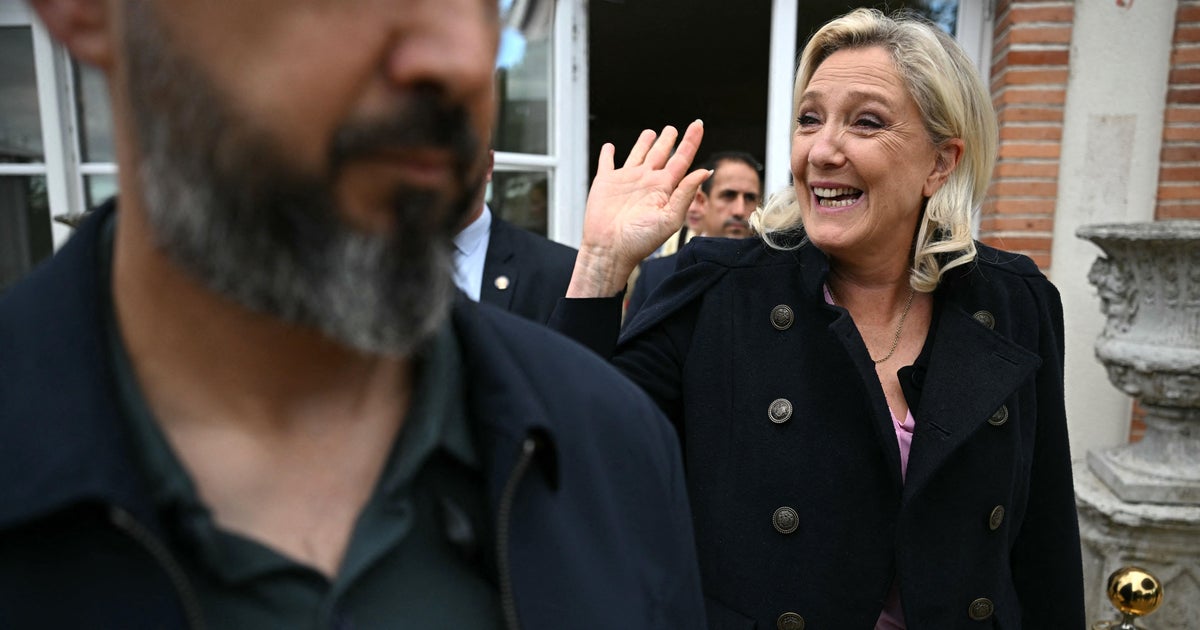
Marine Le Pen and the Transformation of the French Right
In France, Marine Le Pen’s National Rally has marginalized traditional conservatism ahead of the April presidential election. An early October survey indicated Le Pen would garner between 31% and 36% of first-round votes, leading her nearest rival by at least 11 percentage points.
Le Pen has worked to distance her party from the antisemitic reputation established by her father, Jean-Marie Le Pen. Through a strategy of dédiabolisation, or de-demonization, the party changed its name from the National Front, moderated positions, and built support among working-class voters who feel abandoned by the traditional right and left. France’s traditional conservative party, Les Républicains, has fallen to around 9% in national support.

Stéphane Azihari, a French essayist writing for Le Figaro, told cbsnews.com that Le Pen succeeded by filling the void left by a traditional right that disappointed voters on immigration and security.
Across Europe, the European Commission forecasts economic growth of just 1.1% in 2026, down from 1.5% in 2025. Steve Baker noted that economic stagnation fuels an environment where people search for explanations and assign blame, with cultural and ethnic minorities increasingly targeted in political rhetoric.