European Commission report says Recovery and Resilience Facility helps EU states
The European Commission has released its fifth annual evaluation of the Recovery and Resilience Facility (RRF), verifying that the union’s primary post-pandemic mechanism assists member nations with novel policy overhauls and initiatives focused on environmental and digital shifts. Established in 2021 via NextGenerationEU to manage post-COVID recovery, the RRF is entering its closing phase as authorities evaluate pending payment claims and ready the disbursement of the remaining €123 billion prior to year-end.
Assessing the Final Payment Requests and Disbursal Targets
Member states had until 31 August 2026 to complete the specific milestones and targets laid out in their national plans. According to the article, the Commission is actively evaluating the last 32 payment requests to wrap up the funding cycle. Across the lifetime of the programme, governments committed to nearly 6,000 milestones and targets. Official figures show that 4,082 targets have been fulfilled, while the Commission reviews another 1,899.
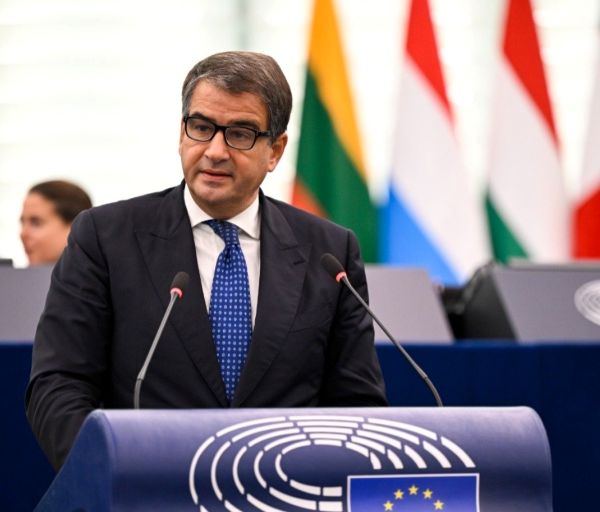
“It has delivered reforms and investments that are modernising our economies and creating new opportunities for citizens and businesses,” said Raffaele Fitto, EU Commissioner for Cohesion and Reform, pointing to the common effort required to handle the unprecedented crisis. Valdis Dombrovskis, Commissioner for Economy and Productivity, added that officials are fully focused on assessing the final payment requests to bring the facility to a successful conclusion.
Green and Digital Transitions Drive Spending Allocations
Environmental projects claimed the single largest share of Recovery and Resilience Facility spending, with €287 billion dedicated to climate-related reforms and investments. The Commission estimates that these backed investments will yield annual greenhouse gas savings equivalent to 1.5% of total EU emissions compared to a 2021 baseline. Accompanying structural reforms could potentially add another 1.4% in savings.

Concrete regional projects illustrate this green push. The Czech Republic rolled out low-emission heating and solar installations designed to save at least 500,000 tonnes of CO2 equivalent annually. Simultaneously, Poland enacted a regulatory overhaul aimed at expanding wind and photovoltaic capacity, which is projected to cut emissions by approximately 4% relative to its 2021 totals.
Digital transformation stands as the second-largest spending priority, drawing €140 billion across the bloc. Notable projects include broad broadband expansion in Austria and the digitalization of court systems in Bulgaria, Malta, the Netherlands, and Portugal. Alongside these technology upgrades, the funds supported wide-ranging structural changes, including sweeping justice reforms in Italy, a labour market overhaul in Spain, and targeted red-tape reductions in Germany and Cyprus.
Deadline Pressures and Implementation Challenges Across Central and Southeast Europe
While several nations finished their targets early, the rush to meet the non-extendable autumn deadlines strained administrative capacities in other parts of the continent. IntelliNews reported that watchdog CEE Bankwatch Network warned that extreme deadline pressure compromised the quality of public participation and stakeholder engagement. This friction affected democratic ownership as well as the speed and effectiveness of investments in countries such as Hungary, Bulgaria, and Poland, which trailed the rest of the EU in drawing down funds.
Financial pressures also shaped final negotiations. In Bulgaria, where state coffers face a deficit target of 5.7% of GDP this year and an excessive deficit procedure opened in July, recovery money served as a vital fiscal lifeline. Sofia secured about €1bn in August after renegotiating conditions on its fifth payment, including dropping a planned water-meter fee. Budapest signed grant agreements to allocate €1.37bn of recovery money into grid upgrades and smart meters, even as the European Commission proposed lifting 2022 rule-of-law measures that had frozen €4.2bn in separate cohesion funds.
Other jurisdictions crossed the finish line with substantial margins. Croatia submitted a final €2.7bn request after receiving €7.3bn, placing recovery funds at roughly 13% of its annual GDP. Lithuania reported that it met all 197 milestones and targets in its final €992.8mn claim. Meanwhile, monitors observe that structural budgetary difficulties continue independently of the recovery instrument, highlighting that Slovakia had only utilized 21.4% of its €12.79bn cohesion allocation for the 2021–27 period by the conclusion of August.
Croatia received €7.3bn in earlier disbursements before submitting its final €2.7bn claim.