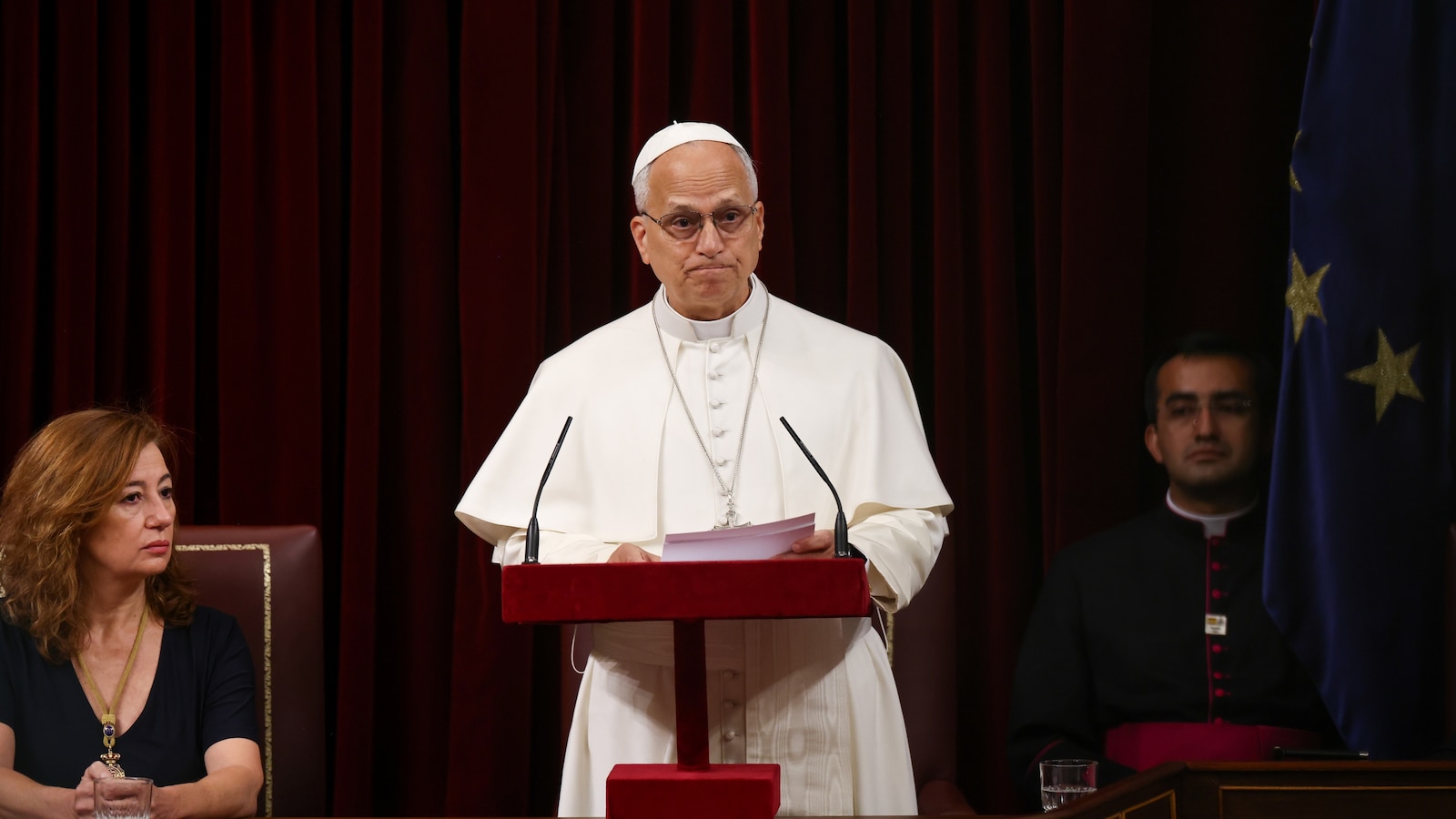
Pope Leo XIV Urges Respect for Migrant Rights and International Law in Historic Address to Spanish Parliament
Pope Leo XIV today delivered a landmark address to Spain’s parliament, calling for urgent respect for migrants’ rights and demanding stricter adherence to international law—a move that marks a historic shift in the Catholic Church’s public stance on global migration crises. In Madrid, where over 1 million gathered for his visit, the pontiff framed migration as a moral imperative, directly challenging governments to reform policies that criminalize or neglect displaced populations. The speech signals a broader push by the Vatican to redefine its role in geopolitical debates, particularly in Europe, where anti-immigration sentiment remains politically volatile.
Why This Address Matters: A Moral and Political Earthquake
Pope Leo XIV’s intervention is not merely symbolic. It arrives as Spain—Europe’s second-largest recipient of asylum seekers—faces mounting pressure from both domestic far-right factions and international bodies like the UNHCR, which has repeatedly criticized Spain’s asylum processing backlogs. The pontiff’s demand for “a just society that defends every human life” directly targets Spain’s 2025 Migration Security Act, which critics argue has led to increased deportations and reduced protections for vulnerable groups.
The timing is deliberate. With Spain hosting the EU Migration Summit in October 2026, the pope’s speech injects moral urgency into negotiations. His call for “solidarity over borders” aligns with the Vatican’s Magnifica Humanitas encyclical, released May 15, 2026, which warns of AI-driven surveillance expanding into migration enforcement—a direct critique of Spain’s use of biometric tracking systems at its North African borders.
“The Church cannot remain silent when laws are written in ink but enforced with indifference. Spain’s migration policies must reflect its Christian heritage—or risk becoming complicit in systemic abandonment.”
What Happens Next: Legal and Political Fallout
The pope’s remarks create a three-pronged challenge for Spain’s government:
- Legal Reckoning: The address forces a confrontation with Spain’s migration attorneys, who are already fielding inquiries from NGOs about potential human rights violations tied to deportation policies. “This is a game-changer for litigation,” says Dr. Elena Márquez, a migration law professor at the Complutense University of Madrid. “The Vatican’s moral authority now carries legal weight in European courts.”
- Diplomatic Pressure: The EU’s European Pillar of Social Rights could face renewed scrutiny. Spain’s refusal to align with the pope’s call risks isolating it from Vatican-backed humanitarian coalitions, particularly in Southern Europe.
- Domestic Backlash: Far-right parties, including Vox, have already condemned the speech as “foreign interference.” Their counter-mobilization could escalate, forcing Spain’s center-left government to either harden or soften its stance—a dilemma that will dominate the 2027 election cycle.
Regional Impact: Cities on the Front Lines
Spain’s migration crisis is not abstract. In Melilla and Ceuta, the North African enclaves where 90% of irregular border crossings occur, the pope’s words carry immediate weight. Local authorities are already scrambling to address:
- Infrastructure Strain: Melilla’s overburdened healthcare system treats an average of 1,200 migrants monthly—double the capacity foreseen in 2025. Hospitals are now partnering with international medical NGOs to bridge the gap.
- Economic Shifts: Barcelona’s migrant workforce—critical to sectors like agriculture and hospitality—faces new legal uncertainties. Employers are consulting labor attorneys to navigate potential penalties for hiring undocumented workers post-address.
- Social Tensions: In Madrid’s Lavapiés district, where 40% of residents are migrants, local councils are preparing for protests—both in support of the pope’s stance and in opposition. Community leaders warn of rising xenophobic incidents, requiring mediation services to preempt violence.
A Global Domino Effect: How This Reshapes Migration Policy
The pope’s intervention is part of a broader Vatican strategy to leverage moral authority in geopolitical conflicts. Since Magnifica Humanitas’s release, the Holy See has:
- Lobbied the UN Climate Summit to link migration to environmental displacement—a stance now echoed by Pope Leo XIV.
- Publicly criticized U.S. asylum restrictions, aligning with progressive Catholic bishops in Texas and California.
- Launched a global migration task force to monitor enforcement of the 1951 Refugee Convention.
Spain’s response will set a precedent. If the government ignores the pope’s call, it risks diplomatic isolation and legal challenges. If it complies, it may trigger a wave of similar demands from other European nations—particularly Italy and Greece—where migration crises are equally severe.
The Long Game: What’s at Stake for the Vatican
Pope Leo XIV’s address is not just about migrants. It’s about reclaiming the Church’s relevance in secular governance. By framing migration as a moral litmus test, the Vatican positions itself as a counterbalance to rising authoritarianism in Europe—a role it hasn’t openly pursued since the Cold War.

Yet the risks are clear. The pope’s intervention could:
- Accelerate secular backlash: In Poland and Hungary, where Catholic nationalism is weaponized, the address may be used to justify anti-Vatican rhetoric.
- Divide Catholic communities: In the U.S., pro-life bishops may clash with the pope over his emphasis on social justice over abortion rights, creating internal fractures.
- Force a reckoning with AI: The Magnifica Humanitas encyclical’s warnings about AI in border control will now be tested. Tech companies like Palantir—which sells surveillance tools to EU nations—may face boycotts from Catholic institutions.
“The pope has just issued an ultimatum: either Europe reforms its migration policies with a human-centered approach, or the Church will no longer remain silent. This is not charity—it’s a demand for justice.”
The Bottom Line: Who Wins and Who Loses
| Entity | Potential Gain | Potential Risk |
|---|---|---|
| Spanish Government | Diplomatic cover to reform asylum laws without far-right backlash. | Legal exposure if deportations continue under scrutiny. |
| EU Institutions | Moral leverage to push through harmonized migration policies. | Member states may resist Vatican-backed reforms. |
| Migrant Communities | Increased protections and public sympathy. | Far-right retaliation in host countries. |
| Vatican | Restored geopolitical influence as a moral arbiter. | Internal Catholic divisions over progressive stances. |
The pope’s words today are not just a speech—they’re a strategic gambit. For businesses, legal firms, and civic organizations navigating this shift, the message is clear: the migration landscape is changing, and those who act now—whether to adapt policies, expand services, or assess risks—will define the next era of global humanitarian work.
The question is no longer if Europe will reform its migration policies, but how quickly. And in that race, the Vatican has just dropped its first domino.