
New Cancer Chip Predicts Chemotherapy Success in Esophageal Cancer
A groundbreaking approach to personalized medicine may revolutionize the treatment of esophageal adenocarcinoma (EAC). This innovative “Cancer Chip” accurately forecasts patient responses to chemotherapy, offering hope for more effective and less toxic cancer care.
Predicting Chemotherapy Outcomes
Esophageal adenocarcinoma, a particularly deadly form of cancer, currently lacks effective targeted therapies. Patients typically receive chemotherapy, often before surgery, to shrink tumors. However, many become resistant, leading to poor outcomes. The absence of tools to predict a patient’s response to chemotherapy is a critical unmet need.
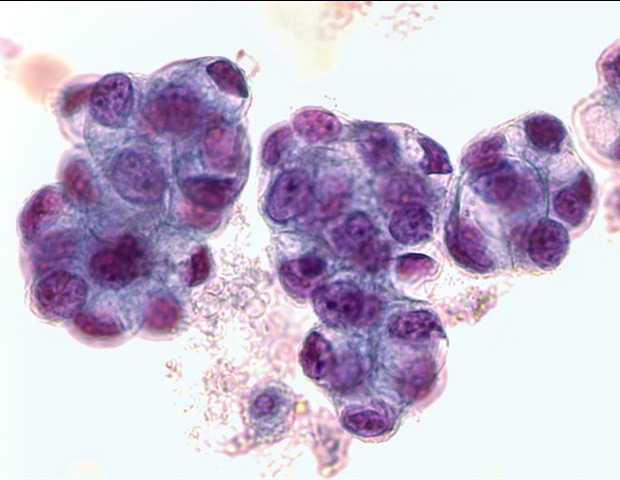
Researchers, including Donald Ingber at Harvard’s Wyss Institute and Lorenzo Ferri from McGill University, developed a personalized medicine solution using human Organ Chip technology. This technology co-cultures EAC organoids alongside stromal cells taken from patient biopsies to create patient-specific Cancer Chip models. These chips mimic the tumor microenvironment, improving the accuracy of chemotherapy response predictions compared to traditional 3D organoid models.
The Cancer Chip approach can stratify patients quickly, within twelve days, into responders and non-responders. It also facilitates exploration of different chemotherapy agents for resistant patients in a clinically useful time frame. The findings were reported in the *Journal of Translational Medicine*.
“This patient-centered approach strongly builds on our previous successes using human Organ Chip technology to recapitulate each individual cancer patient’s TME outside their body so that we can identify the drug combination that will work best for that very patient.”
—Donald Ingber, Founding Director at the Wyss Institute for Biologically Inspired Engineering at Harvard University
In the United States, the five-year survival rate for patients diagnosed with esophageal cancer is only 20% (American Cancer Society, 2023).
Modeling Esophageal Pathologies
The teams of Ingber and Ferri previously collaborated in 2023 on a study modeling Barrett’s esophagus. Barrett’s esophagus is a potential precursor to EAC. The disease results from pathological changes to the esophageal lining. These changes begin with inflammation, often induced by acid reflux, and continue through tissue transformation. This transformation creates stomach-like tissue, ultimately leading to cancer.
Elee Shimshoni, who worked with Ingber, said: “Only by reconstituting key components of the TME and mimicking some of its fluid flows, were we able to achieve physiologically relevant drug exposure, and to accurately predict patient-specific responses to NACT in personalized EAC Chips. This could not be done using cancer organoids.”
From Patients to Cancer Chips and Back
The team created their TME-mimicking EAC Chips by generating personalized EAC organoids from biopsies of newly diagnosed patients. Sanjima Pal and colleagues at McGill University were able to make patient-matched esophageal organoids. Next, they broke up the organoids, cultured the cells in channels of a microfluidic chip, and added tumor-associated fibroblasts from the same patients to form a tumor stroma. A porous membrane allowed the cancer and stromal tissues to exchange molecules, replicating the actual tumor environment. Then, the researchers added a docetaxel-based chemotherapy cocktail into the nutrient fluids that flowed through the stromal channel, matching chemotherapy cycles in EAC patients.
For a cohort of eight patients, the EAC Chips accurately predicted responses to neoadjuvant chemotherapy within 12 days. The chemotherapy killed the EAC cells in four chips, while the cells survived in the others. These results mirrored the patients’ actual responses and their survival rates after tumor removal surgery. The research was funded by a Cancer Research UK Grand Challenge STrOmal ReprogramMing (STORMing Cancer) grant.
