
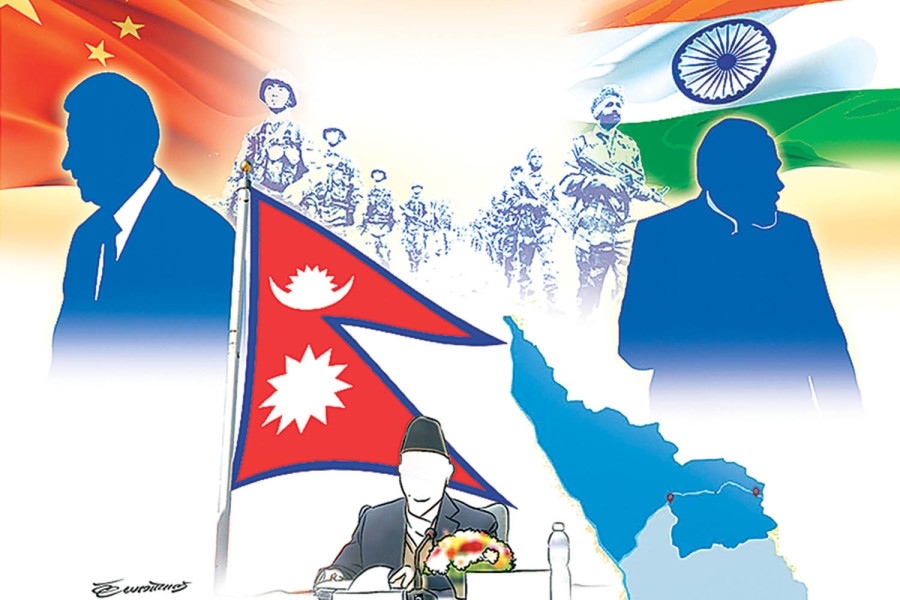
Nepal’s Prime Minister Oli Faces Criticism for Alignment with China at Recent International Events
Beijing, China – Nepal’s Prime Minister K.P. Sharma Oli is facing scrutiny following his recent visit to China and participation in events signaling a closer alignment with Beijing, possibly impacting Nepal’s longstanding policy of strategic autonomy.
Oli attended the Shanghai Cooperation Organisation (SCO) summit in China and publicly supported China’s Global Security Initiative. He also participated in a military parade commemorating the 80th anniversary of the victory in the Chinese People’s War of Resistance against Japanese Aggression and the World Anti-Fascist War.
The parade, described by The New York Times as “a rare gathering of autocrats who have positioned themselves in opposition to the U.S.-led world order,” featured leaders from countries challenging the Western-led international system. Major Western democracies notably abstained from the event. Oli was among 25 heads of state present.
Analysts suggest Nepal’s participation in the parade places the nation firmly within a camp opposed to the West,the US,and Japan,creating a difficult path toward re-establishing trust with Western nations. China is expected to view Nepal’s presence as a meaningful show of support.
The move raises questions about Nepal’s ability to maintain its stated policy of strategic autonomy, requiring increased efforts to reassure Western partners.Concerns are also being raised that Nepal must secure tangible developmental benefits from its relationship with China to justify its current posture.
Pro-China factions within Nepal have argued that improved Sino-Indian relations would alleviate rivalry within Nepal. However, experts contend that despite a seeming thaw, structural tensions between India and China will likely persist, and their rivalry in Nepal will continue, at least in the short term.India is currently pursuing a policy of strategic autonomy, utilizing relationships with both Russia and China to advance its interests.Critics argue that Oli’s foreign policy appears driven by personal considerations rather than national needs, and express concern over the alignment of the Nepali Congress with these strategies. The situation necessitates a reassessment of Nepal’s foreign policy, prioritizing national security, economic growth, and a global order aligned with Nepal’s interests.
