
“`html
Malaria Diagnosis Faces Growing Threat from Gene Deletions, New Modeling Shows
Table of Contents
A new global risk assessment reveals a concerning trend: deletions in the plasmodium falciparum histidine-rich protein 2 and 3 (pfhrp2/3) genes are increasingly jeopardizing the accuracy of rapid diagnostic tests (RDTs) for malaria. Researchers warn that the spread of thes deletions could substantially undermine malaria control efforts worldwide.
The study, published in Nature Microbiology, utilizes advanced modeling to predict the future prevalence of these gene deletions and their impact on diagnostic capabilities. This research highlights the urgent need for proactive surveillance and the development of alternative diagnostic strategies.
The Challenge with pfhrp2/3 Deletions
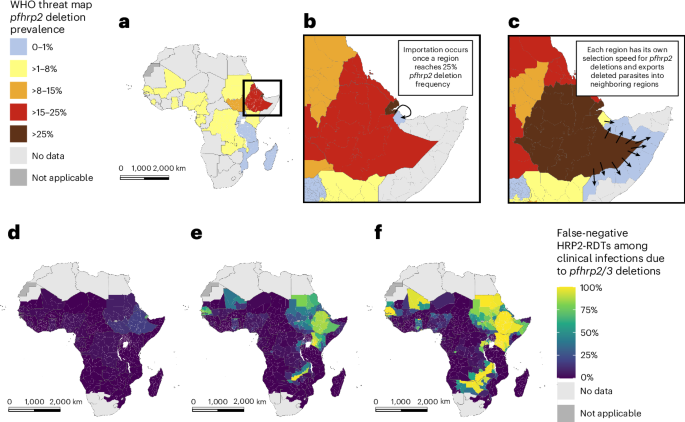
Rapid diagnostic tests are a cornerstone of malaria diagnosis, particularly in resource-limited settings. These tests detect the presence of the pfhrp2/3 protein, a parasite antigen. However, naturally occurring deletions in the genes encoding this protein render the tests ineffective, leading to false-negative results. A false negative can delay treatment and contribute to the spread of the disease.
The deletions are spreading, and the modeling suggests this trend will continue. The study emphasizes that the deletions aren’t uniform; different deletion patterns exist, further complicating diagnostic development.
Global Risk Assessment Through Modeling
Researchers led by O.J. Watson and colleagues conducted a extensive analysis of available data on pfhrp2/3 deletions from across the globe. They than employed complex modeling techniques to project the future risk of these deletions impacting RDT performance. The modeling incorporated factors such as parasite genetic diversity, population movement, and drug resistance patterns.
Their findings indicate a substantial risk of widespread diagnostic failure in several key malaria-endemic regions. Specifically, areas in Africa and Southeast Asia are predicted to experience a meaningful increase in the prevalence of pfhrp2/3 deletions within the next decade. The study points to a potential for diagnostic inaccuracy to rise above ten percent in some areas.
Implications for Malaria control
The increasing prevalence of pfhrp2/3 deletions poses a serious threat to malaria elimination efforts. Accurate diagnosis is crucial for effective treatment and surveillance. false-negative results can lead to underreporting of cases, hindering targeted interventions and perhaps fueling outbreaks.
The researchers advocate for enhanced surveillance of pfhrp2/3 deletions to track their spread and inform diagnostic strategies. Investment in the development of alternative diagnostic tools that do not rely on the pfhrp2/3 protein is also critical. These alternatives include tests targeting other parasite antigens or utilizing molecular diagnostic techniques like PCR.
Malaria remains one of the world’s most devastating infectious diseases, disproportionately affecting children and pregnant women in sub-Saharan Africa. Despite significant progress in recent decades, the fight against malaria is facing new challenges, including the emergence of drug-resistant parasites and the increasing threat of diagnostic inaccuracies. Continued research and innovation are essential to overcome these obstacles and achieve malaria elimination.
Frequently Asked Questions about pfhrp2/3 Deletions and Malaria Diagnosis
- Q: What are pfhrp2/3 deletions?
A: These are naturally occurring genetic changes in the Plasmodium falciparum parasite that remove parts of the genes responsible for producing the pfhrp2/3 protein, which is detected by many malaria rapid diagnostic tests. - Q: How do pfhrp2/3 deletions affect malaria diagnosis?
A: When the parasite lacks the pfhrp2/3 protein due to these deletions, the rapid diagnostic test will give a false-negative result, meaning it incorrectly indicates that someone does not have malaria.
