
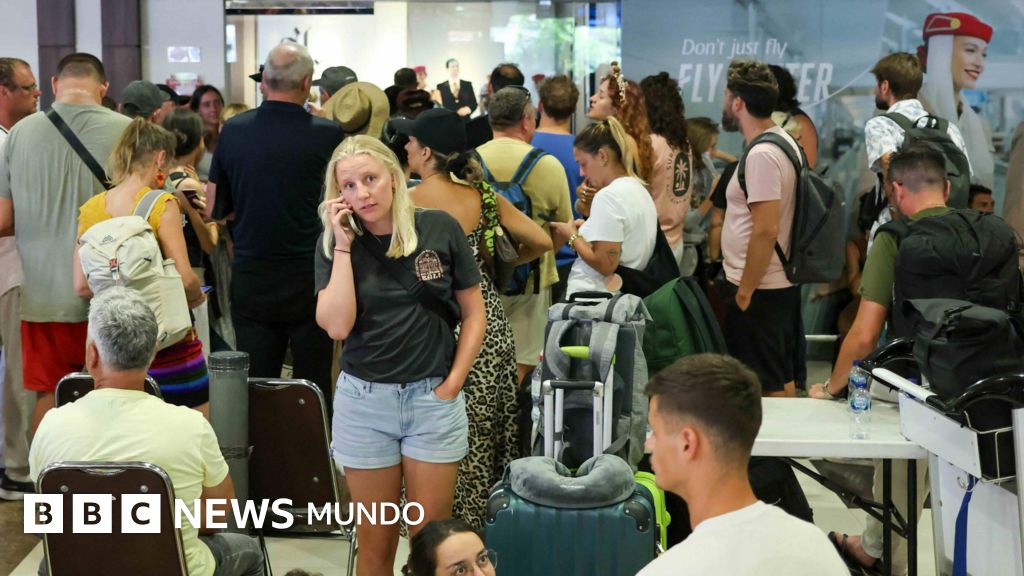
Flights remain grounded and thousands of passengers stranded across the Gulf region as the fallout from coordinated strikes between the United States and Israel against Iran continues. Dubai International Airport, the world’s busiest for international traffic, cancelled 100% of its operations on Sunday and has only begun a slow resumption of flights on Monday.
The disruption to air travel has been widespread, with regional airlines including Etihad, Emirates and Qatar Airways cutting between 30% and 41% of their total flights, according to reports from the Agence France-Presse. Flightradar24 data, reported Tuesday, shows several flights departing the United Arab Emirates, routing south to avoid the Gulf airspace entirely. Reuters reports this represents the most significant disruption to air traffic since the onset of the COVID-19 pandemic in 2019.
Cancellations remained high on Tuesday, concentrated at airports in Dubai, Tel Aviv, Bahrain, Doha, and Abu Dhabi, according to Flightaware. Dubai Airport alone cancelled 413 departing and 424 arriving flights on Tuesday. Israel has maintained the closure of Ben Gurion Airport in Tel Aviv until Wednesday, initially operating with only one passenger flight per hour. Traffic is being diverted to Riyadh, the capital of Saudi Arabia, increasing passenger volume at that terminal.
The crisis has led to a surge in ticket prices, with fares increasing from typical ranges of 500 to 800 euros to as high as 5,000 or 6,000 euros, according to a French merchant interviewed by Reuters.
Several European nations have initiated evacuation plans for their citizens in the region. French Foreign Minister Jean-Noel Barrot stated that approximately 400,000 French citizens are in the dozen countries affected by the conflict, including residents and individuals with dual nationality. France is preparing charter flights for the most vulnerable citizens. Germany announced Monday the deployment of aircraft to Saudi Arabia and Oman to evacuate around 30,000 German citizens stranded in the region. The United Kingdom and Spain have also announced the deployment of humanitarian flights to evacuate their citizens.
The United States has reported that approximately 9,000 American citizens have returned home in recent days, including 300 from Israel. The State Department confirmed This proves actively securing humanitarian flights from Saudi Arabia, the United Arab Emirates, and Jordan. Commercial aviation options remain available in Saudi Arabia, the United Arab Emirates, Oman, and Egypt, and the State Department is assisting American citizens in booking those flights.
On March 1, 2026, images emerged showing the impact of strikes in Tehran, Tel Aviv, and Dubai, according to Euronews.com. The BBC reported on March 2, 2026, that nine people were killed in a missile attack on the Israeli city of Beit Shemesh, and one person was killed in Abu Dhabi, capital of the United Arab Emirates, with another death reported in Kuwait. Al Jazeera reported on March 4, 2026, that the US and Israel continue to strike Iran and Lebanon, disrupting oil flows in the Middle East.
