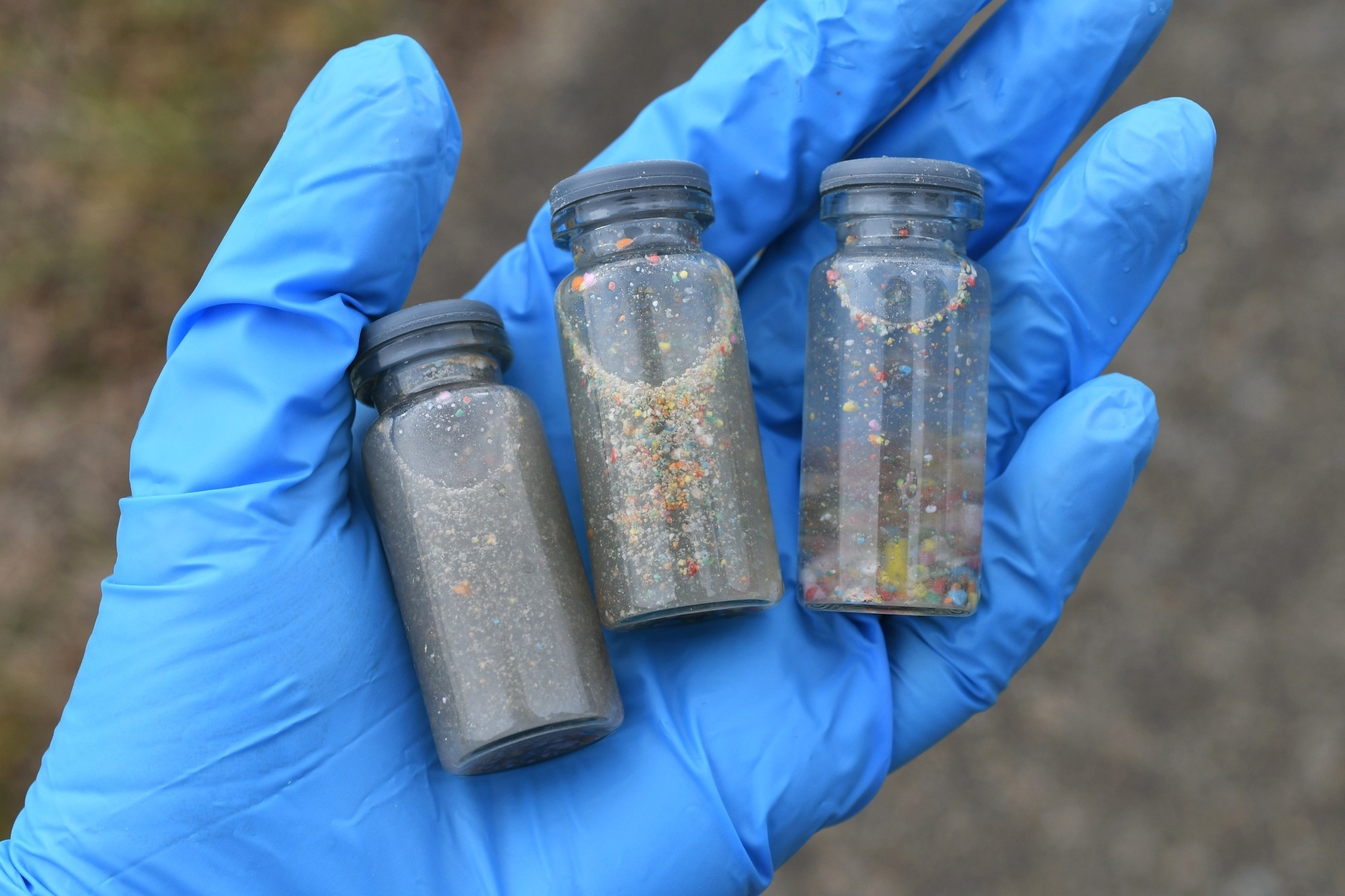
Microplastics Generate Reactive Radicals and Damage Cells in Water
Commodity microplastics spontaneously generate reactive oxygen species and alter protein structures upon water contact, challenging the long-standing assumption that these polymer fragments are chemically inert in biological and environmental systems. According to a study published in the journal Nature, researchers observed that polyethylene, polypropylene, and other common plastics actively produce hydroxyl radicals at their liquid interfaces.
- Commodity microplastics under 5.0 mm spontaneously generate reactive oxygen species, including hydroxyl radicals, upon contact with water.
- Laboratory experiments linked hydrophobic polymer surfaces to increased protein aggregation and red blood cell alterations like schistocytes.
- Surfactant coatings and radical scavengers mitigated these interfacial reactions, providing a baseline for investigating potential cellular injury.
Microplastic Surface Chemistry Generates Hydroxyl Radicals
Researchers examined six common polymer types: polypropylene, polyethylene, polyvinyl chloride, polystyrene, polyethylene terephthalate, and polymethyl methacrylate. Using molecular dynamics simulations and ab initio calculations, the team investigated how microplastic surface chemistry interacts with interfacial water. Vertical ionization energy calculations demonstrated the energy required for hydroxide ions to lose an electron and form hydroxyl radicals. Electron spin resonance spectroscopy and confocal microscopy confirmed that radical production continues over time and increases with surface hydrophobicity. Polymethyl methacrylate, the most hydrophilic polymer tested, showed the lowest interfacial activity. Conversely, polyethylene exhibited a more negative zeta potential and a larger low-vertical ionization energy population, confirming that polymer structure dictates interfacial reactivity.
Biomolecular Adsorption and Cellular Stress Experiments
Laboratory assessments revealed that these reactive interfaces attract charged biomolecules and induce physical changes in cellular components. Positively charged proteins such as wheat germ agglutinin and negatively charged ones like R-phycoerythrin accumulated on hydrophobic polypropylene surfaces. When lysozyme was introduced to buffered solutions containing polystyrene particles, fluorescence measurements confirmed protein aggregation over time. Adding caffeine as a radical scavenger or applying a Triton X-100 surfactant coating reduced these aggregation markers.
Open Questions Regarding Human Health Impacts
The detection of microplastics in human tissues and environmental samples shows that researchers must define their biological activity. Further investigations must determine if continuous radical generation at polymer interfaces contributes meaningfully to clinical pathology, or if biological defense mechanisms mitigate these interfacial reactions in living organisms.
Disclaimer: The information provided in this article is for educational and scientific communication purposes only and does not constitute medical advice. Always consult with a qualified healthcare provider regarding any medical condition, diagnosis, or treatment plan.
