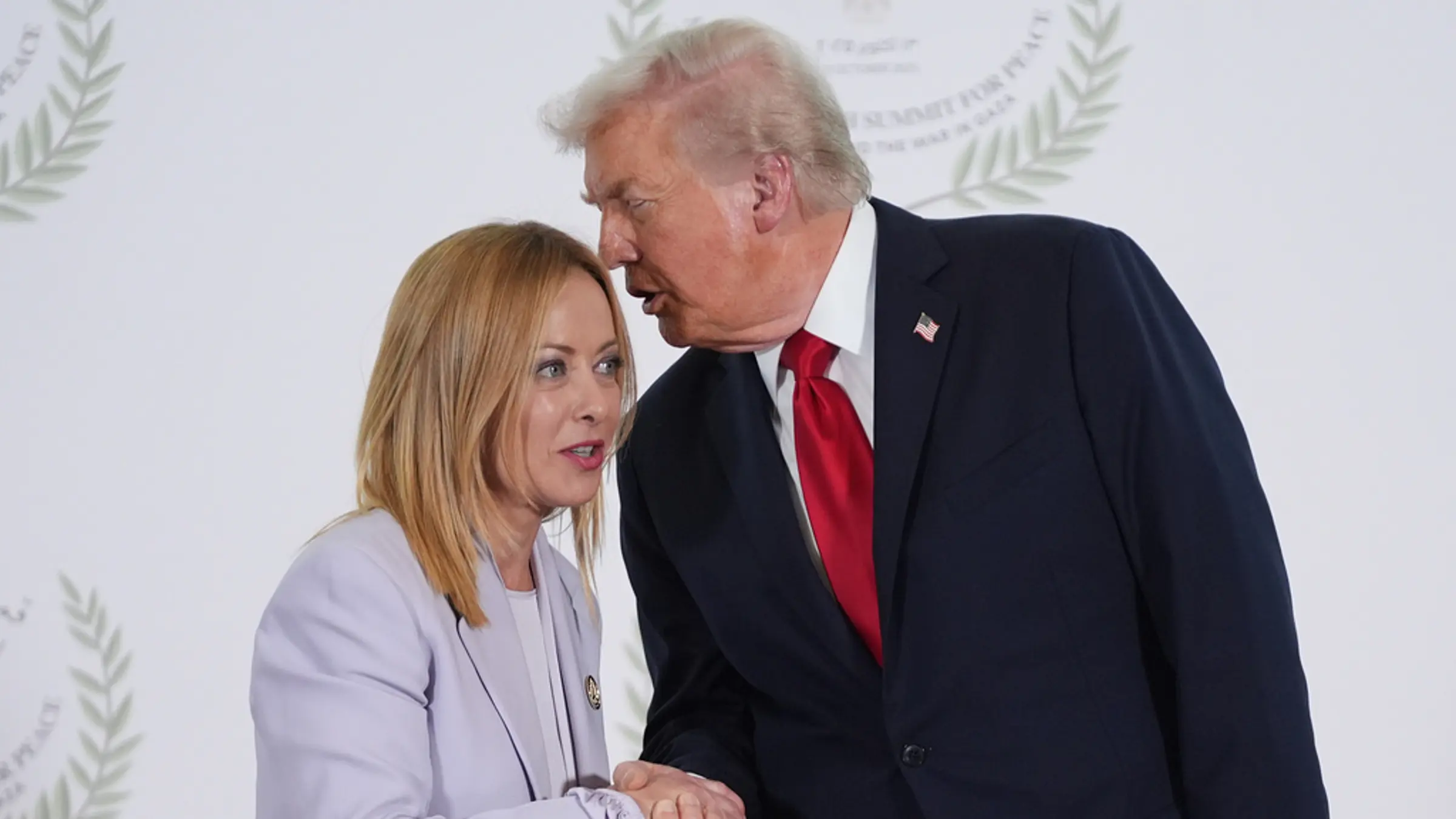
Meloni vs. Trump: How a Photo Became the Latest Flashpoint in Their Feud
U.S. President Donald Trump and Italian Prime Minister Giorgia Meloni are engaged in a public diplomatic standoff following Trump’s claims that Meloni “begged” for a photo during the June 2026 G7 Summit. The dispute, which has triggered a formal protest from the Italian government, highlights the deteriorating relationship between the two nations.
The Origins of the Diplomatic Rift
The conflict escalated on June 19, 2026, when President Trump told Italian broadcaster La7 that Meloni’s request for a photograph was born of desperation regarding her low domestic approval ratings. Trump alleged he only agreed to the photo op because he “felt sorry” for the Italian leader. This sentiment was echoed on his Truth Social platform, where he suggested Meloni’s political struggles were a direct result of her refusal to align with U.S. military objectives in the Middle East.
Meloni, who rose to power in 2022, rejected the narrative entirely. “Italy and I never beg,” she stated in a video released on X on June 19. The Prime Minister characterized the President’s comments as “completely fabricated,” marking an aggressive shift in tone for a leader once colloquially referred to as Europe’s “Trump Whisperer.”
Political Fallout and International Consequences
The impact of this rhetoric has been immediate. Italian Foreign Minister Antonio Tajani canceled a scheduled diplomatic mission to the United States this weekend, signaling a cooling of bilateral ties. The incident follows months of mounting friction. In March 2026, the Italian government denied U.S. military aircraft access to the Sigonella air base in Sicily, a move widely interpreted as a protest against the U.S. campaign against Iran.

“Whoever attacks Giorgia Meloni, attacks all of us,” said Deputy Prime Minister Matteo Salvini in a statement on X.
This public hostility creates a complex environment for Italian businesses and citizens with interests in the United States. As trade and defense protocols face potential disruption, organizations often turn to International Trade Legal Consultants to assess the risk of shifting diplomatic sanctions or export restrictions. The uncertainty surrounding the U.S.-Italy alliance, once characterized by the close alignment of the two populist leaders, now threatens to complicate long-term defense and commercial contracts.
Historical Context: From Inauguration Guest to Critic
The current hostility is a marked departure from 2025, when Meloni was the sole European leader to attend Trump’s presidential inauguration. The relationship was previously bolstered by symbolic gestures, including the promotion of Meloni’s autobiography by Donald Trump Jr. and a foreword penned by Vice President J.D. Vance for her 2026 publication, Giorgia’s Vision.
However, the G7 Summit in Évian-les-Bains served as the site of a visible breakdown. Reports from diplomatic sources confirm that Meloni openly challenged Trump’s claims of abandonment by Western allies. When European Council President António Costa remarked that the pair appeared to be “friends again,” Trump’s sharp reply—“I was abandoned”—was met with an immediate, public refutation from Meloni.
Domestic Pressures and Strategic Realignment
Meloni’s domestic standing has faced significant headwinds, particularly following the defeat of a government-sponsored referendum on justice reform in March 2026. Political analysts suggest that the Italian electorate has become increasingly wary of the government’s proximity to the White House, especially as Trump’s military actions in the Middle East have drawn global condemnation, including from Pope Leo XIV.
The diplomatic friction extends beyond Italy. Trump has reportedly clashed with other key allies, most notably Israeli Prime Minister Benjamin Netanyahu, over the management of peace negotiations. For multinational firms operating in the Mediterranean, the instability is a significant concern. Many are now engaging Geopolitical Risk Assessment Firms to navigate the volatility caused by these high-level personality clashes.
The Path Forward for Italian Sovereignty
Meloni has attempted to reframe the narrative, asserting that her popularity is tied to her defense of Italian national interests rather than her relationship with Washington. “My popularity is none of your concern,” Meloni remarked in a social media post on June 20. “I suggest you focus on yours.”

The opposition in Italy, while often critical of Meloni’s policies, has largely rallied behind her in this instance. Filippo Sensi, a senator for the Democratic Party, noted that the tone adopted by the U.S. President is unacceptable when dealing with the head of a G7 government. This rare moment of domestic unity suggests that the diplomatic spat may actually provide a temporary boost to Meloni’s standing as she prepares for a difficult reelection cycle in 2027.
As the rhetoric continues to sharpen, the underlying issue remains the shifting power dynamics between the United States and its European partners. Companies and institutions caught in the middle of these policy shifts should prioritize due diligence. Connecting with Government Relations and Lobbying Groups is essential for those seeking to maintain operational continuity in an era where personal grievances between leaders can dictate the terms of international cooperation.
The stability of the transatlantic alliance now hinges on whether these leaders can move past the current impasse or if the rift will widen, forcing European capitals to further distance themselves from the current administration in Washington.
- Trump and Ramaswamy Defend Controversial Amy Acton Campaign Ad
- Lula Defeats Flávio Bolsonaro in October 2026 Presidential Runoff
- What Trump's Housing Order Means for a $360,000 Loan at 7.32% (daybreakwire.com)
- China-Indonesia Photo Exhibition in Jakarta Highlights Deepening Friendship and Cooperation (archyde.com)