
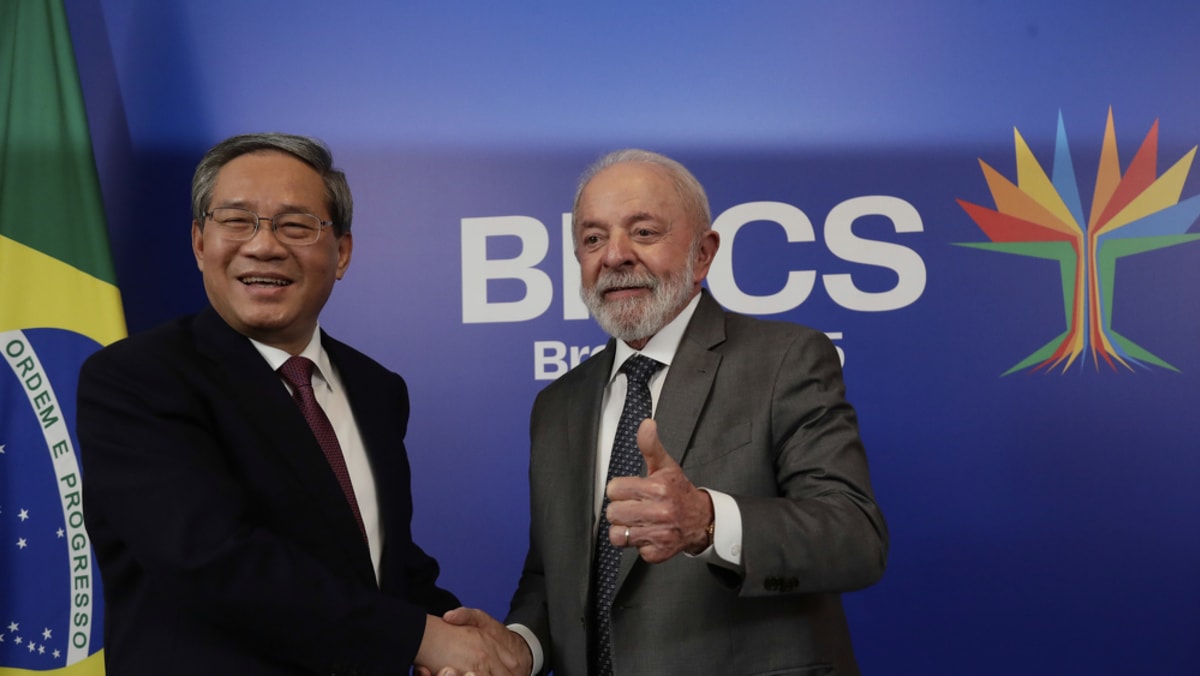
BRICS Leaders Convene, Seek Reformed World Order
Leaders from BRICS nations are meeting in Rio de Janeiro, advocating for changes to established Western institutions. The bloc aims to present itself as a champion of multilateralism amid global divisions.
BRICS Aims to Fill Global Leadership Vacuum
With groups like the G7 and G20 facing internal disagreements and the “America First” policies of former US President Donald Trump, the expansion of BRICS offers new opportunities for international cooperation.
Luiz Inacio Lula da Silva, the Brazilian President, addressed a BRICS business forum on Saturday, stating, “In the face of the resurgence of protectionism, it is up to emerging nations to defend the multilateral trade regime and reform the international financial architecture.”
Representing more than half the world’s population and 40% of the global economic output, BRICS nations are becoming a considerable force, a point emphasized by Lula.
Expansion and Participation
Originating in 2009 with Brazil, Russia, India, and China, the BRICS group later incorporated South Africa. In the past year, Egypt, Ethiopia, Indonesia, Iran, Saudi Arabia, and the United Arab Emirates were included as full members. This summit marks the first time Indonesia has been represented at the leaders’ level.
According to one Brazilian diplomat, “The vacuum left by others ends up being filled almost instantly by the BRICS.”
This source noted that the G7’s influence is diminishing, even though it still holds significant power.
Challenges and Notable Absences
The increasingly diverse BRICS group faces questions regarding its members’ shared objectives, especially with the inclusion of regional rivals and major emerging economies. For example, Saudi Arabia and Iran have a history of regional tensions. Despite these challenges, over 30 countries have expressed interest in joining or partnering with the BRICS alliance.
Adding to the summit’s complexities, Xi Jinping, the Chinese President, chose to send his prime minister instead, and Vladimir Putin of Russia is participating online due to an International Criminal Court arrest warrant.
Key Attendees
Despite some notable absences, several heads of state, including Indian Prime Minister Narendra Modi and South African President Cyril Ramaphosa, are expected to participate in discussions at Rio’s Museum of Modern Art.
Despite challenges, the BRICS economic output is projected to increase to 50% of the world’s GDP by 2030, signaling its growing influence on the global stage (Statista).
