
Japan Extends Global Reach with Historic ‘atlantic Eagles’ Deployment
Teh sight of fighter jets in foreign airspace can understandably cause concern, but more often than not, these movements are part of carefully planned training exercises. these exercises are crucial for maintaining readiness,fostering interoperability between allies,and honing the skills necessary for collective defense. In September 2025, a meaningful demonstration of this occurred when Japan’s Air Self-Defense Force (JASDF) deployed personnel and aircraft to Europe for the first time, basing operations at the British Royal Air Force’s (RAF) Coningsby base.
This deployment, dubbed “Atlantic Eagles,” was more than just a visit. It represented a concerted effort by Japan to demonstrate its commitment to international security and strengthen ties with key allies,including the United Kingdom,Germany,Canada,and the United States. The mission, described by Japan’s Air Self-Defense Force as a “friendly visit to North America and Europe” [[1]], served as a clear signal of cooperation and a visible display of collective strength, intended to deter potential adversaries. Considering Japan possesses [[1]] one of the world’s largest air forces, the scale of the deployment was notably significant.
A multi-Nation Exercise: Aircraft and Locations
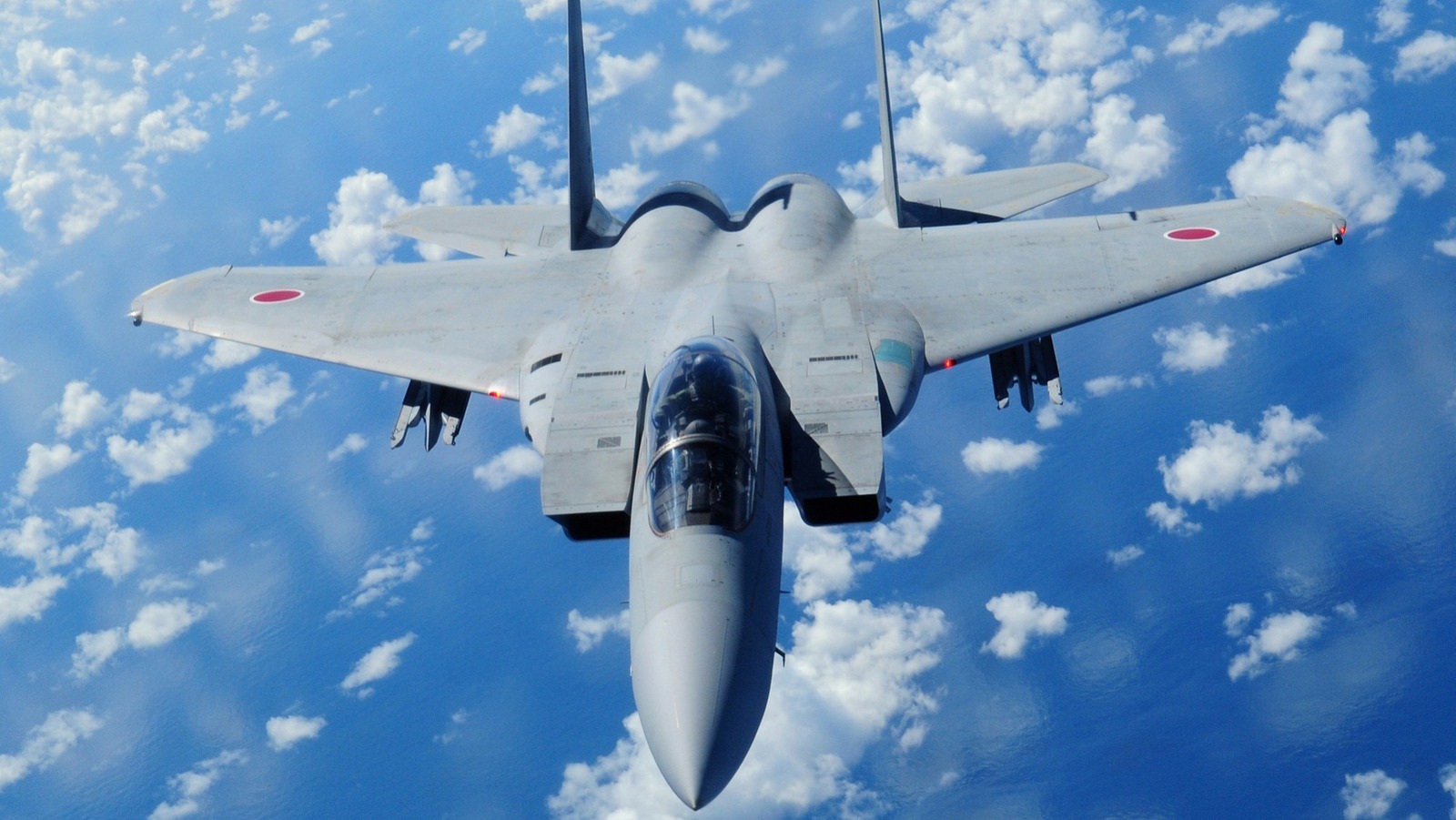
The “Atlantic Eagles” mission involved approximately 180 personnel and eight aircraft from various units within the JASDF, including the 1st and 3rd Tactical Airlift Wings, the 2nd Tactical Airlift Group, and the 2nd Air Wing [[2]].The core of the fighter element consisted of four F-15J Eagles,iconic aircraft known for their air superiority capabilities.
These weren’t the only aircraft involved. Supporting the F-15Js were two Kawasaki C-2 long-range transport aircraft – a domestically produced asset that has been in service with the JASDF since 2017 – and a pair of tankers crucial for extending the range of the fighters: the Boeing KC-46A Pegasus and the KC-767. The deployment wasn’t limited to the UK; joint training operations also took place at Laage Air Base in Germany, CFB Goose Bay in Canada, and Eielson Air Force Base in Alaska.As Japan Air Self-Defense Force Chief of Staff General Morita Takehiro emphasized, the mission was symbolic: “We have named this mission ‘Atlantic Eagles,’ symbolising our F-15 jets spreading their wings across the Atlantic” [[2]].
Importance of the F-15J eagle
The F-15J Eagle is a Japanese-built variant of the renowned American F-15 Eagle. It has been the backbone of the JASDF’s air defense capabilities for decades, offering remarkable performance in air-to-air combat. While newer aircraft like the F-35A Lightning II are entering service, the F-15J remains a vital component of Japan’s air power. The deployment of the F-15J to Europe highlighted not only Japan’s ability to project power globally but also its commitment to interoperability with NATO forces. [[3]]
Expanding Security Partnerships and Future implications
The “Atlantic Eagles” mission marked a watershed moment in japan’s defense strategy. Prior to this deployment, the JASDF had never conducted operations in Europe or Canada [[3]].This ancient first underscores Japan’s growing willingness to take on a more assertive role in global security affairs,moving beyond its conventional focus on regional defense.
The exercise provided a valuable opportunity to refine tactics, techniques, and procedures with NATO allies, boosting interoperability and strengthening the collective ability to respond to potential threats. It also served as a powerful message to potential adversaries, demonstrating the strength and resolve of the international community.
Looking ahead, the “Atlantic Eagles” deployment is likely to pave the way for even closer defense cooperation between Japan and its allies. Further joint exercises, personnel exchanges, and technology collaborations are anticipated, solidifying the bonds of friendship and enhancing the collective security of the transatlantic region. The mission signals a new era of Japanese engagement on the world stage, highlighting its commitment to maintaining peace and stability in an increasingly complex global landscape.
