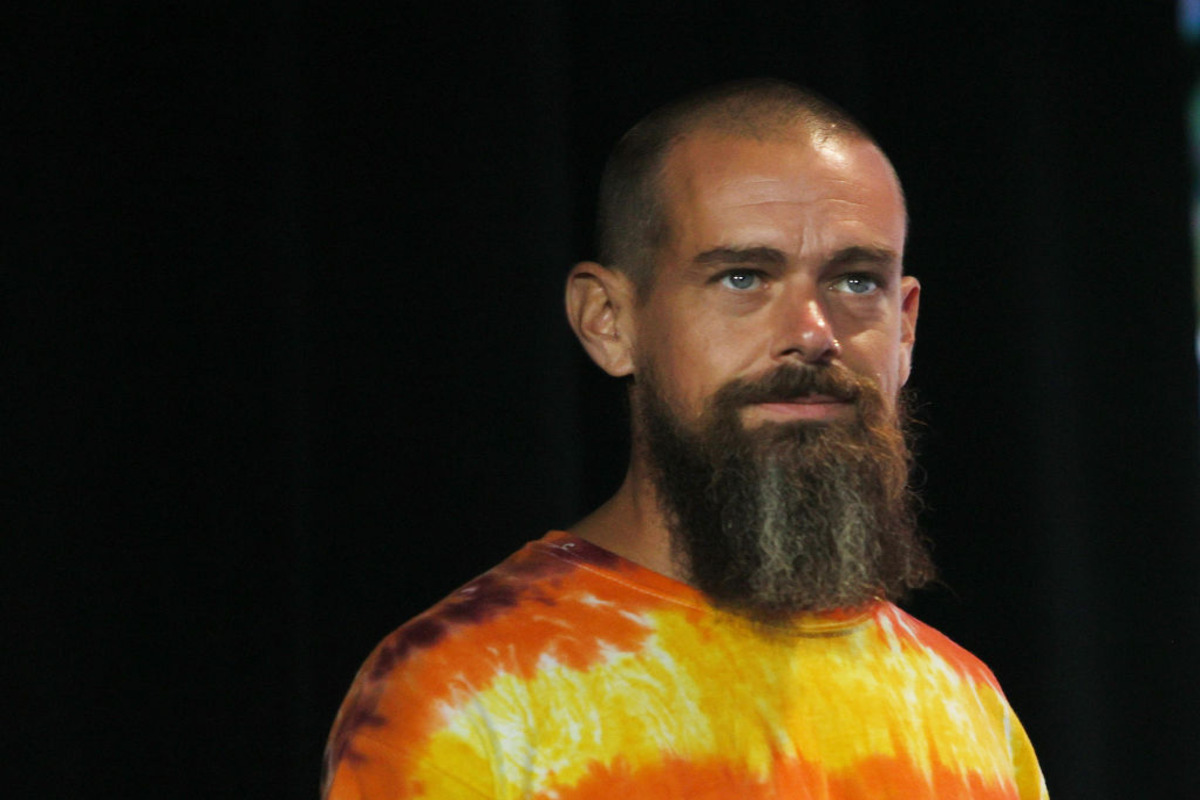
Jack Dorsey at 50: How Twitter Began on a Playground Slide
Jack Dorsey turns 50 today, on Thursday — and the pitch that became Twitter was delivered sitting on a playground slide in San Francisco’s South Park, City AM reported.
Twenty years on, the platform he sketched that lunchtime is X.
The Tech TL;DR:
- Dorsey pitched the SMS-based idea that became “twttr” during a 2006 brainstorming break at podcast startup Odeo, City AM reports.
- The first tweet went out at 12:50 pm PST on March 21, 2006; the service opened to the public on July 15 that year.
A slide in South Park, a pitch about SMS
The setting, per City AM’s account by writer and historian Eliot Wilson, was a children’s playground in South Park itself, in the South Beach area of San Francisco. The neighborhood had been dubbed “Multimedia Gulch” in the 1990s for its density of tech firms, and by the mid-2000s it was resurgent after the dot-com crash of 2000.
Three employees of Odeo — a podcast publishing and aggregation platform founded by Evan Williams and Noah Glass in July 2005 — had broken from a brainstorming session with burritos. Apple had just integrated podcast support into iTunes, squeezing Odeo’s core business, so the company needed a pivot.
Dorsey, then 29, was with Dom Sagolla, a 32-year-old software engineer from Hackensack, New Jersey, and Florian Weber, Odeo’s Ruby on Rails engineer, previously working remotely from Hamburg.
Dispatch routing was the original problem
Dorsey’s fascination predated the playground. He had spent two years studying computer science and mathematics at the University of Missouri-Rolla before transferring to New York University, then dropped out a semester before graduating. His niche interest was dispatch routing — how companies assign employees, vehicles or services to customers fastest — and, growing up in St Louis, he had listened to police dispatchers processing the city’s flow of information.
His pitch on the slide was characteristically constrained: use ordinary SMS technology, tried and tested by 2006, to communicate within a small, defined group. Glass supplied the name — “twttr”, five characters, the same length as American SMS short codes, and a nod to Flickr, the image-hosting platform launched two years earlier.

The project started in February 2006 and took a matter of weeks. Dorsey published the first tweet — “just setting up my twttr” — at 12:50 pm PST on March 21. After an internal trial with Odeo employees, the service opened to the public on July 15, and Williams paid $7,500 for the previously occupied domain name. Twttr became Twitter.
What the numbers say now
The platform’s economics have never been simple. City AM reports Dorsey’s current net worth at an estimated $7.2 billion.
User counts are disputed: City AM cites 421 million users in 2023 — roughly one in 20 of the global population — while some claims put the 2024 figure as high as 600 million, which would be one in 14. urgent.news, drawing on the same reporting, describes Twitter as having grown to over 421 million users and become “a significant part of our social architecture.”
| Figure | Value | Source |
|---|---|---|
| Domain name cost, 2006 | $7,500 | City AM |
| Users in 2023 | 421m | City AM |
| Claimed users in 2024 | up to 600m | City AM |
Williams, who funded the domain purchase, captured the product’s oddness at birth. “They called it a social network, they called it microblogging, but it was hard to define, because it didn’t replace anything,” he said, per City AM. “There was this path of discovery with something like that, where over time you figure out what it is.”
From dispatch routing to platform governance
The technical core Dorsey proposed — short, timestamped messages fanned out to subscribers — scaled into infrastructure that now shapes political communication. City AM notes Musk has demonstrated that X can be “an immensely powerful tool of propaganda,” because of what he can hold back or prioritize as owner, but also that the platform was “no fluke, nor a licence to print money.”
The first tweet, as an API object
The platform’s origin artifact is itself a data structure. The first status — “just setting up my twttr”, posted March 21, 2006 — is the canonical example of the status payload every client since has parsed: an author, a timestamp, and 140 characters of text. In modern terms, a retrieval against a status endpoint returns fields Dorsey’s original Ruby on Rails prototype would recognize:
curl -s "https://api.example.social/2/tweets/20"
  -H "Authorization: Bearer $TOKEN"

{
  "data": {
    "id": "20",
    "text": "just setting up my twttr",
    "created_at": "2006-03-21T20:50:10.000Z",
    "author": "jack"
  }
}
The schema barely changed for 16 years — a constraint-driven design that outlived its creators’ ownership of it. Constraint, in this case, was the feature: SMS’s 160-character limit, minus four reserved for the username, set the ceiling that forced the format’s clarity.
Created need, contested ownership
City AM’s argument is that Twitter created rather than fulfilled a consumer need — not the wheel or the lightbulb, but something that persuaded customers they had always wanted it. Skeptics initially could not see what need it filled or how it could be monetized.
Wilson’s framing, published Wednesday, is that the platform went from “a man fascinated by the coordination of services and delivery, to one of the fiercest battles of the soi-disant culture wars, overseen by one of its most erratic generals.”
City AM recalls David Cameron’s warning in 2009 — “Too many tweets might make a twat” — a line that aged better as comedy than as forecast.
Musk fought from April to October 2022 to complete the purchase, took the write-down, and has since rebranded the service X — more than three years ago now. Whether the platform’s next two decades resemble its first is, as City AM puts it, something “we still don’t” know.
Dorsey, born in St Louis, Missouri, in 1976, had already tried to build the idea once before Odeo: in 2000 he started a company in Oakland to dispatch couriers, taxis and emergency services from the Web.
When Twitter was founded in 2007 he became its chief executive, only to lose the post in 2008 — reportedly for leaving work early to pursue interests such as yoga and fashion design, having also worked as a fashion model in his younger days. He returned as permanent CEO in October 2015.
His career has since stretched beyond social media: he co-founded Block, Inc., the financial technology company behind Square and Cash App, and remains best known as the co-founder of both ventures.
Dorsey, meanwhile, moved on long ago: the co-founder who dropped out of NYU a semester short of a degree pitched the idea from a playground slide, and that slide is now a footnote in platform history.