
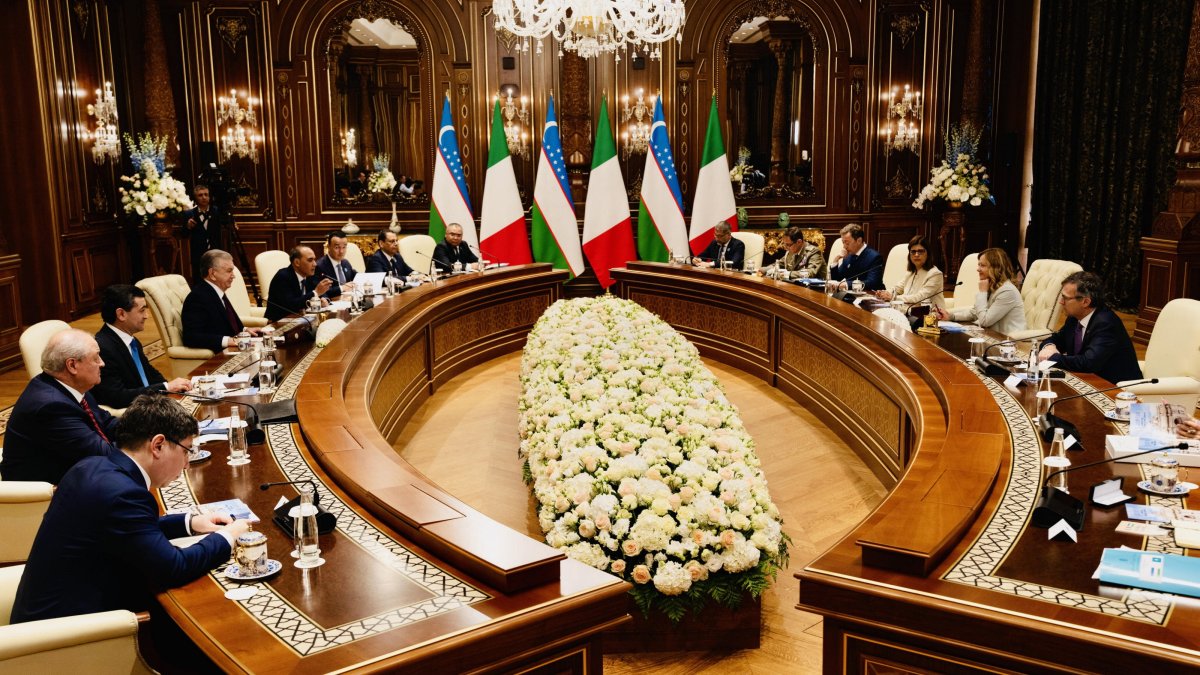
Italy Strengthens Ties with Central Asia Amid Geopolitical Shifts
Table of Contents
Italy is increasing its strategic focus on Central Asia, a region experiencing geopolitical reorientation amid global challenges. Prime Minister Giorgia Meloni’s recent visit and the first Italy-central Asia summit signal Rome’s ambition to become a reliable partner, emphasizing multilateral cooperation, particularly in energy and infrastructure development. this initiative aligns with the European Union‘s interests in regional security, energy resources, and trade connectivity. In 2023, trade between the EU and Central Asia reached €42.4 billion, highlighting the region’s growing economic importance Source: European Commission.
Historic Summit and Bilateral Agreements
The inaugural Italy-Central Asia summit, attended by leaders from Kazakhstan, Kyrgyzstan, Tajikistan, and Turkmenistan, marks a notable milestone in Italy’s engagement with the region. During her visit, Prime Minister Meloni highlighted the positive reception of Italy’s initiatives. The summit facilitated numerous agreements, particularly in the energy sector, reflecting italy’s strategic interests.
The first stop on Meloni’s tour was Uzbekistan,where 14 agreements worth 3 billion euros were signed,covering areas such as mobility,infrastructure,culture,and migration. This builds on previous agreements signed in 2023 during Uzbek President Shavkat Mirziyoyev’s visit to Rome, which focused on security, economy, energy, and culture. The establishment of a branch of Italy’s Industry Confederation (Confindustria) in Uzbekistan further strengthens business and economic ties.
Did you Know? Italy is among Kazakhstan’s main trading partners within the EU.
Kazakhstan as a Key partner
Kazakhstan holds a pivotal role in Italy’s Central Asia strategy. During the summit in Astana, new bilateral agreements worth approximately 5 billion euros were reached, primarily in the energy sector. These agreements underscore the importance of regional rare earth elements and logistical potential for Italy, particularly in developing infrastructure to enhance connectivity between East and West.
Italy aims to support the EU regional engagement further by pioneering a high-level dialog format with the Central Asian states. In January 2024, many mous were signed to strengthen bilateral economic cooperation.
The Middle Corridor and Strategic Connectivity
The Middle Corridor, also known as the Trans-caspian Transport Corridor (TCTC), is of paramount importance to Italy’s strategy. This trade route connects China and Europe through Kazakhstan, the Caspian Sea, Azerbaijan, Georgia, and Türkiye, offering a multimodal option to routes through Russia. Supported by the EU and G-7, the middle Corridor is crucial for diversifying trade flows and securing independence from geopolitically unstable routes.
Italy, with its strategic location and key infrastructures and ports like Genoa, trieste, and Venice, aims to play a central connecting role as a trade hub. This involves promoting faster and more resilient logistic supply chains.The volume of cargo transported via the Middle Corridor reached 2.5 million tonnes in 2023,a 64% increase compared to 2022 Source: RailFreight.com.
Strategic objectives and European Cooperation
Meloni’s visit and the summit’s success highlight Italy’s strategic objectives in Central Asia: diversifying partnerships and strengthening its position in a geopolitically significant region.This ambition reflects Rome’s desire to enhance cooperation both bilaterally and from a European perspective.
The EU has already established a strategic partnership with Central Asia, focusing on energy (particularly gas and hydrogen), transport and alternative logistics corridors like the Middle Corridor, governance, human rights, and sustainable development. Italy’s proposed cooperation aims to ensure the security and stability of supply chains and create new opportunities for growth and shared development.
Italy seeks to act as a credible partner, leveraging its industrial skills and expertise, especially in energy and infrastructure. By fostering a pragmatic dialogue, Italy aims to bridge Central Asian countries and the EU, consolidating the European presence in a region increasingly contested at a global level.
Pro Tip: Keep an eye on infrastructure developments along the Middle Corridor, as they will significantly impact trade routes and regional connectivity.
| Aspect | Details |
|---|---|
| Strategic Priority | Regional stability, energy security, trade connectivity |
| Key Agreements | €3 billion in agreements with Uzbekistan, €5 billion in agreements with Kazakhstan |
| Middle Corridor | Crucial for diversifying trade flows and securing independence from unstable routes |
| EU Partnership | Focus on energy, transport, governance, and sustainable development |
What impact will Italy’s increased engagement have on the balance of power in Central Asia? How can businesses capitalize on the growing trade opportunities between Italy and Central Asian countries?
Evergreen Insights: Central Asia’s Geopolitical Significance
Central Asia’s strategic importance stems from its geographical location, bridging Europe and Asia, and its rich natural resources, including oil, gas, and rare earth minerals. Historically influenced by Russia, the region is now attracting interest from various global actors, including China, the EU, and the United States. This competition for influence is reshaping the region’s geopolitical landscape.
The development of alternative trade routes, such as the Middle Corridor, is crucial for reducing reliance on conventional routes and enhancing regional connectivity. These developments have long-term implications for trade,security,and regional stability.
Frequently Asked Questions About Italy and Central Asia
- Why is Italy increasing its focus on Central Asia?
- Italy sees Central Asia as a strategically important region for diversifying partnerships, ensuring energy security, and promoting trade connectivity amid global geopolitical shifts.
- What are the main areas of cooperation between Italy and Central Asian countries?
- The primary areas of cooperation include energy, infrastructure development, trade, and cultural exchange, with a focus on projects that enhance regional connectivity and stability.
- How does the Middle Corridor benefit Italy and Central Asia?
- The Middle Corridor provides a crucial alternative trade route, reducing reliance on traditional routes and enhancing connectivity between Europe and Asia, benefiting both italy and Central Asian countries.
- What role does the EU play in Italy’s Central Asia strategy?
- Italy’s engagement with Central Asia aligns with the EU’s strategic partnership with the region, focusing on energy, transport, governance, and sustainable development.
- What are the potential challenges in strengthening Italy-Central Asia relations?
- Challenges include navigating geopolitical complexities,ensuring the security of trade routes,and addressing governance and human rights issues in the region.
- How can businesses benefit from Italy’s increased engagement in Central asia?
- Businesses can capitalize on new trade and investment opportunities, particularly in sectors such as energy, infrastructure, and logistics, by establishing partnerships and leveraging Italy’s expertise.
Stay informed about the evolving dynamics between Italy and Central Asia. Share this article and join the discussion below!
