
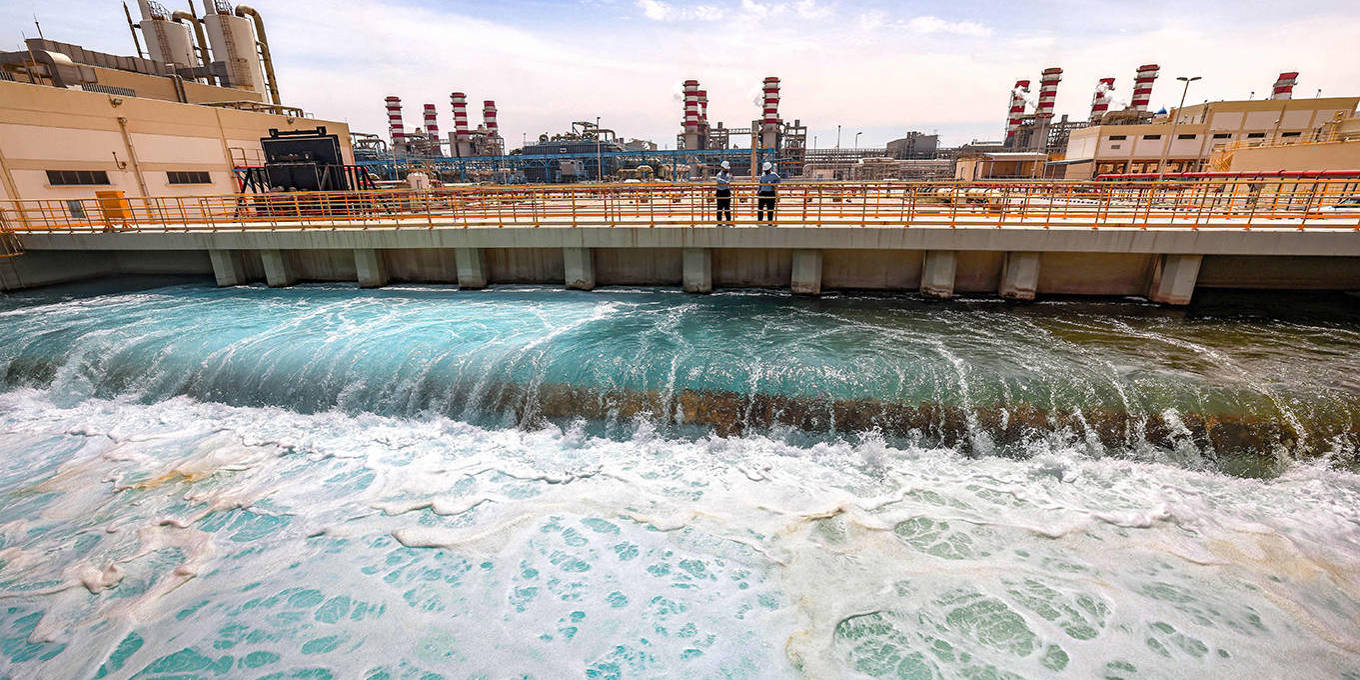
Iran War Threatens Gulf Desalination Plants and Water Security
Escalating tensions in the Persian Gulf are shifting the focus from energy disruptions to a more fundamental threat: water security. Iran’s veiled threats to target desalination plants in Gulf nations, coupled with recent attacks on critical infrastructure, are exposing a critical vulnerability for economies heavily reliant on converting seawater into potable water, potentially triggering a regional crisis and demanding immediate resilience planning.
The Saltwater Kingdoms’ Existential Risk
For decades, the Gulf states have skillfully masked a fundamental scarcity of natural freshwater resources through massive investment in desalination technology. This has allowed for rapid economic development and population growth, transforming nations like Saudi Arabia, the UAE, Qatar, Bahrain, Kuwait, and Oman into thriving, modern economies. But, this reliance on “black magic” – as Cambridge University researchers term it – has created a single point of failure. The region now produces over 40% of the world’s desalinated water, a statistic that underscores both its technological prowess and its inherent vulnerability. According to a recent report by the International Water Association, the Gulf Cooperation Council (GCC) countries invest over $60 billion annually in water infrastructure, with desalination accounting for the largest share.
From Oil Fields to Water Plants: A New Battlefield
The current conflict with Iran has dramatically altered the calculus. Initial attacks focused on oil facilities, but the rhetoric emanating from Tehran now explicitly includes desalination plants as potential targets. Iranian Foreign Minister Abbas Araghchi’s accusation of US attacks on a Qeshm Island desalination plant, even as unverified, served as a clear warning. This escalation represents a breach of long-held norms regarding the protection of civilian infrastructure, as outlined in the Geneva Conventions. The potential for disruption isn’t merely economic; it’s a direct threat to public health and social stability.
Economic Fallout: Beyond Oil Price Shocks
While the immediate impact of the conflict has been felt in oil markets – with French Finance Minister Roland Lescure estimating a 30-40% reduction in Gulf refining capacity, removing 11 million barrels per day from global supply – the long-term consequences of water disruption are potentially far more severe. Oil price volatility, while significant, can be absorbed through strategic reserves and alternative sourcing. A prolonged disruption to desalination, however, would lead to widespread water shortages, impacting agriculture, industry, and daily life. The economic modeling firm Oxford Economics projects that a sustained 20% reduction in desalination capacity across the GCC could shave 1.5% off regional GDP growth in the next fiscal year.
The Trump Factor and Escalating Risks
US President Donald Trump’s volatile approach has further complicated the situation. His initial threat to “obliterate” Iran’s power plants, followed by a series of extensions and denials, has created a climate of uncertainty. The potential seizure of Kharg Island, a critical Iranian oil export hub, is viewed by Tehran as a red line. Mohammad Bagher Ghalibaf, speaker of the Iranian parliament, has explicitly warned that any regional power supporting a US occupation of Iranian islands would face “relentless attacks” on its vital infrastructure. This thinly veiled threat directly implicates the UAE and its desalination facilities.
The Insurance Imperative: Protecting Critical Infrastructure
The escalating risk to desalination plants is driving a surge in demand for specialized insurance products. Companies like specialty insurance brokers are seeing a dramatic increase in inquiries from Gulf-based utilities and infrastructure operators seeking to mitigate the financial impact of potential attacks. These policies, however, are becoming increasingly expensive and difficult to obtain, reflecting the heightened risk profile of the region.
“The geopolitical risk in the Gulf has fundamentally shifted. It’s no longer just about oil; it’s about the very survival of these nations. We’re seeing a scramble for risk transfer solutions, but capacity is limited, and premiums are soaring.” – Dr. Leila Al-Sultan, Managing Director, Global Risk Analytics.
Supply Chain Vulnerabilities and Technological Dependencies
The desalination industry itself is heavily reliant on specialized equipment and components sourced from a limited number of suppliers, primarily in Europe and the United States. Disruptions to these supply chains, whether due to sanctions, geopolitical tensions, or direct attacks, could severely hamper the ability to maintain and repair existing desalination plants, as well as to build new capacity. What we have is where robust supply chain management firms develop into invaluable, offering risk assessment, diversification strategies, and alternative sourcing solutions.
Legal Ramifications and International Law
The targeting of civilian infrastructure, particularly water facilities, raises serious questions under international law. While the laws of war permit attacks on legitimate military targets, they strictly prohibit attacks that are indiscriminate or that cause disproportionate harm to civilians. The potential for widespread water shortages to trigger humanitarian crises could lead to legal challenges and international condemnation. Corporations operating in the region are increasingly seeking guidance from specialized international law firms to assess their legal exposure and ensure compliance with evolving regulations.
The Nuclear Dimension: A Dangerous Escalation
Alongside the threats to desalination plants, the conflict has also seen escalating attacks on nuclear facilities. Israeli strikes near Iran’s Bushehr nuclear power plant forced the evacuation of Russian personnel, while more recent attacks targeted uranium processing facilities in Yazd and Khondab. These actions raise the specter of a wider regional nuclear conflict, with potentially catastrophic consequences.
Looking Ahead: Resilience and Diversification
The current crisis underscores the urgent require for Gulf states to diversify their water sources and enhance the resilience of their desalination infrastructure. This includes investing in alternative technologies, such as atmospheric water generation and wastewater recycling, as well as strengthening cybersecurity defenses to protect against potential attacks on control systems. The situation demands a proactive, long-term strategy focused on water security as a core national priority.
The unfolding events in the Gulf represent a paradigm shift in geopolitical risk. The focus is no longer solely on energy security, but on the fundamental availability of resources essential for human survival. For businesses operating in the region, or with exposure to the Gulf economies, understanding these risks and developing robust mitigation strategies is paramount. The World Today News Directory provides access to a vetted network of B2B partners – from insurance brokers and supply chain experts to legal counsel and cybersecurity specialists – to facilitate navigate this complex and evolving landscape. Don’t wait for the crisis to deepen; secure your resilience today.