
A Lost Veteran: The Case of José Barco
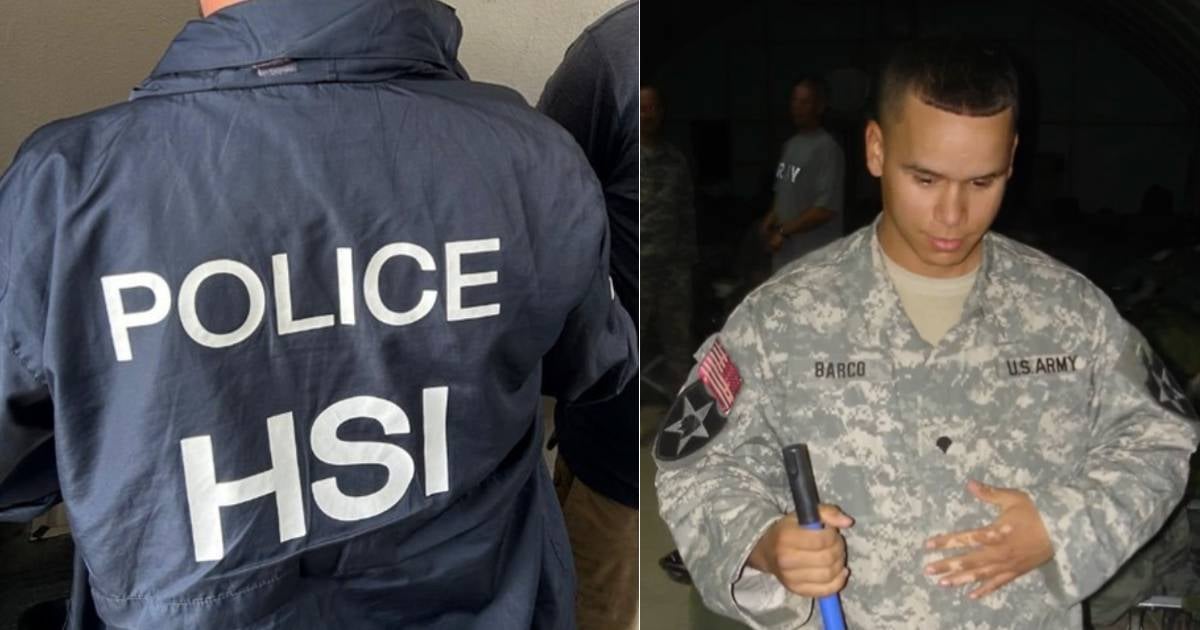
José Barco’s story is one etched with exile, sacrifice, and ultimately, abandonment. His family’s journey began with escape - relatives fleeing Cuba after his father was imprisoned for political dissent. They later legally immigrated to the United States when José was just four years old, seeking a new life in a new country.He embraced this opportunity, graduating and enlisting in the U.S. Army at seventeen.
barco served two deployments in Iraq, demonstrating remarkable bravery during one. He risked his life to rescue two fellow soldiers trapped beneath a burning humvee, an act of heroism that earned him the Purple Heart.Though, his path to full integration into his adopted nation was tragically blocked. While stationed in Iraq in 2006, his submission for U.S. citizenship was lost – a bureaucratic failure confirmed by his commander’s letter certifying submission, yet dismissed by ICE as misplaced documentation.Subsequent attempts to regularize his status proved equally fruitless.
The physical and emotional wounds of war followed Barco home. He battled insomnia, post-traumatic stress disorder, and debilitating nightmares, all without adequate treatment. This deterioration contributed to a tragic incident in 2008, where he was convicted of attempted murder after a shooting during an altercation, resulting in a fifteen-year prison sentence.
His ordeal didn’t end with his release on January 21, 2025. ICE agents were waiting for him.
Barco’s legal team argues he became trapped in an immigration limbo,exacerbated by the harsh conditions of detention. He reportedly expressed to his lawyers a desperate sentiment: he would prefer to return to combat rather than continue navigating the immigration system. His case became a stark example of the system’s failures.
ICE initially attempted to deport barco to Venezuela, but Venezuelan officials questioned the authenticity of his birth certificate, stating he lacked a convincing Venezuelan accent. Fearing repercussions due to his family’s Cuban heritage and his father’s history of political persecution, his family also believed cuba would be unsafe. ICE nonetheless persisted in pursuing deportation to one of these countries.
From a Texas detention center, Barco voiced his despair, telling CNN he felt his service, sacrifice, and the blood he shed for the country were meaningless. “I’m basically a man without a country,” he stated.
His deportation ignited immediate outrage. Protests erupted in Phoenix, led by veterans, activists, and legislators demanding an investigation and a halt to the expulsion of former service members. Ricardo Reyes of Vets Forward argued that deporting a veteran was “a blow to all veterans” and undermined the values they had sworn to defend. Raquel Terán, an activist and former legislator, condemned the deportation of a Purple Heart recipient as a betrayal. Representative César Aguilar pointed to the erosion of protections for veterans within the immigration system, notably under the previous administration.
ICE confirmed Barco was taken to Nogales, Mexico, but his family has received no definitive confirmation of his whereabouts. Activists fear he may have been transferred to another border location or even a third country, while ICE officials have remained tight-lipped, citing internal protocols. his case stands as a chilling illustration of a nation seemingly willing to leave its warriors behind.
