
US Gains Ground in African Investment as Concerns Rise Over Chinese Projects
JOHANNESBURG,SOUTH AFRICA - The United States is increasingly positioning itself as a key investment partner for African nations,capitalizing on growing concerns regarding the benefits of Chinese investment adn seeking to secure access to critical minerals vital for its green energy transition. While China remains a dominant economic force on the continent, a shift in sentiment and strategic US initiatives are creating new opportunities for american companies.
For decades, China has been the primary foreign investor in Africa, funding infrastructure projects and resource extraction. however, recent criticisms from African leaders and economists suggest that these investments haven’t always translated into significant local benefits, fueling a desire for more balanced partnerships. This, coupled with a renewed US focus on the continent, is opening doors for American businesses.
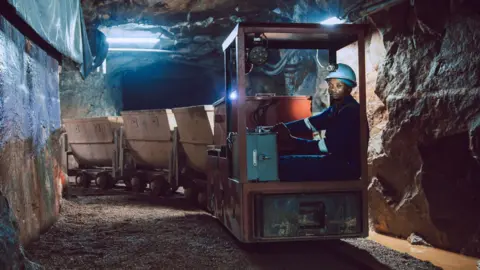
One US company making notable inroads is ReElement Africa, a subsidiary of american Resources, currently constructing a critical minerals and metals refinery in South Africa’s Gauteng province. “It was extremely rewarding to realize that we could partner with countries in Africa to put refining facilities alongside the resource in the mining projects, so you could actually capture more value, upskill labor, build an economy around that zone, and lay the foundation for further industrial development,” says Ben Kincaid, CEO of ReElement Africa.
However,the US hasn’t been without missteps.International economist at Carnegie Mellon University,Prof Lee Branstetter,argues that former President Trump’s trade tariffs on African nations hindered potential gains.”had the current administration not indiscriminately slapped tariffs on large numbers of African countries for no apparent reason, the United States would probably have been in a better position to benefit from African disaffection with Chinese projects,” he stated.
The competition for influence in Africa is expanding beyond the US and China. Economist Sepo Haihambo notes increasing interest from countries like Brazil, India, and Japan, adding another layer of complexity to the investment landscape. “African nations must be careful to secure good deals,” Haihambo cautioned,emphasizing the need for strategic partnerships that prioritize local economic development.
the US push into Africa is driven, in part, by the demand for critical minerals essential for the production of electric vehicles and renewable energy technologies. Securing a stable supply chain for these resources is a national priority, and Africa represents a significant potential source. As the geopolitical landscape evolves, the continent is poised to become a crucial battleground for economic and strategic influence.
