
Actor Confronts Apartheid’s Ghost in Directorial Debut
Embeth Davidtz grapples with childhood trauma in a powerful adaptation of a memoir set against a backdrop of racial tension.
For Embeth Davidtz, memories of apartheid-era South Africa remain vivid. Now, the acclaimed actress, known for her role in Schindler’s List, makes her directorial debut with Don’t Let’s Go to the Dogs Tonight
, a film born from those deep-seated experiences.
Early Exposure to Brutality
Relocating from New Jersey to South Africa at age 8, Davidtz encountered a starkly different reality. She recalls witnessing the casual brutality of police, who apprehended Black individuals for lacking identification. These formative moments shaped her worldview.
Davidtz also remembers seeing a Black family accosted by drunk white men at a roadhouse, further etching the injustice into her memory. “It leaves an imprint on you,”
she explained, noting the profound impact these experiences had on her.
From Memoir to Film
Drawn to Alexandra Fuller’s 2001 memoir, Don’t Let’s Go to the Dogs Tonight
, Davidtz recognized the world Fuller described. The book chronicles a childhood in Zimbabwe during the tumultuous years of its War of Independence.
After securing the rights, Davidtz dedicated six years to adapting the memoir, focusing on Fuller’s early years leading up to 1980. The year marked a pivotal moment when Robert Mugabe was elected prime minister. This era resonated with Davidtz, evoking memories of the Soweto Uprising in 1976.
A Child’s Perspective
Casting newcomer Lexi Venter as the young Fuller, nicknamed Bobo, Davidtz tells the story through a child’s eyes. In the film’s opening, Bobo echoes her mother’s language, labeling Africans as terrorists. Through Bobo’s experiences, Davidtz aimed to highlight the dissonance between adult rhetoric and a child’s perception of the world.
“I would see humanity, and I would see kindness, and I would see people being treated really badly,”
Davidtz stated. “I knew as an 8-year-old, there’s something discordant about this.”
Echoes of October 7th
The Hamas attack on Israel on October 7th deeply affected Davidtz, adding a new layer of urgency to her project. While filming in South Africa, she felt compelled to incorporate images of violence seen on television, underscoring the impact of conflict on children.
“There are children in bomb shelters right now hearing that sound,”
Davidtz observed. “There are kids all over the world having that imprinted in them right now. And I wanted to put that more strongly in the film, because the horror of October 7, I could not shake it. I couldn’t shake what happened there and I can’t shake that human beings do this to each other”
Amidst ongoing conflicts, over 400 million children are currently living in conflict zones, facing unimaginable trauma and displacement (UNICEF).
Davidtz hopes for de-escalation in Gaza and the return of hostages, believing no simple solution exists. Her experiences filming Schindler’s List, witnessing antisemitic sentiments, made her question whether dehumanization is winning again. The film draws parallels between the prejudices absorbed by children in Nazi Germany and the racial biases instilled in Bobo.
Spielberg’s Influence
While Schindler’s List left an indelible mark, Davidtz cites Spielberg’s Empire of the Sun as a key inspiration for her directorial approach. The film’s portrayal of a child shaped by limited perspectives resonated deeply with her.
“Empire of the Sun gave this notion of a child who’s been cosseted and given one point of view and not expanded by those parents,”
Davidtz explained. “And if it’s one thing that I’ve tried to do with my kids, I really try to give them both sides, and say, ‘You have to look at the world in its full entirety, and not just be single minded in one thing.’”
Like Spielberg, Davidtz masterfully presents a child’s perspective. The film, set for release July 11, shares common thematic elements with Spielberg’s work, seen even in Bobo’s motorbike which echoes the bicycles in E.T.
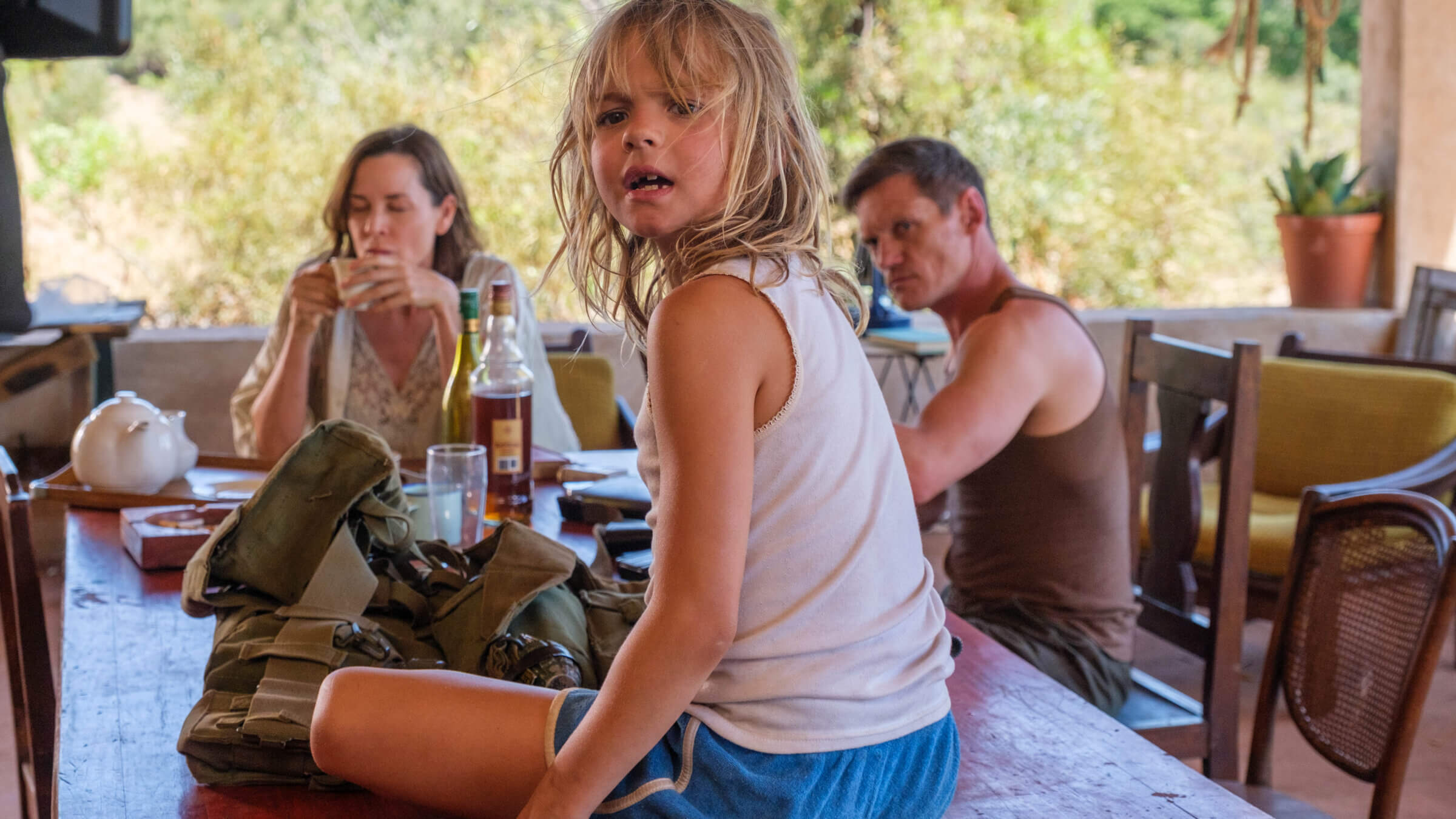
Confronting South Africa’s Past
Filming in South Africa with a predominantly Black crew, Davidtz found the experience both liberating and challenging. She aimed to capture both the commonalities and specific nuances of Zimbabwe’s culture, including the incorporation of a Shona hymn in the soundtrack.
Addressing claims of white genocide in South Africa, Davidtz expressed bewilderment, dismissing it as rhetoric akin to the prejudices she witnessed growing up.
Looking ahead, Davidtz seeks a new directorial project, one that resonates with her deeply. However, she hesitates to adapt Damon Galgut’s The Promise, a Booker-winning novel about a white South African family, due to her close friendship with the author.
“He’s my best friend from childhood,”
Davidtz said of Galgut.”I just worry about our friendship if I were the person trying to tell the story, because you have to take license.”
Words of Wisdom
Davidtz shared that Spielberg has yet to view Don’t Let’s Go to the Dogs, but his cinematographer, Janusz Kamiński, offered invaluable advice during her moments of technical uncertainty.
“He said, ‘Embeth, you know this world better than anybody. You will know what the world needs to look like. So don’t worry. Don’t get caught up. Don’t let your cinematography take too long to light. Just shoot, shoot, shoot,’”
Davidtz recounted. “I sort of went, ‘I can’t doubt myself. What I know is I’ve got to be inside this child’s face and head, and that’s the way to tell the story.’”
