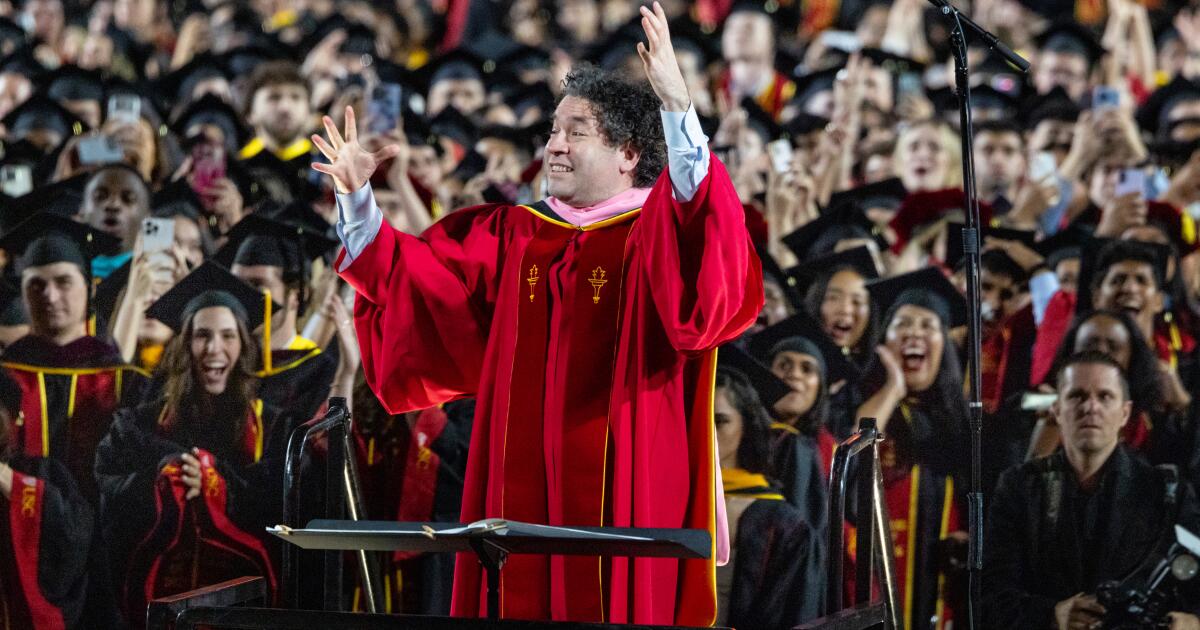
Gustavo Dudamel Reflects on His L.A. Phil Legacy and the Future
As of May 19, 2026, Gustavo Dudamel enters his final weeks as Music & Artistic Director of the Los Angeles Philharmonic at Walt Disney Concert Hall. His departure marks the conclusion of a transformative seventeen-year tenure, signaling a major shift in the city’s cultural leadership as he transitions to the New York Philharmonic.
The departure of a figure as central to the Los Angeles cultural identity as Dudamel is more than a change in artistic direction; it is a significant pivot point for the city’s philanthropic and arts-management sectors. For over a decade and a half, his presence has been the gravitational center for international donor interest, local educational outreach, and high-profile civic partnerships. As the baton passes, the organizations that have flourished under his influence must now navigate the complexities of succession, institutional stability, and the preservation of the community-based programs he championed.
The Institutional Legacy of a Global Visionary
Dudamel’s tenure is defined by his commitment to the concept that art serves as a catalyst for social integration. His work with the Los Angeles Philharmonic and the integration of the El Sistema philosophy—a program originating in his native Venezuela—has fundamentally altered the relationship between a major symphony orchestra and the underserved communities of Southern California.
This transition raises immediate questions regarding the long-term sustainability of these outreach initiatives. Large-scale cultural institutions often rely on highly specialized non-profit management consultants to bridge the gap between artistic vision and operational permanence. As the leadership changes, these institutions are tasked with maintaining donor confidence and ensuring that the structural integrity of these social programs remains intact during the transition.
Infrastructure and the Economics of Arts Leadership
The economic footprint of the Los Angeles Philharmonic extends well beyond the concert stage. The orchestra’s residency at the Walt Disney Concert Hall acts as a driver for local tourism, hospitality, and municipal engagement. The departure of a globally recognized brand like Dudamel necessitates a strategic reassessment for local businesses that have long benefited from the “Dudamel Effect.”

“When a city loses a cultural anchor of this magnitude, the ripple effects are felt in the hospitality and tourism sectors. The challenge for Los Angeles is to leverage the momentum built over the last seventeen years to ensure that the transition does not lead to a contraction in audience engagement or public-private partnerships.”
To mitigate the risks associated with such high-profile leadership shifts, city stakeholders are increasingly turning to strategic economic planning firms to forecast shifts in cultural tourism and to reorganize public engagement strategies. The stability of these sectors is paramount as the city prepares for the next phase of its institutional evolution.
Navigating the Transition: A Legal and Operational Perspective
The complexity of moving an artistic director of this stature—who, by September 2026, will assume his role as Music and Artistic Director of the New York Philharmonic—involves intricate contractual and intellectual property considerations. These shifts often require the oversight of specialized intellectual property and corporate attorneys to ensure that ongoing artistic collaborations, digital archives, and educational commitments are handled with precision.

the logistical shift of such a move impacts more than just the conductor. The Los Angeles Philharmonic must now manage the transition of a legacy that includes the influence of predecessors such as Gustav Mahler, Arturo Toscanini, and Leonard Bernstein. Maintaining this standard requires not only artistic excellence but also the meticulous management of institutional resources.
The Future of Cultural Integration
As Dudamel prepares for his final performances, including the “Celebrating Gustavo at the Bowl” series in August 2026, the focus remains on his role as an advocate for music education. His advocacy has extended from the United Nations to the White House, setting a precedent that places the conductor at the intersection of international diplomacy and local social work.

For community organizations and educational foundations in Los Angeles, the departure serves as a reminder of the necessity of robust governance. Organizations that have relied on the charisma and vision of a single leader are often vulnerable during leadership transitions. It is now common for boards to engage corporate governance advisors to institutionalize the values and programs that were once tied to an individual’s personal mission.
The story of Gustavo Dudamel in Los Angeles is far from over, as his influence continues to resonate through the lives of the students and audiences he has touched. However, the institutional shift is an inevitable reality of professional life in the arts. Whether the institution in question is a massive cultural entity or a community-focused non-profit, the ability to withstand the transition of key leadership is the true test of organizational strength.
As the city moves forward, the focus shifts toward the continuity of the mission. For those tasked with managing the next chapter, ensuring that the necessary professional infrastructure is in place—from legal compliance to strategic development—is the only way to preserve the harmony that has been built over the past seventeen years. The legacy is not just in the music, but in the enduring systems designed to support it.