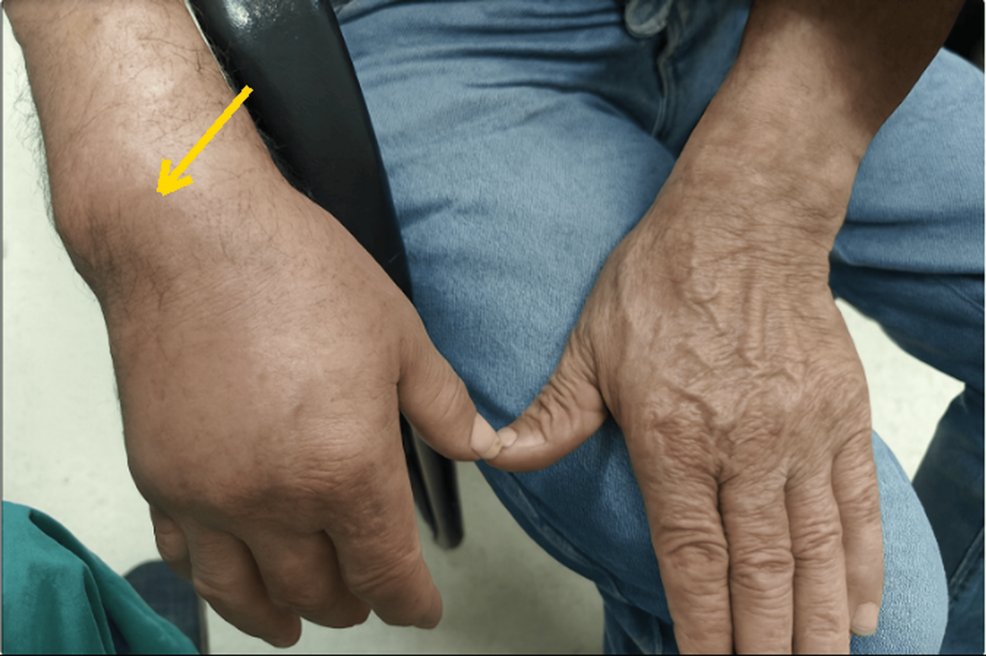
Gonococcal Septic Arthritis in an Elderly Patient: A Case Report of Purulent Monoarthritis of the Wrist
A 75-year-old man presenting with acute purulent monoarthritis of the right wrist was diagnosed with gonococcal septic arthritis, a condition typically associated with younger populations. According to a case report published in Cureus, the patient’s clinical presentation included severe pain and swelling, with synovial fluid analysis revealing 170,501 leukocytes/µL and the presence of Neisseria gonorrhoeae. This case highlights the diagnostic challenges clinicians face when rare infections occur in older patients who fall outside the classic epidemiological profile for sexually transmitted infections.
- Gonococcal arthritis can present as isolated monoarthritis in elderly patients, even in the absence of systemic symptoms or clear sexual history.
- Synovial fluid analysis, including Gram staining and culture, remains essential, though clinicians must be aware of the organism’s fragility which can limit culture sensitivity.
- The presence of pre-existing degenerative joint disease—such as advanced carpal osteoarthritis—can complicate the interpretation of post-infection imaging and recovery assessments.
Diagnostic Challenges in Elderly Patients
The patient, who had a medical history of hypertension and dyslipidaemia, arrived at the emergency department with two to three days of progressive wrist pain and functional limitation. While Cureus reported that the patient denied fever or trauma at the time of admission, he later disclosed an episode of urethral discharge occurring approximately one week prior. This sequence underscores the importance of detailed sexual history taking, even when the primary complaint is orthopaedic. A separate report in the National Center for Biotechnology Information (PMC) archive describes a similar diagnostic dilemma involving a patient in his mid-70s with bilateral wrist pain, where multiple unsuccessful arthrocentesis attempts delayed the identification of disseminated gonococcal infection (DGI).
Diagnostic complexity is compounded by the fact that N. gonorrhoeae is a delicate organism. The Cureus report notes that synovial fluid culture sensitivity for the bacteria is often below 50%. In the case of the 75-year-old man, the diagnosis was confirmed through surgical sampling and culture of the joint fluid. While a urine multiplex polymerase chain reaction (PCR) test performed on day seven was negative, the initial Gram stain and subsequent cultures provided the definitive identification required to guide antibiotic therapy.
Patient Recovers After Arthrotomy and Antibiotic Treatment
Following the confirmation of N. gonorrhoeae, the patient underwent arthrotomy and irrigation of the joint. The antibiotic regimen consisted of intravenous ceftriaxone 2 g daily for 14 days, supplemented by a single dose of azithromycin 500 mg. Upon completion of the intravenous course, the patient transitioned to oral ciprofloxacin for seven days, based on susceptibility results. By the three-month follow-up, the patient reported a Visual Analogue Scale (VAS) score of 0/10 and showed no signs of recurrence.
The clinical team observed that while the infection was successfully cleared, the patient’s long-term imaging results were influenced by pre-existing conditions. Computed tomography (CT) performed on day 35 showed high-grade chondral erosions and subchondral cysts indicative of advanced carpal osteoarthritis. Because these degenerative changes predated the acute infection, clinicians could not attribute the structural joint damage solely to the gonococcal arthritis.
Gonorrhea Remains a Significant Public Health Concern
Gonococcal infections remain a significant public health concern. Data from the Centers for Disease Control and Prevention (CDC) cited in the PMC report indicate that 601,319 cases of gonorrhea were reported in the United States in 2023, identifying it as the second most common sexually transmitted infection. Although disseminated gonococcal infection—which can lead to septic arthritis—occurs in only 0.5% to 3% of untreated cases, the potential for irreversible joint damage makes it an orthopaedic emergency.
Clinicians are encouraged to maintain a high index of suspicion for N. gonorrhoeae in patients presenting with acute, purulent monoarthritis, regardless of age. When standard treatments for suspected rheumatoid arthritis or degenerative joint flares fail to provide relief, further investigation into infectious etiologies is warranted. Patients experiencing persistent or unexplained joint inflammation should seek evaluation from a board-certified rheumatologist or an infectious disease specialist to ensure accurate diagnostic testing and timely intervention.
The successful outcome of this case, marked by a return to full mobility and an asymptomatic status at the one-year mark, reinforces the effectiveness of prompt surgical drainage combined with targeted antibiotic therapy. As research continues to evolve, the integration of nucleic acid amplification testing (NAAT) for synovial fluid may eventually improve diagnostic sensitivity, though current clinical practice still relies heavily on traditional culture methods and a high degree of diagnostic vigilance.
Always consult with a qualified healthcare provider regarding any medical condition, diagnosis, or treatment plan.