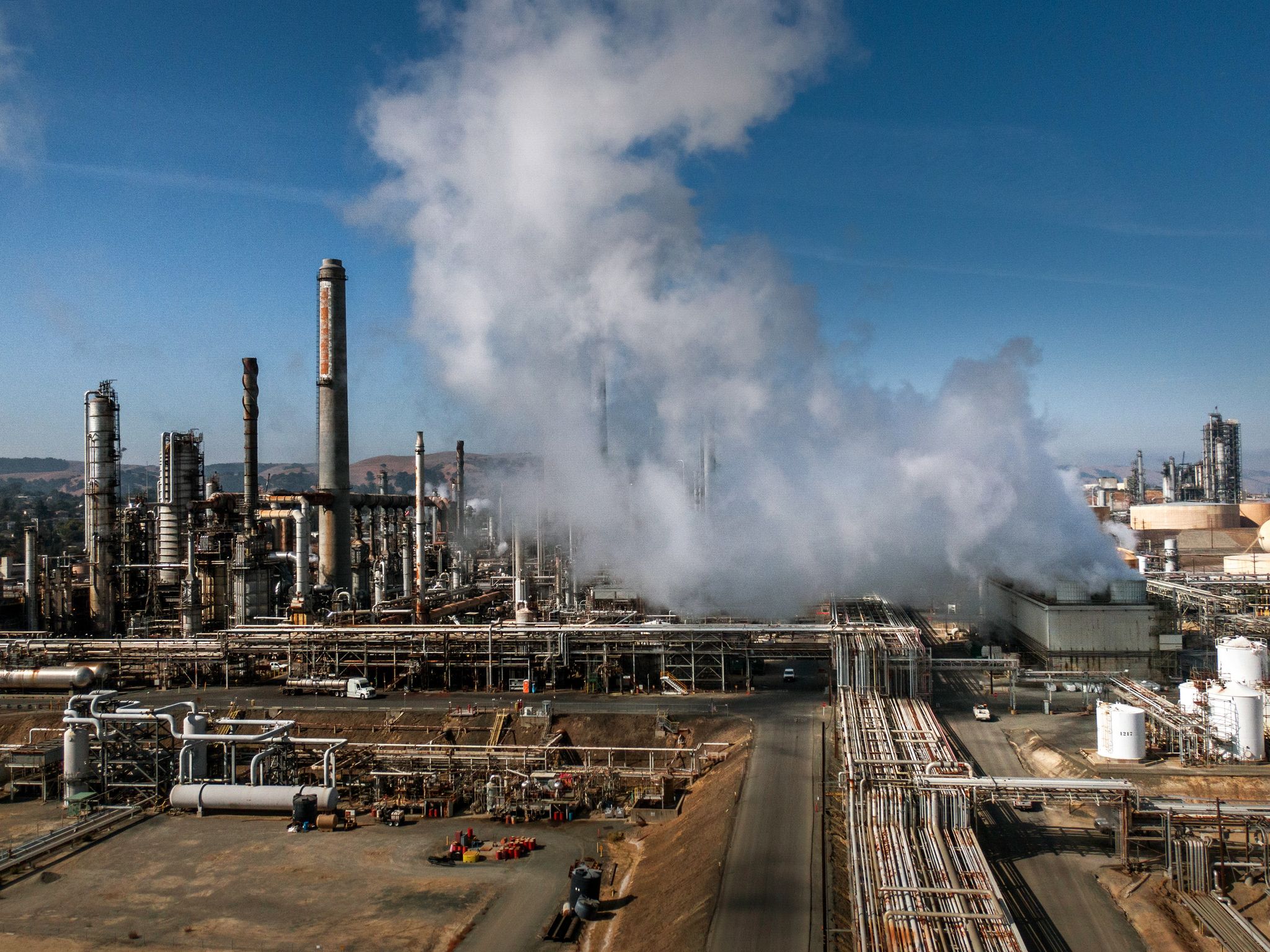
Fossil Fuel Polluters Driving California Water Scarcity, Study Finds
Between 2014 and 2024, emissions traced to major fossil fuel companies drove significant reductions in California’s streamflow and groundwater, exacerbating extreme drought conditions, according to a study published by the Union of Concerned Scientists. The analysis reveals that 47 percent of the streamflow reduction caused by climate change in the state is attributable to these entities, known as the Carbon Majors.
Understanding the Carbon Majors’ Impact on California’s Water Supply
Water scarcity across California is increasingly tied to historical and ongoing greenhouse gas emissions from major oil and gas producers, including operations in the East Bay. According to the Union of Concerned Scientists, these corporate emissions are directly responsible for a roughly 13 percent reduction in baseline streamflow within California basins. Furthermore, the data shows that 10 percent of total observed groundwater loss across the state stems from these same emissions.
The San Joaquin River and Sacramento River basins experience particularly severe disruptions to their hydrologic cycles. Drastic snowpack reductions and heightened irrigation demands leave agricultural communities in the Central Valley facing severe vulnerabilities. “Emissions traced to the Carbon Majors are intensifying an already dire water crisis across the western United States,” said Dr. Angel Fernández-Bou, co-author and bilingual senior climate scientist at the Union of Concerned Scientists, in a statement detailing the findings.
Shifting Streamflow Timelines Threaten Agricultural Planning
Beyond absolute volume losses, the timing of water availability has shifted substantially. The study notes that the midpoint of annual streamflow now occurs more than five days earlier in California than historical baselines. This temporal shift widens the seasonal gap between when water naturally flows through the watershed and when agricultural and municipal users actually need it.
Agricultural operations dependent on predictable seasonal runoff face mounting planning challenges. “People living in California are already experiencing firsthand what fossil-fueled climate change means, with more extreme drought and forest fire conditions impacting people’s health, wallets, and quality of life,” said Dr. Emily Williams, lead author and postdoctoral scientist at the University of California Merced.
Managing these intensifying agricultural challenges often requires specialized intervention.
Accountability Efforts and Legislative Pushback
As communities bear the financial burdens of drought recovery, questions of legal liability have moved to the forefront. Major fossil fuel companies, including BP, Chevron, ExxonMobil, and Shell, understood as early as 1959 how their products would devastate the climate, according to historical documentation cited by researchers. Critics point to subsequent public relations campaigns designed to delay regulatory action.
In response to mounting costs, lawmakers have filed Make Polluters Pay bills in the California legislature. These proposals aim to hold fossil fuel companies financially responsible for climate-related disasters. Concurrently, industry lobbyists have pursued federal protections, including a blanket immunity bill introduced in Congress earlier this year by Sen. Ted Cruz and Rep. Harriet Hageman.

“Pathways to justice that hold polluters accountable, including legislation and lawsuits, must be protected,” said Dr. Carly Phillips, study co-author and senior scientist at the Union of Concerned Scientists. “Fossil fuel companies have consistently prioritized profits over people and the planet, and communities deserve the opportunity to recoup the costs of climate change.”
Navigating the complex intersection of environmental litigation, regulatory compliance, and municipal liability demands rigorous advocacy.
As the fossil-fueled water crisis unfolds across western states, policymakers face mounting pressure from scientific communities to invest in long-term climate resilience while pursuing structural transitions away from traditional energy sources.