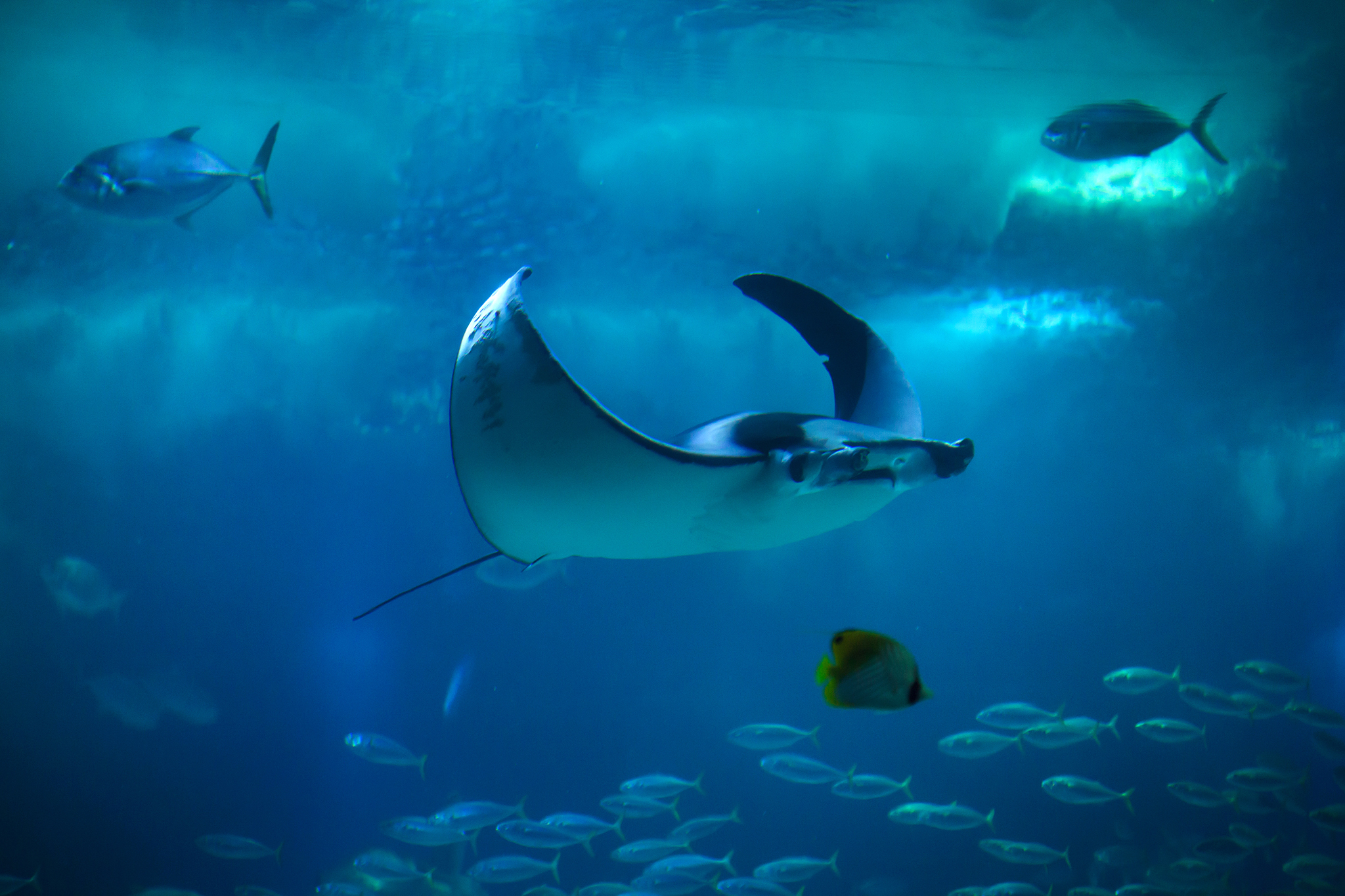
El Niño Brings Rare Devil Rays to Southern California Coast
On an unseasonably warm October day, a sightseeing catamaran left Dana Point Harbor into 73-degree water, where naturalist Amanda McFadden told passengers it was “like a lake out here, which is wonderful conditions for sighting these animals,” SFGATE reported. The Southern California coastline is experiencing an influx of tropical marine life driven by a powerful El Niño event colliding with long-term ocean warming.
Devil Rays Arrive Off Southern California As Ocean Temperatures Climb
Sightseers and commercial spotters have noted an unusual abundance of devil rays—close relatives of the giant manta ray—gliding through the coastal waters of Orange County and beyond. While giant manta rays can span up to 26 feet across, devil rays range from 3 to 17 feet across. Their mouths also differ, as mantas have faces that point forward while devil rays feature mouths positioned beneath their heads. Three distinct species have appeared off Southern California in recent months: spinetail, bentfin, and the critically endangered Chilean devil ray, also known as the sicklefin.
Spinetail devil rays have turned up most frequently. Carl Sbarounis, a Torrance-based pilot and commercial fisherman who has spotted fish from a Cessna 172 for over four decades, reported seeing devil rays almost every time he flew off the coast in September and October. He described watching large groups swim together and leap out of the water.
“They jump all over the place,” Sbarounis said.

El Niño Restructures the Pacific Food Chain
The sudden appearance of tropical species is a direct consequence of shifting oceanographic conditions. Logan Siemens, public programs assistant manager for the Ocean Institute in Dana Point Harbor, explained that El Niño pushes warm surface water from the Western Pacific over to the Eastern Pacific. This disruption suppresses upwelling, the natural mechanism that brings cold, nutrient-rich water from the deep ocean up to the surface.
“Warmer water means stronger El Niños,” Siemens said, noting that while the warm water attracts animals like devil rays, hammerhead sharks, and a whale shark spotted off San Clemente, it also threatens the base of the marine food chain by diminishing phytoplankton populations.

The National Oceanic and Atmospheric Administration’s Climate Prediction Center categorized the ongoing event as “very strong,” ranking it among the most extreme El Niño occurrences on record. Alongside the rays and sharks, tours have documented larger quantities of flying fish, an early arrival of migrating orcas, and massive bait balls under attack by hundreds of dolphins, brown pelicans, and California sea lions.
Finding Rare Marine Life Remains a Challenge
Despite increased sightings from aerial spotters, encountering the animals from a sea-level vessel remains difficult. Nate Jaros, vice president of animal care at the Aquarium of the Pacific in Long Beach, pointed out the realities of open-ocean observation.
“It’s a big ocean out there, and it’s hard to spot things,” Jaros said. “I think odds are improved if you’re up in the air.”