
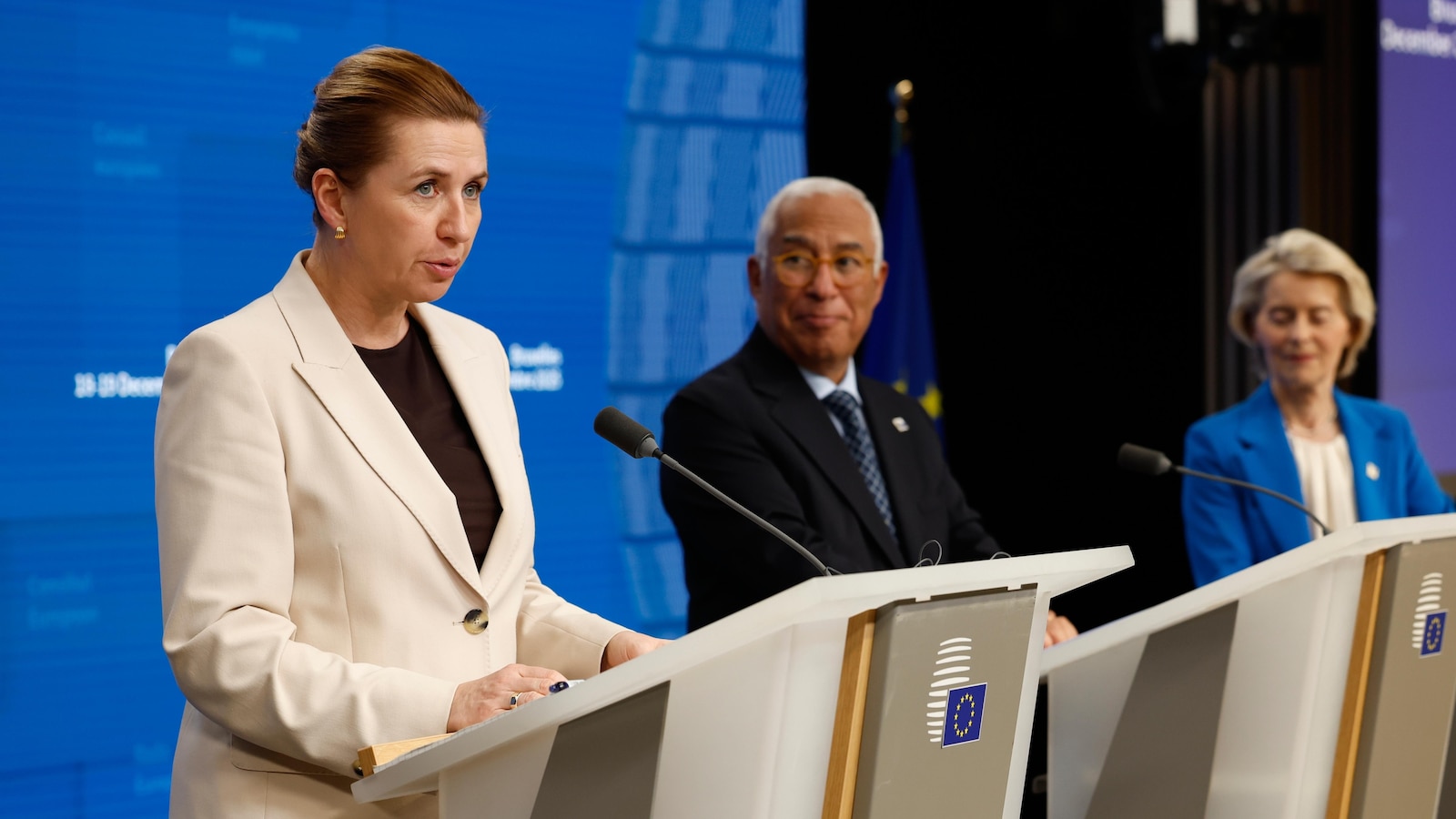
The European Union is now at the center of a structural shift involving the financing of UkraineS war effort. The immediate implication is a tighter fiscal commitment by the EU that tests internal cohesion and sets a precedent for using frozen sovereign assets.
The Strategic Context
Since Russia’s full‑scale invasion in 2022, the EU has pursued a dual strategy: contain Moscow through sanctions while sustaining Kyiv’s military and state capacity. Over four years, the conflict has become a persistent drain on EU political capital and financial resources, prompting a move from ad‑hoc aid to a more institutionalised, multi‑year financing mechanism. The broader structural backdrop includes a Europe‑wide shift toward collective security financing, the emergence of a “frozen‑asset” pool as a quasi‑budgetary lever, and the EU’s internal balancing act between frontline states (Poland, the Baltic members) and more reluctant members (Hungary, Slovakia, the Czech Republic). This context is compounded by the EU’s fiscal constraints, the need to preserve market credibility, and the legal‑political sensitivities surrounding the use of seized sovereign wealth.
Core Analysis: Incentives & Constraints
source Signals: EU leaders approved a €90 billion interest‑free loan for Ukraine covering 2026‑27, opting to raise the funds on capital markets after Belgium blocked a plan to tap frozen Russian assets. Hungary, Slovakia and the Czech Republic did not block the package but secured guarantees against financial fallout.Belgium’s prime minister warned of legal risks and potential damage to Euroclear’s operations. France and Germany publicly endorsed the market‑based borrowing approach. Ukrainian officials emphasized urgency, while Poland warned of “money today or blood tomorrow.”
WTN Interpretation: The EU’s decision reflects a convergence of several structural incentives. First,frontline members require a reliable financing stream to avoid a security vacuum,creating pressure on the Council to deliver. Second, the market‑based loan preserves the EU’s legal credibility by sidestepping the contested use of frozen assets, which could trigger litigation and undermine the EU’s reputation as a rule‑based actor. Third, the loan’s zero‑interest terms serve as a political signal to both Russia and domestic constituencies that the EU remains committed to Kyiv without escalating fiscal burdens on member states. Constraints arise from the divergent threat perceptions of the Visegrád Group, whose governments balance Russian economic ties and domestic political calculations, limiting their willingness to endorse overtly punitive measures. Belgium’s legal concerns highlight the fragility of the frozen‑asset pool as a financing tool, especially given the pending Russian lawsuit against Euroclear. the EU’s own budgetary limits and the need to maintain sovereign‑rating stability constrain the scale and duration of future commitments.
WTN Strategic Insight
“The EU’s pivot to market‑sourced loans marks the institutionalisation of war‑time financing,turning ad‑hoc solidarity into a durable fiscal instrument that will shape European cohesion for the next decade.”
Future Outlook: Scenario Paths & Key Indicators
Baseline Path: If the EU continues to rely on capital‑market borrowing and maintains the legal shield around frozen Russian assets, the €90 billion loan will be disbursed without major disruption. Member‑state cohesion will improve as the loan’s structure addresses the legal concerns of Belgium and the political reservations of the Visegrád countries. Ukraine’s budget shortfall for 2026‑27 is mitigated, sustaining its defence procurement and macro‑stability, while the EU preserves its rule‑of‑law credentials.
Risk Path: If the Russian lawsuit against Euroclear gains traction or if domestic political pressure in Hungary,Slovakia or the Czech Republic intensifies,the EU could face renewed gridlock on future financing rounds. A legal setback could force the EU to either abandon the frozen‑asset concept entirely or to negotiate a more complex compensation scheme,potentially delaying funds to Kyiv and exposing the EU to criticism of wavering commitment. escalation of legal costs or market perception of heightened sovereign‑risk could also raise borrowing costs for the loan.
- Indicator 1: Outcome of the Russian legal action against Euroclear (court filings, rulings, or settlement negotiations) within the next 3‑4 months.
- Indicator 2: Parliamentary debates or votes in Hungary, Slovakia and the Czech Republic on the loan package or related budgetary measures, especially any shift toward formal opposition.
