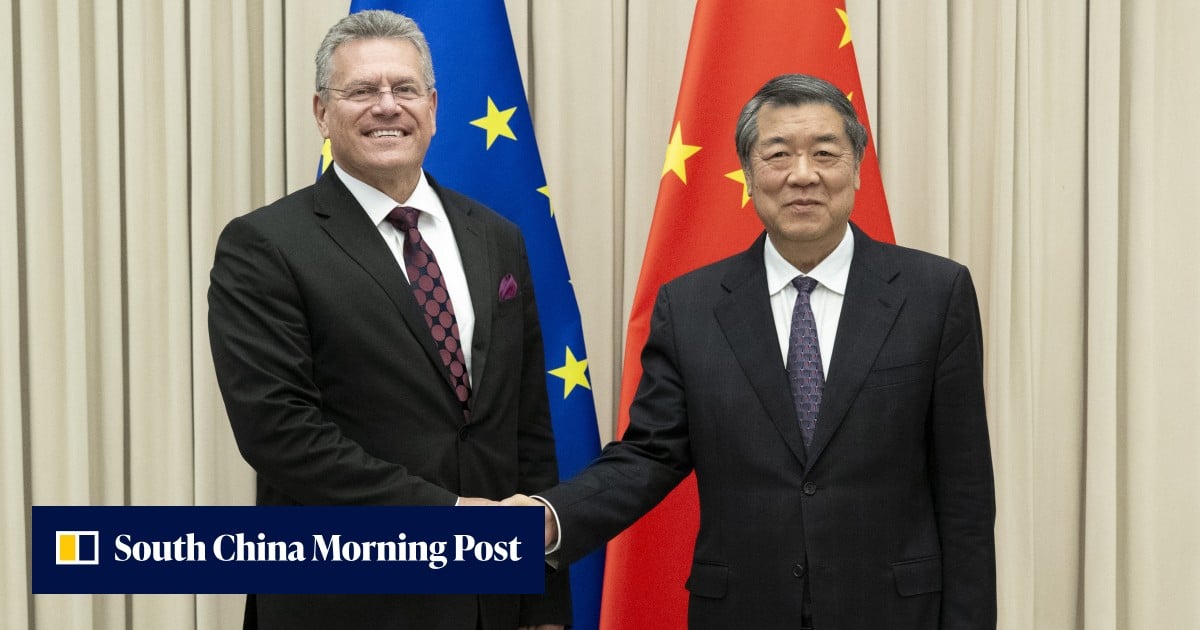
EU and China Reach Understanding to Cut Hybrid Car Exports by Half
The European Union and China reached an understanding in Beijing that will cut Chinese hybrid car shipments to the bloc by more than half over a four-year period. European trade chief Maros Sefcovic stated that the deal serves as a temporary salve to trade tensions without prior trade conflict.
Maros Sefcovic Announces Hybrid Car Export Reductions in Beijing
Speaking after two days of marathon trade negotiations in the Chinese capital, Sefcovic told reporters that the agreement will see China slash its hybrid vehicle exports by several million cars. Sefcovic characterized the talks with China’s Commerce Minister Wang Wentao as a positive first step following a summer of rising tensions. Sefcovic noted that this marks the first time Beijing has agreed to moderate its exports without going through a phase of prior trade tensions.
The final decision still requires approval from Brussels. Meanwhile, China’s Commerce Ministry released a list of 16 consensus outcomes following the discussions.
EU Gains Rare Earth Licences and Market Access
Alongside the vehicle export reductions, both sides agreed to expedite European Union applications for rare earth mineral export licences and improve market access for goods such as car parts, olive oil, and textiles. Sefcovic estimated that these market access provisions could be worth almost four billion euros, or approximately 4.5 billion US dollars, in current export value.
The package includes a World Trade Organization-compatible arrangement on hybrid vehicles, a continuation of expedited rare earth and permanent magnet export licensing, and a scheduled follow-up meeting between the two sides in March.
France and Germany Urge Rapid Trade Counter-Measures
The bilateral agreement unfolded against a backdrop of rising protectionist sentiment within Europe. France and Germany pushed for a new rapid-action trade measure to strike back against countries that harm the bloc’s economy through systemic market-distorting practices. French President Emmanuel Macron and German Chancellor Friedrich Merz wrote a joint letter to European Commission President Ursula von der Leyen urging the creation of rapid counter-measures.

Concurrently, the European Parliament adopted a document taking a significantly tougher stance toward Beijing, labeling Chinese industrial policy as an existential threat.
Future Trade Consultations Scheduled for March
The two sides agreed to maintain their diplomatic channel through a video conference scheduled for January, followed by a meeting of the bilateral mechanism in March, according to readouts from China’s Commerce Ministry. Whether the current understanding translates into written schedules or remains an in-principle statement will depend on political conditions in both Brussels and Beijing.
This is the first time that China has accepted to moderate its exports without going through the phase of prior trade tensions, and I very much appreciate that.