
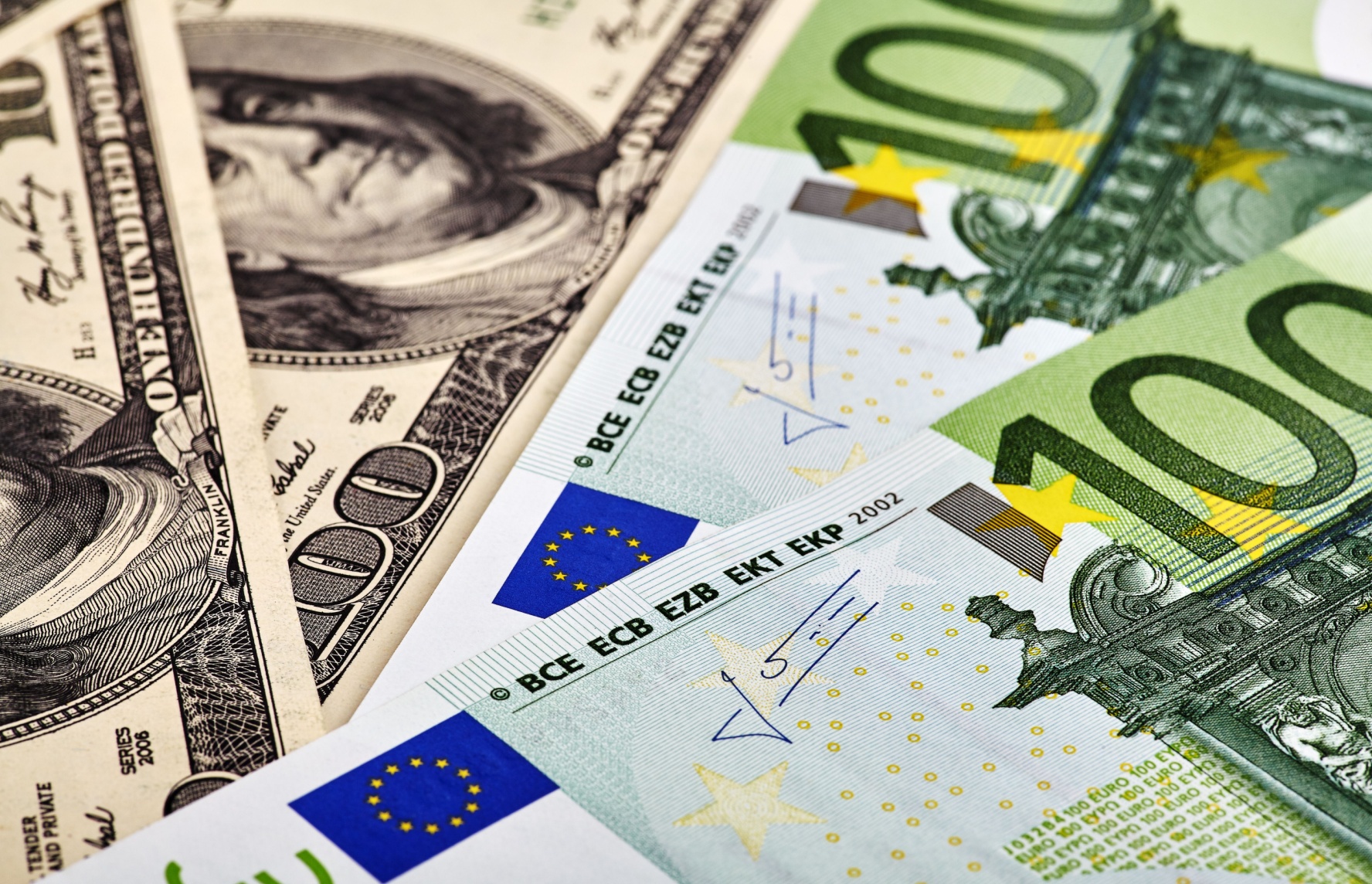
Trade Tensions and the Future of the Dollar‘s Global Role
A new study presented at the Brookings Papers on Economic Activity (BPEA) conference suggests that escalating tariffs and a retreat from international trade by the United States could jeopardize the dollar’s long-held position as the world’s primary safe haven currency. this status, the authors argue, underpins key benefits for the U.S. economy, including lower interest rates and substantial foreign investment.
The research,conducted by Tarek A. Hassan of Boston University, Thomas M. Mertens of the Federal Reserve Bank of San Francisco, Jingye Wang of Renmin University of china, and Tony Zhang of Arizona State University, highlights the link between the dollar’s “safe-haven property” – its tendency to appreciate during global economic uncertainty – and favorable conditions for U.S. businesses and investors. This safe-haven status allows U.S. companies to secure lower borrowing rates internationally and invest more, ultimately contributing to higher wages.
the paper introduces a novel quantitative model to assess the potential impact of rising tariffs on the international monetary system. Since World War II, the dollar has dominated international transactions, with many smaller economies pegging their currencies to it as a safeguard against financial instability.However, the authors contend that restricting trade flows through tariffs weakens the foundations of this special role.
“Inhibiting trade flows to and from the United States through tariffs or other means, weakens the force underpinning the dollar’s special role,” the authors write.They predict that a loss of safe-haven status could lead to increased U.S. interest rates, a decline in the global value of U.S.firms, capital outflows, and reduced U.S. wages. Ultimately,they warn that the U.S. dollar-centric system could collapse or transition to a different anchor currency.
According to Hassan, tariffs announced by the U.S. on April 2nd, and subsequent retaliatory measures from other nations, currently equate to roughly 17% symmetric tariffs. The model identifies a tipping point of 26% tariffs that could trigger either the breakdown of exchange-rate management or a shift to an alternative anchor currency, most likely the euro.
While acknowledging the U.S. has not yet reached this critical threshold, Hassan emphasized the basic connection between U.S. engagement with the global economy and the dollar’s standing. “We’re probably still a bit away from the tipping point but the fundamental insight stands,” Hassan said. “The dollar’s status depends on the degree that the U.S. engages with the rest of the world.”
The authors note that their model’s predictions have largely aligned with market reactions following President trump’s April 2nd tariff announcement. Stock prices and the dollar’s value both experienced a sharp decline, while long-term interest rates rose. Although U.S. stock prices have as recovered in dollar terms, they have underperformed relative to stocks in other countries, especially when considering “the dollar has massively depreciated,” Hassan stated.
CITATION:
Hassan, Tarek A., Thomas M. Mertens, Jingye Wang, and Tony Zhang. 2025. “Trade War and the Dollar anchor.” BPEA Conference Draft, Fall.
