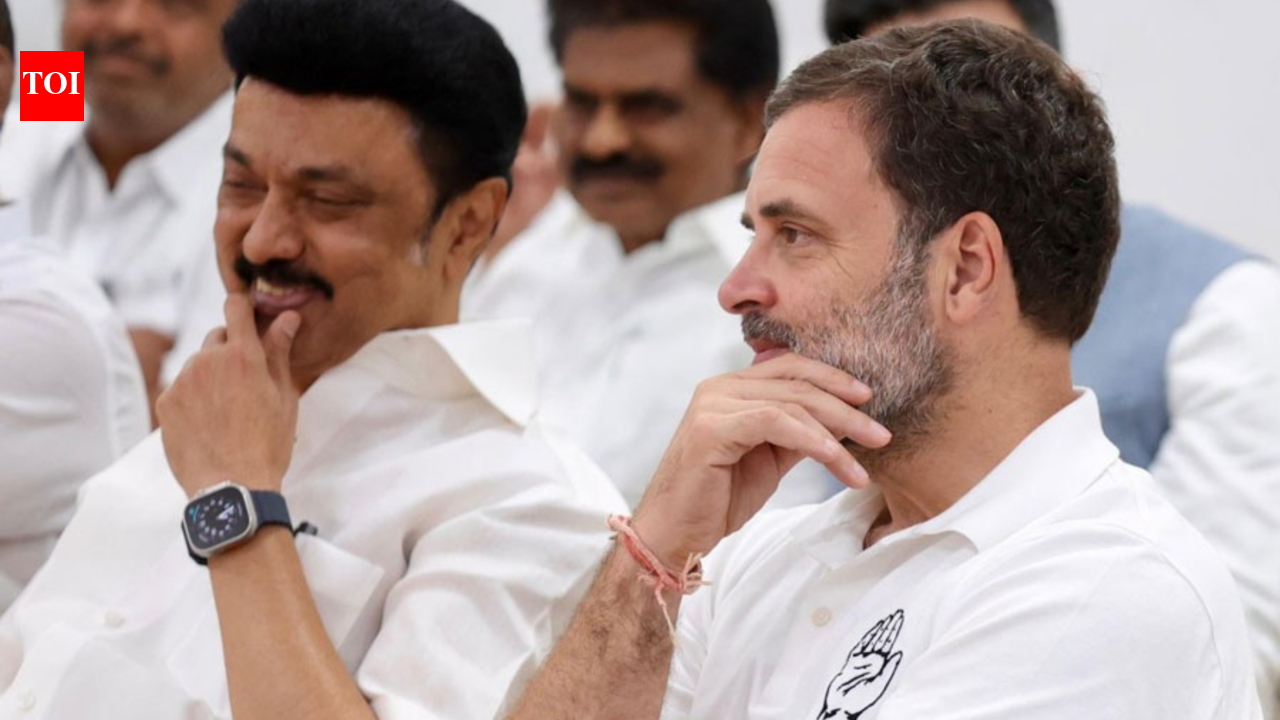
DMK Boycotts INDIA Bloc Meeting Over Congress Betrayal Ahead of Tamil Nadu Polls Fallout
In a decisive escalation of political tensions within India’s opposition alliance, the Dravida Munnetra Kazhagam (DMK) announced on Monday that it would boycott the June 8 meeting of the INDIA bloc—a coalition of parties united against the ruling Bharatiya Janata Party (BJP)—citing what it called a “betrayal” by the Indian National Congress (INC).
The DMK’s decision, confirmed by party sources and reported by multiple news outlets, comes after weeks of simmering disagreements over strategy, seat-sharing, and the Congress’s perceived reluctance to fully commit to a united front against the BJP ahead of the 2024 general elections. The INDIA bloc, formally launched in September 2023, had been positioned as a bulwark against the BJP’s dominance, but internal fissures have since threatened its cohesion.

The immediate trigger for the DMK’s withdrawal appears to be a dispute over the Congress’s handling of the Tamil Nadu political landscape, where the party has struggled to consolidate its influence. According to a senior DMK leader, who spoke on condition of anonymity, the party was particularly incensed by the Congress’s decision to contest seats in Tamil Nadu without prior coordination with the DMK, effectively undermining the bloc’s agreed-upon seat-sharing formula. “The Congress has shown no respect for the alliance’s principles,” the leader said. “They are acting as if they are above the INDIA bloc, and that we cannot accept.”
The DMK’s boycott is not merely a tactical snub but a strategic blow to the INDIA bloc’s ability to present a unified opposition. The party, which holds significant sway in Tamil Nadu—a state where the BJP has made inroads in recent years—had been a critical voice in the bloc’s negotiations. Its withdrawal leaves a void in the alliance’s southern strategy, particularly as the BJP seeks to expand its footprint in the region ahead of the elections.

Congress leaders, including party president Mallikarjun Kharge, have not yet publicly commented on the DMK’s decision, but internal discussions suggest the party is seeking to downplay the rift. A Congress spokesperson told reporters that the party remained committed to the INDIA bloc’s objectives but did not address the specific allegations of “betrayal.” Meanwhile, Rahul Gandhi, the Congress’s vice president, took to social media to assert that the BJP’s dominance was unsustainable, stating, “Modi won’t be PM in a year.” His remarks, while not directly addressing the DMK’s boycott, underscored the broader narrative of opposition unity—even as cracks in that unity grow more visible.
The fallout from the DMK’s decision extends beyond Tamil Nadu. Analysts note that the INDIA bloc’s ability to function as a cohesive opposition force hinges on its ability to resolve internal disputes before the general elections. The bloc’s next meeting, originally scheduled for June 8, now hangs in the balance, with some members questioning whether it should proceed at all. A senior political analyst based in New Delhi told World Today News that the DMK’s boycott “could be a turning point. If the bloc cannot even hold a meeting without one of its key members, how can it expect to win seats?”
In parallel developments, the political landscape in West Bengal—another critical battleground—has also seen shifts that could influence the INDIA bloc’s trajectory. The Trinamool Congress (TMC), led by Mamata Banerjee, has been engaged in its own negotiations with the BJP, raising questions about the bloc’s stability in the eastern region. While the TMC has not yet announced any formal realignment, its willingness to engage with the BJP signals a fluid political environment where alliances can shift rapidly.
The DMK’s boycott has also drawn reactions from other INDIA bloc constituents, including the Aam Aadmi Party (AAP) and the Nationalist Congress Party (NCP). AAP leader Arvind Kejriwal has called for an emergency meeting to discuss the DMK’s withdrawal, while the NCP has urged the Congress to take a more conciliatory stance. The party’s general secretary, Sunil Tatkare, stated in a press release that “the INDIA bloc must prioritize unity over petty disagreements. The BJP is watching closely, and we cannot afford to give them any reason to celebrate.”

The June 8 meeting, now in jeopardy, was intended to finalize the bloc’s election strategy, including seat-sharing agreements and campaign messaging. With the DMK’s absence, the meeting’s purpose is unclear, and some members have suggested it may be postponed or canceled entirely. The BJP, meanwhile, has remained silent on the developments, but its leaders are likely monitoring the situation closely, aware that any further fragmentation in the opposition could only benefit their own electoral prospects.
As the INDIA bloc grapples with its internal crisis, the DMK’s decision to boycott the meeting stands as a stark reminder of the challenges facing India’s opposition. The alliance’s ability to present a united front in the coming months will determine not only its electoral fate but also its long-term relevance in India’s political landscape.