Madrid Teachers Flood Gran Vía to Protest Government “Neutrality” Order During Strike
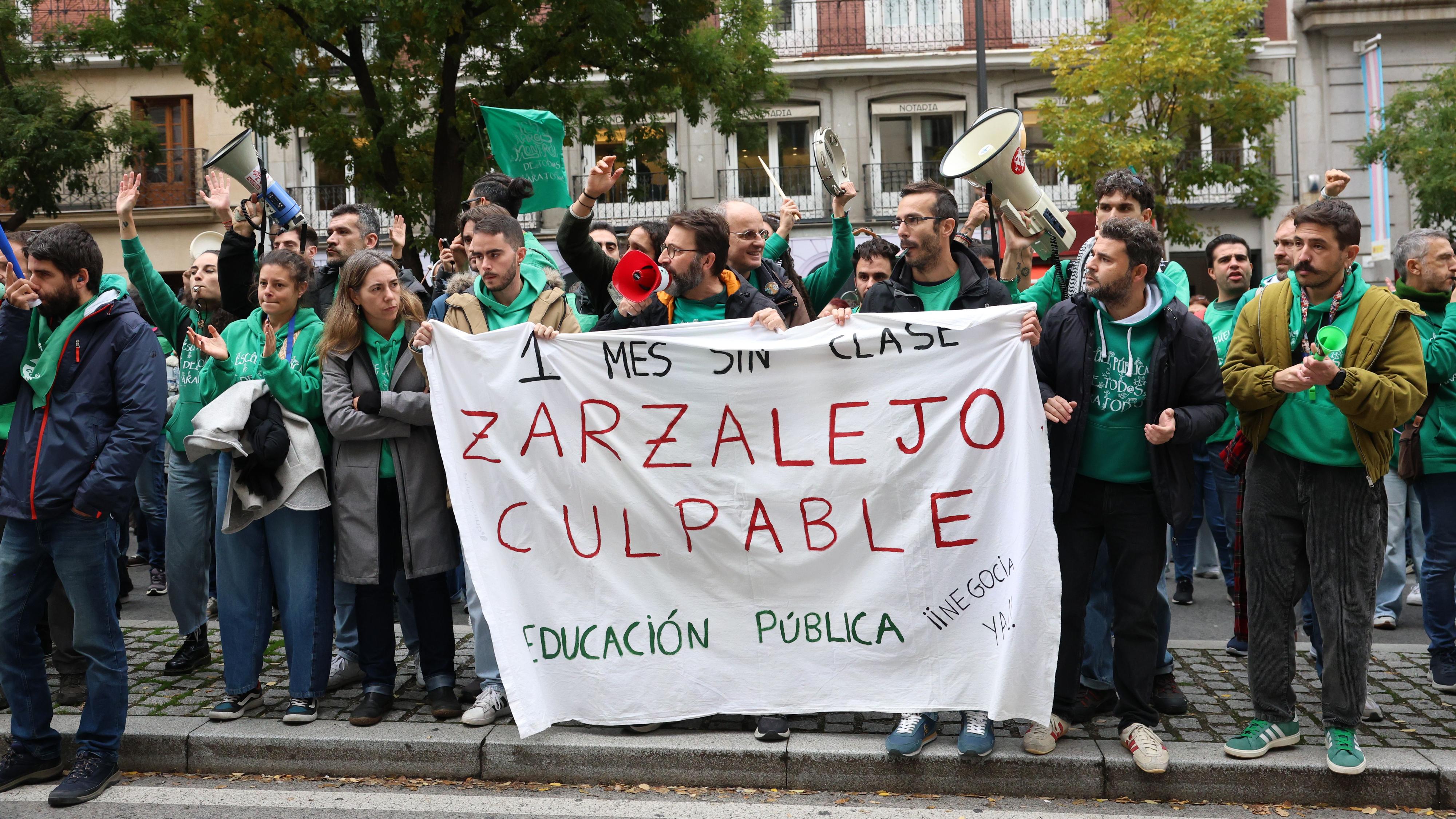
Thousands of protesters flooded Madrid’s Gran Vía on Friday to demonstrate against a government directive requiring schools to maintain political neutrality during an ongoing teachers’ strike.
The protest, characterized by participants as a defense of educational freedom, effectively brought traffic in the city center to a standstill. The protest occurred amid a growing conflict between Madrid’s teaching staff and the regional Education Department, led by Mercedes Zarzalejo.
The government directive explicitly bars staff from encouraging students to participate in protests, collecting signatures, or making value judgments regarding colleagues who choose to work during the labor action. Teachers are also restricted from using classes, tutorials, exams, or periods designated as "minimum services" to seek student support for strike demands.
The regional government clarified that wearing personal items, such as the signature green shirts of the ‘Marea Verde’ movement, badges, or ribbons, does not constitute an infraction, provided the teacher does not engage in proselytism toward minors, according to Rtve.
“Silencian a las profes, les damos nuestras voces,” protesters chanted, according to eldiario.es. The demonstration served as a focal point for long-standing grievances regarding resource shortages in public schools, with participants framing the government’s neutrality order as an act of censorship rather than a management decision. Demonstrators also directed chants at the Education Minister, shouting “Zarzalejo, dimisión” and “la lucha sigue cueste lo que cueste.”
Government Stance on Classroom Neutrality
The regional government justifies these measures under the premise that the primary function of a public school is to educate, not to indoctrinate. The official document sent to school directors warns that any deviation from these neutrality requirements will trigger the standard disciplinary regime for public employees.
The order extends to the use of school resources, including photocopiers and official digital platforms like EducaMadrid, which are now restricted from hosting union manifestos or partisan content.

To enforce these rules, the Community of Madrid has introduced a reporting mechanism. Families, students, and staff may now submit forms to school management or the Territorial Area Directorate to flag potential incidents of bias.
The Education Inspectorate is tasked with evaluating these reports within ten working days, maintaining a mandate to act with confidentiality and proportionality, RTVE reported. The Inspectorate will “act with objectivity, proportionality and confidentiality” and “interfere as little as possible in the school’s activity.”
Legal Challenges to the Directive
The teachers’ strike, which began on October 14, 2026, has intensified following the issuance of these instructions. The Strike Committee has announced plans to challenge the measures in court, seeking immediate injunctive relief to halt the enforcement of what they describe as repressive policies.
“El profesorado no se doblega ante la consejera,” said Guillermo Blanco of the group Queremos FP, as reported by laSexta. He added, “Seguimos en pie y vamos a defender la educación pública que están desmantelando.”
Impact on School Administration
School directors have expressed significant concern regarding their new role as monitors of teacher conduct. The Association of Secondary School Directors described themselves as “consternated” by the instructions, noting that they are being forced to assume surveillance functions over the expression of their staff and students, according to eldiario.es.
The requirement to oversee the removal of symbols, posters, or banners from school facades has placed administrative teams in a difficult position between the regional government and their own faculty.

“Esa forma de proceder nos recuerdan a un pasado de opresión y tiranía,” said Andrea Ordóñez of the CNT union, telling laSexta. Regarding the broader movement, she insisted, “Si nos quieren hacer retroceder 90 años nos recordarán como entonces,” referencing the historical phrase “no pasarán.”
“Compartimos la preocupación y lo que estamos buscando es una solución, estamos en el lado correcto de la historia,” said Aida San Millán of the CCOO union, addressing families.
Mercedes Zarzalejo, who was born in 1976, brings a background in both law and academia to her role. Before her appointment as regional minister, she served as a member of the Council for Education of the Community of Madrid and the Education Commission of the Spanish Federation of Municipalities and Provinces. Her career also includes experience as teaching and research staff at various academic institutions.
Beyond her administrative and legal expertise, Zarzalejo’s professional history includes a tenure as mayor of San Martín de Valdeiglesias from 2015 to 2023. She also holds formal training in classical and Spanish dance from the Royal Academy of Dance in London and the Royal Conservatory of Dance of Madrid.
The conflict remains unresolved, with union representatives calling for the resignation of Mercedes Zarzalejo, according to Eldiario. The next steps involve ongoing judicial review of the government’s neutrality order, as the strike committee prepares to petition the courts for the suspension of the current directives.