
Dams’ Water Storage Slightly Tilts Earth’s Poles
Reservoirs’ impact on polar wander could help predict effects of melting glaciers.
Human activity, specifically the construction of dams and the impoundment of water, has caused Earth’s poles to shift slightly, according to new findings. Research indicates that the weight of water stored in reservoirs has nudged the planet’s axis of rotation.
How Dams Affect Earth’s Rotation
Because Earth’s solid outer layer floats on a molten rock layer, its surface can move relative to the magma below. Mass redistribution, such as ice sheet changes, causes the outer layer to wobble, leading to true polar wander, as explained by researchers.
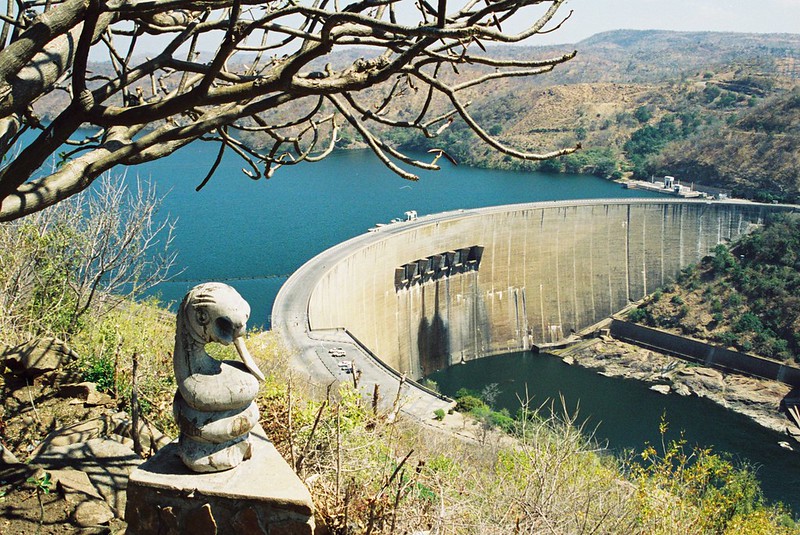
A study published in Geophysical Research Letters determined that the building of nearly 7,000 dams between 1835 and 2011 resulted in a one-meter shift of the poles and a 21-millimeter decrease in global sea levels. These dams collectively hold enough water to fill the Grand Canyon twice.
The study highlights another way humans are altering the planet. While the polar shift is small, it provides insights into how melting glaciers and ice sheets, driven by climate change, might affect future polar movements.
“As we trap water behind dams, not only does it remove water from the oceans, thus leading to a global sea level fall, it also distributes mass in a different way around the world,”
stated **Natasha Valencic**, a graduate student at Harvard University and the study’s lead author. She added, “We’re not going to drop into a new ice age, because the pole moved by about a meter in total, but it does have implications for sea level.”
Details of the Study
**Valencic** and her team used a global dam database to pinpoint each dam’s location and water impoundment. From this data, they analyzed how these dams shifted Earth’s poles between 1835 and 2011.
The research revealed that dam construction caused polar shifts in two phases. From 1835 to 1954, many dams were built in North America and Europe, causing these regions to move toward the equator. During this period, the North Pole shifted 20.5 centimeters toward the 103rd meridian east, which runs through Russia, Mongolia, China, and the Indochina Peninsula.
Subsequently, from 1954 to 2011, dam construction in East Africa and Asia led to a 57-centimeter shift toward the 117th meridian west, passing through western North America and the South Pacific.
Overall, from 1835 to 2011, the poles shifted approximately 113 centimeters, with 104 centimeters of this movement occurring in the 20th century.
Implications for Sea Level Rise
These results emphasize the need to consider water impoundment when projecting future sea level rise. Humans trapped a quarter of that amount behind dams, according to **Valencic**. Sea level rise varies geographically, highlighting the importance of considering dam locations and reservoir placement when assessing its impact.
According to the Intergovernmental Panel on Climate Change (IPCC), global sea levels are projected to rise between 0.43 and 0.84 meters by 2100 under a high emission scenario (IPCC 2021).
“Depending on where you place dams and reservoirs, the geometry of sea level rise will change,”
she said. “That’s another thing we need to consider, because these changes can be pretty large, pretty significant.”
