
A stone removed from play during a men’s curling match between Britain and Germany on Sunday ignited a fresh wave of controversy at the Winter Olympics in Milan-Cortina, adding to a growing dispute over the enforcement of rules regarding illegal “double-touching” of the stone during release.
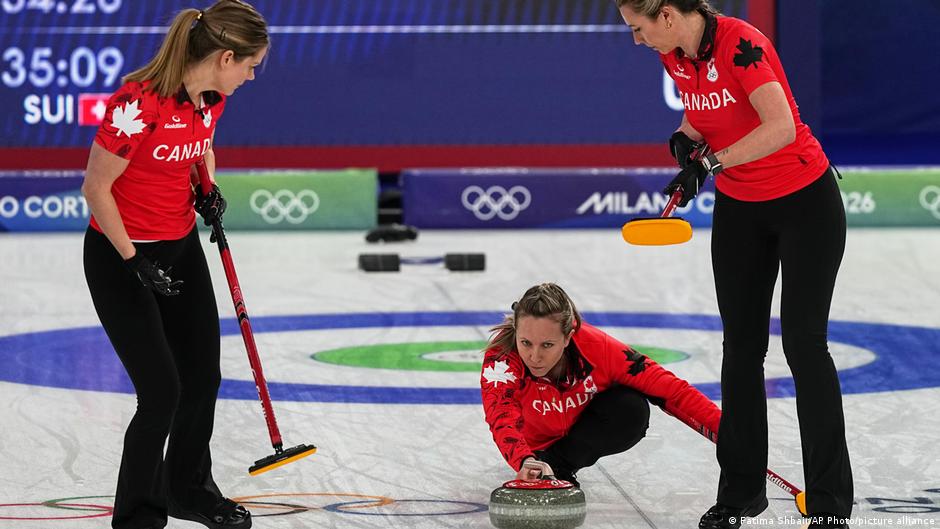
The incident, involving British curler Bobby Lammie, came just days after Sweden’s men’s team accused Canada of the same infraction on Friday, triggering a heated exchange and widespread media attention. Rachel Homan of Canada’s women’s team also had a stone disqualified against Switzerland on Saturday after officials alleged a double-touch.
The initial complaints from Sweden centered on the belief that Canadian players were illegally imparting extra spin or momentum to their stones by touching them more than once during delivery. This prompted World Curling to deploy additional officials to monitor the “hog line” – the designated point from which the stone must be released – in an attempt to enforce the rule more stringently.
Though, the increased scrutiny quickly drew criticism. Canadian men’s captain Brad Jacobs described the disqualification of Homan’s stone as “despicable” and suggested his team was being unfairly targeted. “I felt immediately as Canadian curlers we were targeted,” Jacobs said. He further questioned the preparedness of the additional officials assigned to the hog line, stating, “I consider we have untrained people doing things that they’ve never done before.”
World Curling appeared to backtrack on its increased enforcement efforts on Sunday, but not before Lammie’s stone was removed during the match against Germany. Jacobs, while maintaining his belief that the Canadian team had been unfairly singled out, expressed a degree of relief that the issue wasn’t solely focused on his team. “If he threw that rock that way against us, personally I would never ever want that rock to be removed. He did nothing wrong in my opinion,” Jacobs said of Lammie’s delivery. “But at least it wasn’t just the Canadians being targeted – which is great.”
The controversy has sparked debate about the potential implementation of video replay technology in curling. Johanna Heldin of Sweden cautioned that introducing video review could disrupt the flow of the game. “If they bring that in, I think it probably disrupts the speed of play,” Heldin said. “We’ve always been a sport that tries to play by the rules and have a high level of sportsmanship, so hopefully You can figure that back out.”
Tara Peterson of the United States offered a contrasting view, stating she would “absolutely” support the employ of video replays, arguing that “You’ll see instances where an instant replay would be huge.”
As of Sunday, World Curling had not issued a further statement regarding the ongoing concerns about officiating or the possibility of implementing video review. The situation remains unresolved as the curling competitions continue in Milan-Cortina.
