
A recent study identifying countries at high risk for future disease outbreaks and possessing limited capacity to respond has drawn criticism for possibly perpetuating harmful narratives about the Global South. While the research aims to guide targeted support for adaptation programs, experts argue the methodology and conclusions may oversimplify complex issues.
Dr. Colin Carlson, an assistant professor of epidemiology at Yale School of Public Health, acknowledges the study’s intent to enable practical prioritization of interventions.He notes that countries like the Republic of Congo and Madagascar, facing both high risk and limited response capacity, are indeed key candidates for targeted support through regional or multilateral adaptation programs.
Though, Dr. Carlson points out that similar research has been conducted previously. He states that many studies examine a notable number of outbreaks and employ machine learning to identify correlations, often confirming the hypothesis that environmental degradation drives disease outbreaks. He cautions that machine learning approaches are highly likely to find some form of signal, regardless of the underlying causal relationships.
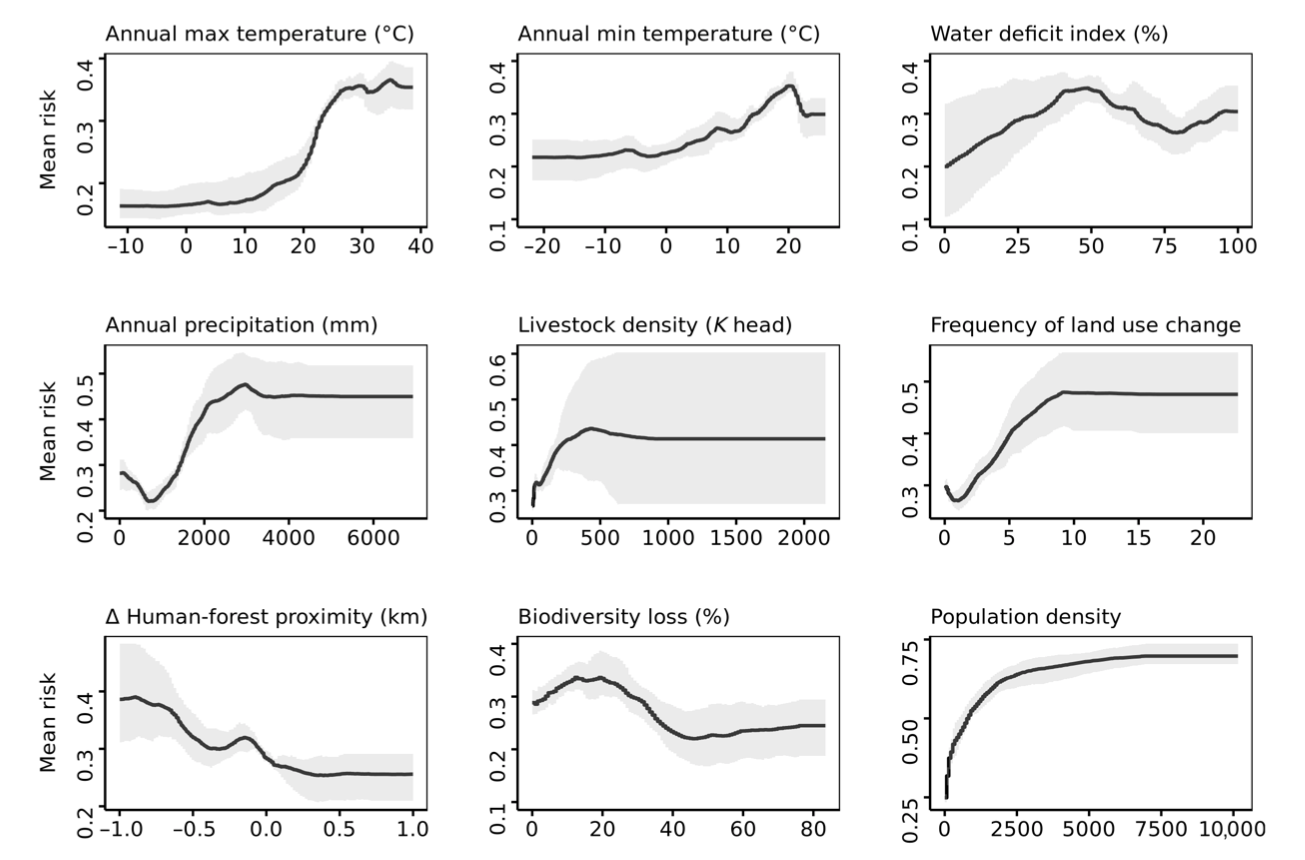
Further critiquing the study’s methodology,Dr.Carlson highlights the selection of variables that focus on “intact tropical rainforests and other tropical ecosystems.” He describes these areas as “hot, wet, biodiverse [and] populated.” While acknowledging that these regions are indeed hotspots for disease outbreaks, he argues that poverty plays a significant, if not greater, role than the environment itself in this phenomenon.
Dr. Carlson asserts that the notion of a “one-size-fits-all global risk assessment is just untrue.” He expresses concern that the work contributes to a narrative that frames pathogen spillover from animals to humans as a problem primarily of the Global South. This narrative, he contends, suggests that pandemics occur as populations in these countries are disengaged from outbreak prevention or unwilling to coexist with nature.
In Dr. Carlson’s expert opinion, this prevailing narrative is fundamentally flawed.
