
China‘s Limited Role in Israel-Iran Conflict Despite Middle East Oil Dependence
Table of Contents
- China’s Limited Role in Israel-Iran Conflict Despite Middle East Oil Dependence
- Evergreen Insights
- frequently Asked Questions
- Why is China so dependent on Middle East oil?
- what is the meaning of the Hormuz Strait?
- How does the Israel-Iran conflict affect china’s energy security?
- What are China’s strategic interests in the Middle East?
- Can China play a more active role in resolving Middle East conflicts?
- What are the potential consequences of a blockade of the Hormuz Strait?
- How does China balance its relationship with iran and other Middle Eastern countries?
The recent conflict between Israel and Iran has highlighted the complex geopolitical dynamics in the Middle East. While the United States has taken a leading role in brokering an armistice after a reported nuclear facility raid, China, a major importer of Middle East oil, has largely remained on the sidelines. This raises questions about China’s influence and its ability to act as a peace mediator in the region.
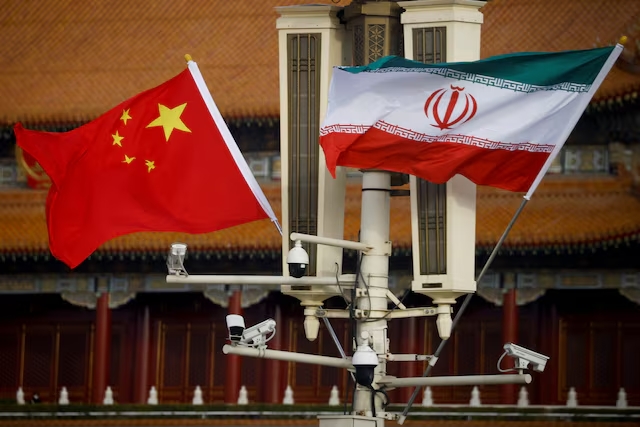
China’s dependence on Middle Eastern crude oil is meaningful. More than half of China’s crude oil imports come from the region, with Saudi Arabia, Iraq, Oman, the United Arab Emirates, Kuwait, and Qatar being major suppliers. Iranian crude oil accounts for approximately 10-15% of China’s total crude oil imports. The Hormuz Strait, a critical chokepoint for global energy supplies, is essential for China’s energy security.
Did You Know? The Hormuz Strait sees approximately 25% of the world’s maritime oil transportation and 20% of petroleum pass through it daily.
Despite its economic interests, China’s involvement in the Israel-Iran conflict has been limited to diplomatic statements and proposed ceasefire resolutions at the UN Security Council.According to William Figuera, a China-Iranian expert at the University of Holland, China’s influence in the middle East is primarily economic, lacking the military and diplomatic leverage of the United States.
The united States, under President Trump, has taken a more assertive role, claiming to have brokered a “complete and full truce” between Israel and Iran after an alleged raid on an Iranian nuclear facility. This action has reasserted U.S. military and diplomatic influence in the region.
U.S. Secretary of State Marco Rubio has called on China to pressure Iran to prevent the blockade of the Hormuz Strait.However, China’s response has been perceived as passive, raising questions about its willingness or ability to exert meaningful influence.
| Country/Region | Role in Conflict | Key Interest |
|---|---|---|
| United States | Mediator, Military Presence | Regional Stability, Countering Iran |
| China | Limited Diplomatic Engagement | Energy Security, Economic Interests |
| Israel | Directly Involved in Conflict | National Security |
| Iran | directly involved in conflict | Regional Influence |
Pro Tip: Monitor geopolitical developments closely, as shifts in power dynamics can substantially impact global energy markets and international relations.
The situation highlights the complexities of China’s foreign policy. While it seeks to expand its economic influence globally, its willingness to intervene in regional conflicts remains cautious, notably when it involves balancing relationships with key partners like Iran and navigating the presence of the United States.
What are the long-term implications of China’s limited involvement in the Israel-Iran conflict? How might this affect its relationship with the United States and other Middle Eastern nations?
Evergreen Insights
The Middle East has been a focal point of global power struggles for centuries, driven by its strategic location and vast energy resources. China’s growing economic influence presents a new dynamic, but its approach to regional conflicts remains distinct from that of traditional powers like the United States. Historically, external powers have frequently enough intervened in the Middle East to protect their interests, leading to complex and often volatile situations. China’s cautious approach reflects a desire to avoid direct military involvement while safeguarding its economic interests.
frequently Asked Questions
-
Why is China so dependent on Middle East oil?
China’s rapid economic growth has fueled a massive demand for energy, making it heavily reliant on oil imports from the Middle East to sustain its industries and transportation needs.
-
what is the meaning of the Hormuz Strait?
The Hormuz Strait is a critical waterway through which a significant portion of the world’s oil supply passes. Its potential closure could have severe consequences for global energy markets.
-
How does the Israel-Iran conflict affect china’s energy security?
the conflict poses a risk to the stability of the region and the flow of oil through the Hormuz Strait, potentially disrupting China’s energy supplies and impacting its economy.
-
What are China’s strategic interests in the Middle East?
China’s primary interests include ensuring a stable supply of energy, expanding its economic influence through trade and investment, and promoting its Belt and Road Initiative.
-
Can China play a more active role in resolving Middle East conflicts?
While China has the potential to play a more active role, its approach is highly likely to remain cautious, focusing on diplomatic and economic engagement rather than military intervention.
-
What are the potential consequences of a blockade of the Hormuz Strait?
A blockade could lead to a surge in oil prices, disrupt global trade, and potentially escalate regional tensions, impacting economies worldwide.
-
How does China balance its relationship with iran and other Middle Eastern countries?
China seeks to maintain good relations with all countries in the region, balancing its economic ties with Iran with its strategic partnerships with other nations like Saudi Arabia and the UAE.
What role do you think China should play in the Middle East? share your thoughts in the comments below!
Source: g-enews.com
