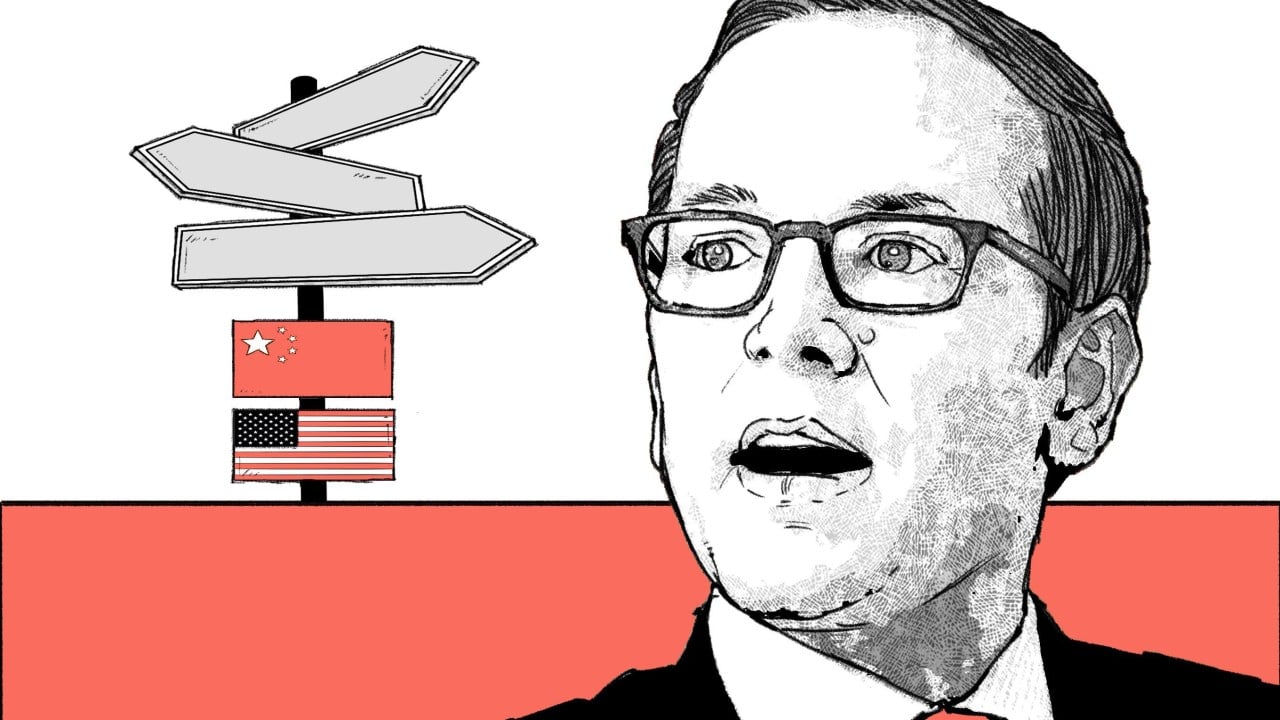
China-US stability may not last, ex-Asia adviser to Obama says
As of May 22, 2026, Dr. Evan Medeiros, former Asia adviser to President Barack Obama, warns that the current stability between China and the United States remains fragile. Growing American opposition to recent diplomatic detente and unresolved tensions over Taiwan threaten to trigger a significant crisis in bilateral relations between the two powers.
The Fragility of the Current Diplomatic Equilibrium
The geopolitical landscape is shifting beneath the feet of global policymakers. Dr. Evan Medeiros, serving as the Penner family chair in Asia studies at Georgetown University, has highlighted a critical disconnect between the current state of US-China relations and the long-term strategic reality. While recent high-level meetings have aimed to project an image of managed competition, the underlying structural mistrust remains profound.
Medeiros, who previously served as the National Security Council’s director for China, Taiwan and Mongolia, argues that the current “detente” is increasingly viewed through a lens of skepticism within Washington. The risk, according to his analysis, is that domestic political pressures in the United States may erode the space for the pragmatic diplomacy required to keep major power competition from spiraling into open conflict.
This is not merely a matter of rhetorical posturing. The integration of global supply chains and the rapid evolution of technology—particularly in the artificial intelligence sector—mean that diplomatic instability has immediate consequences for private enterprises. Businesses navigating this environment are increasingly turning to international risk management consultants to assess the potential for sudden policy shifts that could impact trade viability.
Beyond the Surface: The Taiwan Flashpoint
Central to Medeiros’s concern is the Taiwan issue, which continues to serve as the most volatile variable in the US-China relationship. Even as both nations attempt to maintain lines of communication, the lack of fundamental trust means that miscalculations are becoming more probable. The diplomatic architecture designed to contain these risks is being tested by competing national security priorities.
The implications for global trade infrastructure are stark. As governments and corporations grapple with the potential for sudden regulatory decoupling or heightened trade barriers, the necessity for robust legal and logistical planning has never been greater. Organizations caught in the crossfire of these macro-political tensions often require the expertise of specialized international trade attorneys to navigate the complex web of sanctions, export controls, and shifting jurisdictional mandates.
The fundamental challenge in the current US-China dynamic is that both sides are operating under the assumption that the other is fundamentally revisionist. Without a shared framework for stability, we are essentially managing a crisis that has not yet occurred, but which is increasingly likely to materialize if the domestic political appetite for engagement continues to wane.
Economic Realignment and the Cost of Strategic Competition
The ripple effects of this instability extend far beyond the halls of government. We are witnessing a quiet, yet seismic, shift in global energy and resource management. As nations move to secure their own energy futures, the competition for raw materials and the development of localized energy sources are becoming central pillars of national security strategies. This shift is driving an unprecedented demand for transparency and due diligence in cross-border investments.

For firms operating across the Pacific, the current environment necessitates a move toward “resilient operations.” This involves auditing not just the reliability of supply chains, but the geopolitical exposure of every tier of the production process. Those failing to conduct this level of scrutiny are finding themselves vulnerable to sudden shifts in maritime policy or regional economic blockades. Engaging supply chain resilience auditors has become a standard, if not essential, practice for any entity with significant exposure to the Asia-Pacific region.
The Path Forward: A Call for Institutional Vigilance
The warning issued by Medeiros serves as a reminder that diplomacy is not a static state of affairs, but a dynamic process that requires constant maintenance. As of May 2026, the global community finds itself at a juncture where the choices made in Washington and Beijing will define the economic and security architecture for the coming decade.

The risk of a “hard landing” in US-China relations is not merely a theoretical exercise for academics; it is an immediate concern for the global financial system. The volatility introduced by these tensions requires stakeholders to be proactive rather than reactive. Relying on outdated assumptions about the inevitability of cooperation is a dangerous gamble in an era of renewed great power competition.
History suggests that the most successful organizations are those that prepare for volatility before it manifests as a crisis. Whether through diversifying manufacturing hubs, securing alternative logistics routes, or engaging in sophisticated political risk mapping, the objective remains the same: continuity in an age of uncertainty. As the situation continues to develop, the window for strategic recalibration is closing. Now is the time to ensure that your organization’s legal, financial, and operational frameworks are sufficiently hardened against the shifting currents of global diplomacy.