Canada Seeks 16-Year Extension of North American Free Trade Agreement
Ottawa is pushing for a 16-year extension of the United States-Mexico-Canada Agreement (USMCA), aiming to lock in North American trade stability ahead of the 2026 sunset review. By seeking a long-term commitment, Canada hopes to mitigate geopolitical volatility and provide the regulatory certainty required for cross-border capital investment and supply chain integration.
The six-year review clause, embedded in the current USMCA framework, has transformed from a routine check-up into a high-stakes fiscal bottleneck. For multinational corporations, this uncertainty is not merely a diplomatic friction point; It’s a direct hit to net present value calculations for long-cycle infrastructure projects. When the rules of engagement for the world’s most integrated manufacturing corridor sit on a six-year fuse, institutional capital retreats into defensive postures.
The market is already pricing in the risk of supply chain fragmentation. As trade policy shifts toward protectionist rhetoric, firms are finding that their legacy logistical models—optimized for frictionless movement—are now failing to account for shifting tariffs and local content requirements. This is where the expertise of supply chain optimization specialists becomes a critical hedge against margin erosion.
The Math Behind the Mandate
The USMCA, which replaced NAFTA in 2020, covers a combined GDP of approximately $31 trillion. However, the operational reality for firms moving goods across borders involves navigating complex Rules of Origin (ROO) that dictate duty-free status. According to the Office of the United States Trade Representative (USTR), the agreement relies heavily on maintaining regional value content (RVC) thresholds. If these thresholds are not harmonized or extended, companies face a catastrophic jump in effective tariff rates, potentially compressing EBITDA margins by 150 to 300 basis points.

“The 2026 review is not a regulatory formality; it is a liquidity trap. If a firm cannot guarantee that their cross-border input costs remain stable for the next decade, they cannot justify the CAPEX required for North American re-shoring. We are seeing a massive flight to quality in legal and trade compliance advisory as boards scramble to insulate their balance sheets from policy-driven volatility.” — Senior Managing Director, Global Trade Risk Division
This volatility creates a specialized demand for international trade law firms capable of navigating the intersection of national security legislation and commercial treaty obligations. Companies that fail to audit their compliance protocols now will likely face significant audit risk once the sunset review triggers officially begin in July 2026.
Macro-Financial Implications for North American Trade
The push for a 16-year extension is a strategic play to lower the risk premium on North American assets. In a high-interest-rate environment, the cost of capital is already elevated; adding “treaty risk” to the discount rate makes long-term projects in the automotive, aerospace and semiconductor sectors mathematically unviable. The following table outlines how policy uncertainty impacts capital allocation strategies:
| Risk Factor | Operational Impact | Financial Metric Affected |
|---|---|---|
| Sunset Clause Volatility | Delayed CAPEX decisions | Return on Invested Capital (ROIC) |
| ROO Complexity | Increased compliance overhead | Operating Margin / EBITDA |
| Currency Fluctuation | Hedging costs rise | Net Income Volatility |
When trade policy becomes a variable rather than a constant, corporate finance departments must pivot. The current climate necessitates a shift toward localized sourcing, a move that requires deep integration with regional suppliers. Firms that lack the infrastructure to handle these complex procurement shifts are increasingly turning to enterprise procurement platforms to manage the transition.
The Institutional View: Hedging Against Policy Drift
Investors are monitoring the USMCA review with a focus on the automotive sector, which remains the most sensitive to regional value content requirements. Per the latest SEC 10-Q filings from major North American manufacturers, the cost of compliance with updated labor value content (LVC) rules has already forced a reallocation of production capacity. This is not just about the movement of goods; it is about the structural integrity of the North American production base.
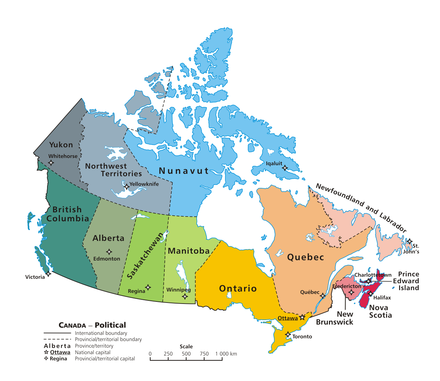
The 16-year request by the Canadian government is an attempt to create a “safe harbor” for international investors. By extending the agreement through 2042, Ottawa intends to signal that North America remains the most attractive jurisdiction for manufacturing, despite the global trend toward regionalization. Yet, the success of this request depends heavily on the political appetites in Washington and Mexico City, both of which are wrestling with their own domestic fiscal pressures.
Expect the next three quarters to be defined by intense lobbying and sector-specific deal-making. As the sunset review date approaches, the premium on accurate, real-time regulatory intelligence will skyrocket. Companies that rely on reactive management will be left exposed to the whims of legislative cycles. The winners will be those who have proactively integrated their compliance, legal, and procurement functions into a unified defensive strategy.
Navigating this environment requires more than just internal agility; it requires the right partners. Whether you are seeking to optimize your cross-border tax structure or secure your supply chain against legislative shocks, the World Today News Directory serves as your primary gateway to the firms that define the new standard of corporate resilience. Do not wait for the 2026 review to expose your weaknesses—connect with our vetted strategic management consultants today to ensure your firm is positioned for the long-term, not just the next fiscal quarter.