
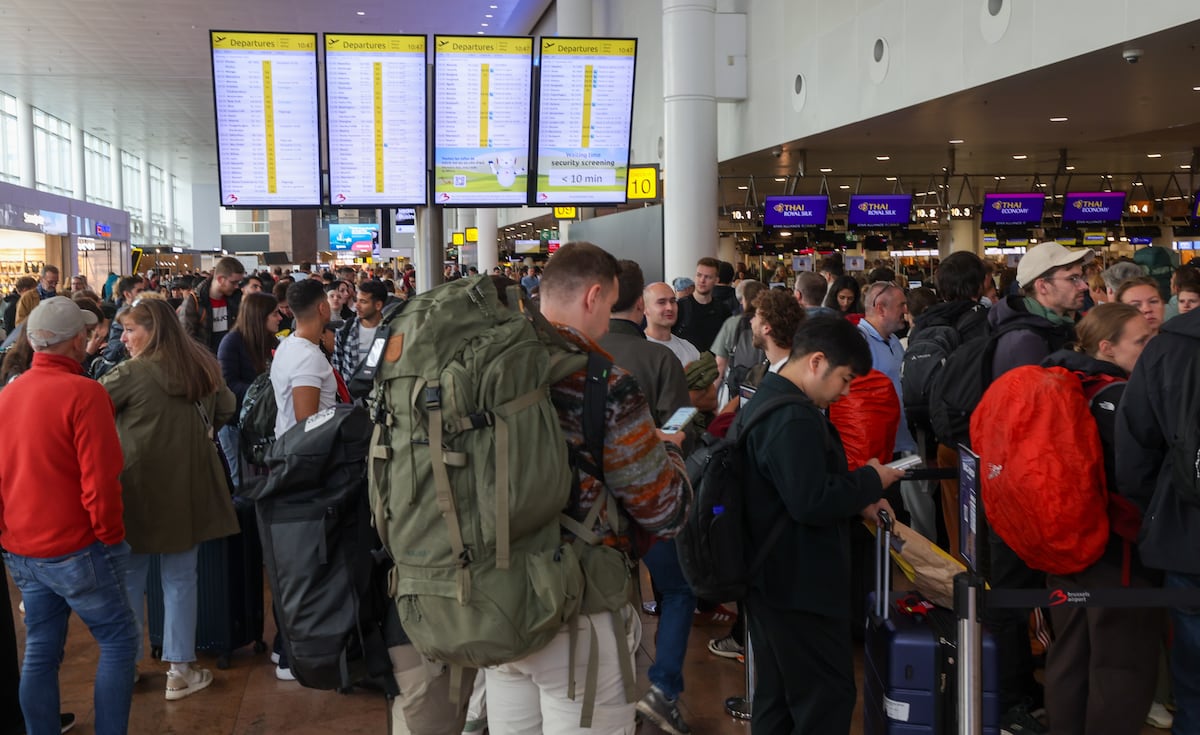
European Airports Experience Disruptions Following Cyberattack
Several European airports are facing disruptions following a cyberattack that began on Friday afternoon.The attack targeted Collins Aerospace, a data processing provider for the aeronautics sector and a subsidiary of RTX (formerly Raytheon).
Brussels Airport has been considerably impacted, with 28 arrival flights cancelled and six redirected to the Belgian capital. Despite deploying additional personnel, the airport is currently operating with manual check-in and baggage handling procedures due to the compromised systems. Disruptions are expected to continue on Sunday, and it remains uncertain if the system can be fully restored by Monday.
Berlin Brandenburg Airport also experienced issues,primarily affecting billing processes which have also been forced to be conducted manually. While the situation stabilized by saturday afternoon, with processes becoming “relatively quiet and fluid,” the airport anticipates increased passenger volume on Sunday and Monday due to the Berlin Marathon, and encourages travelers to utilize self-service kiosks.
London Heathrow Airport reported that “the vast majority of flights” continued to operate, but advised passengers to check their flight status and avoid arriving at the airport with excessive advance time to prevent congestion.
Spanish airports, operated by Aena, are currently functioning “normally.” However, some delays and cancellations have been reported on connecting flights to and from Brussels at Madrid-barajas and Barcelona-El Prat airports. Iberia sources indicated these disruptions may be related to adverse weather conditions rather than the cyberattack.
The European emergency Commissioner, Hadja lahbib, has called for increased investment in cybersecurity preparedness within the European Union, emphasizing the ”real and complex” nature of current threats following the airport disruptions.
