
Mysterious Comet 3I/ATLAS Added to Monitoring List Amid Claims of ‘Non-Natural Origin’
A comet currently traveling toward Earth has sparked debate among scientists, with Harvard astronomer Avi Loeb suggesting it may not be a naturally occurring space object. The International Asteroid Warning Network (IAWN) has added 3I/ATLAS to its observation list, acknowledging the “high interest to the scientific community” despite stating it “poses no threat.”
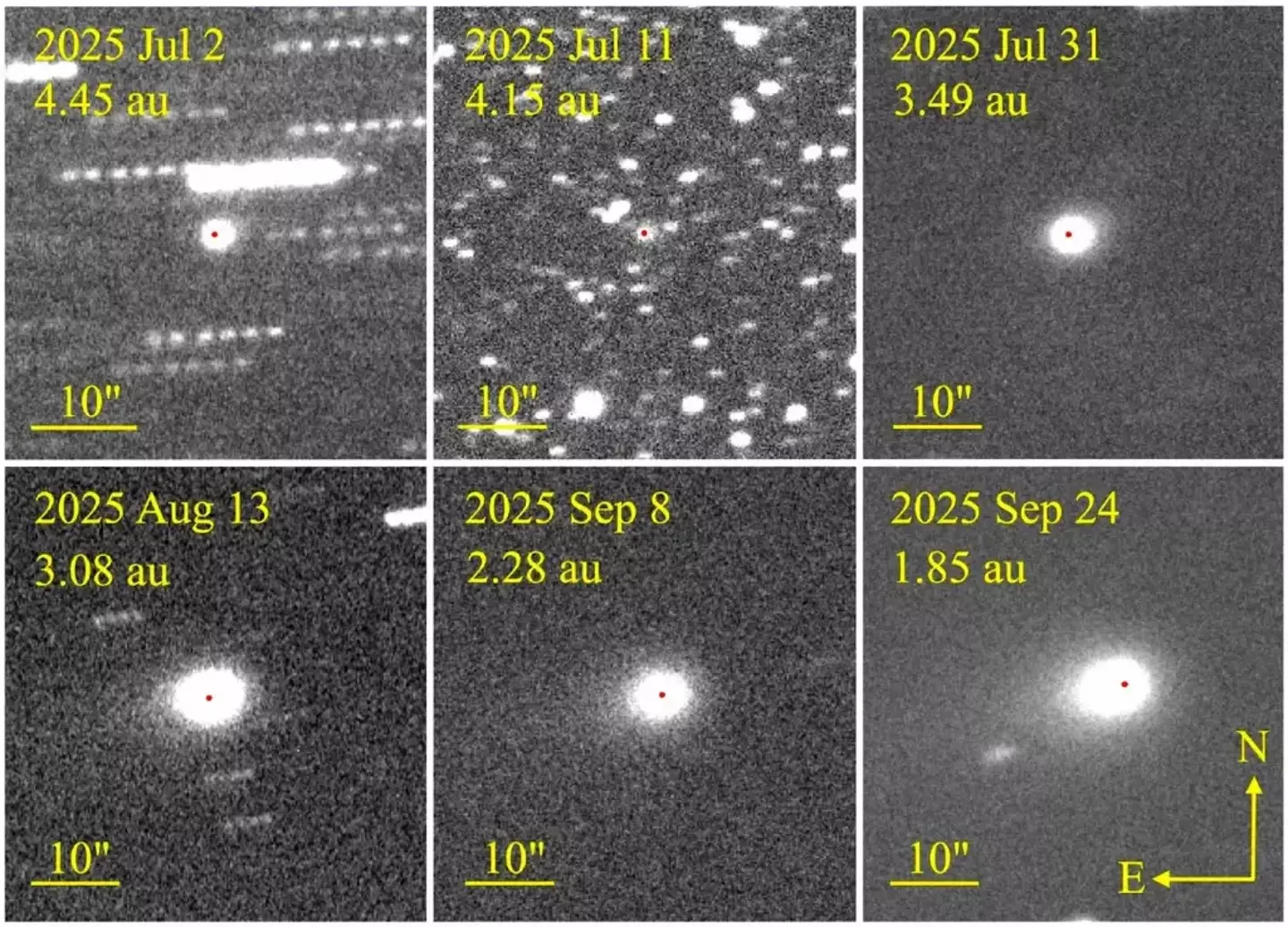
The comet, discovered in 2023, has exhibited an unusual behavior – the development of a tail – prompting further inquiry. While most scientists attribute this to typical cometary activity, Loeb posits the tail could indicate “controlled maneuvering,” perhaps suggesting an artificial origin. he believes the object may be utilizing an “Oberth manoeuvre,” leveraging the sun’s gravity to alter its course, a tactic he suggests a “mothership” might employ to release probes toward earth.
“As of now, I assign a 30 to 40 per cent likelihood that 3I/ATLAS does not have a fully natural origin,” Loeb wrote on his blog. He further described the possibility as a “black swan event akin to a Trojan Horse, where a technological object masquerades as a natural comet.”
Currently, Loeb rates the object a “6” on a scale assessing its unusual characteristics, noting his assessment will evolve with further data as the comet approaches the sun. Jewitt and Luu (2025) have documented the startling change in the comet’s appearance with the growth of its tail.
The IAWN emphasizes that 3I/ATLAS presents a ”great chance” for observation due to its prolonged visibility from Earth, allowing for detailed scientific study.The network’s website states the object is being monitored, not due to any perceived danger, but to maximize the potential for scientific discovery.
