
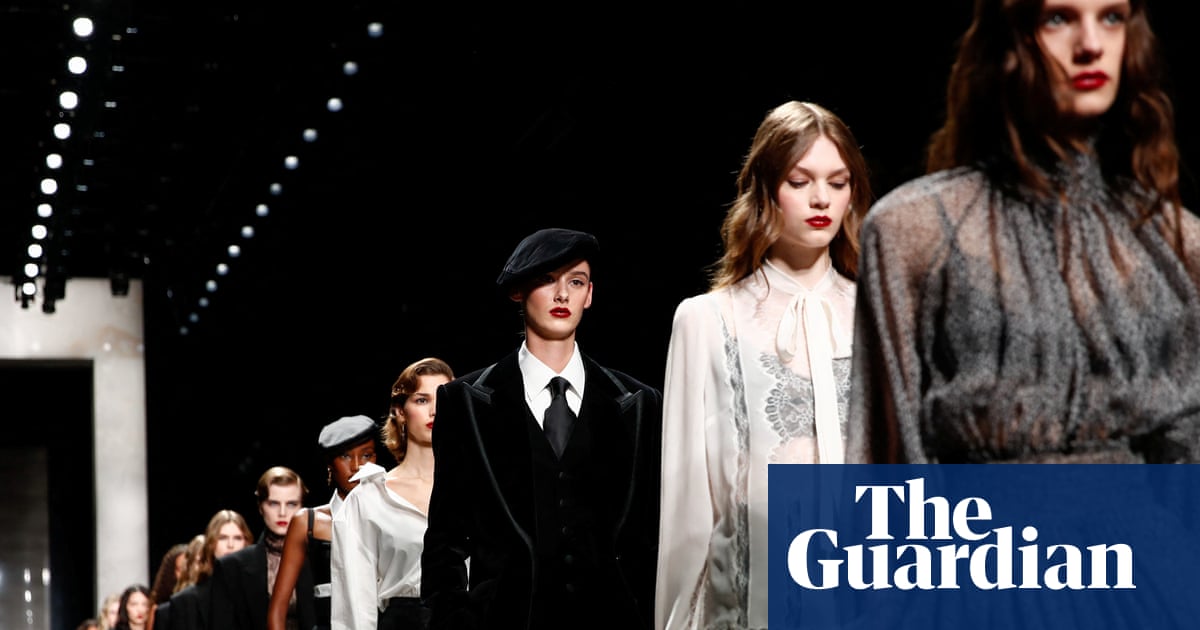
Milan, Italy – Dolce & Gabbana’s menswear show on Saturday presented a deliberate shift in focus, away from the controversies that have dogged the brand and toward a reassertion of its core identity. The move followed criticism of an all-white casting choice at a previous show in January, with Saturday’s runway featuring a significantly more diverse group of models, including more than a third women of colour.
Designers Domenico Dolce and Stefano Gabbana, speaking after the show, emphasized a desire to define themselves through their creations, rather than responding to external pressures. “Our collections speak to us, our identity, our values,” Dolce said. “We never wanted to follow trends.” They articulated a goal of creating instantly recognizable garments, pieces that would immediately evoke the brand’s name without the demand for a label.
The collection itself largely adhered to the established aesthetic of Dolce & Gabbana, built around idealized Italian archetypes. For men, the brand continued to favor a muscular, assertive image, while the women’s looks drew inspiration from classic Sicilian figures – the widow and the mistress – alongside a new addition: the Gen Z hipster, represented by baggy ripped denim and satin bra tops. A predominantly black palette was punctuated by strategic splashes of color, including red shoes, scarlet lips, and green doctor’s bags. The use of faux fur was noted, as Milan and Paris have yet to implement bans on animal fur in runway shows, unlike London and New York.
The show featured a continuation of the brand’s long-standing practice of incorporating lingerie as outerwear, a trend they pioneered in the early 1990s. With the loosening of societal norms around visible underwear, the focus shifted to showcasing knickers beneath sheer lace dresses, with one model even sporting a white shirt tucked into bloomers. Accessories included crucifix earrings and baker-boy hats reminiscent of the film Cinema Paradiso.
Dolce & Gabbana’s history has been marked by numerous controversies. In 2012, the brand faced accusations of romanticizing slavery after showcasing earrings that echoed blackamoor imagery. Three years later, shoes marketed as “slave sandals” were renamed following public outcry. Past statements from the designers regarding IVF and same-sex parenting also drew significant criticism. A 2018 marketing campaign in China resulted in the brand being removed from most Chinese-owned platforms, reportedly costing the company a substantial portion of its revenue.
Despite these controversies, Dolce & Gabbana remains a prominent force in the fashion industry, generating nearly €2 billion in annual revenue. The brand continues to be a favorite among celebrities on the red carpet, though the tailoring presented on Saturday was described as unconventional, with some garments appearing to be constructed “back to front.”
Notably absent from the front row were Lauren Sánchez, who wore a Dolce & Gabbana gown to her wedding to Jeff Bezos, and Melania Trump, who chose the brand for her official White House portraits. However, Madonna made a late arrival, seated next to Anna Wintour as the designer’s music played. The show, as reported by CNN, took place against a backdrop of broader uncertainty within the fashion industry, with designers like Prada and Brunello Cucinelli emphasizing the need for “gentleness” and compassion in their collections.
