
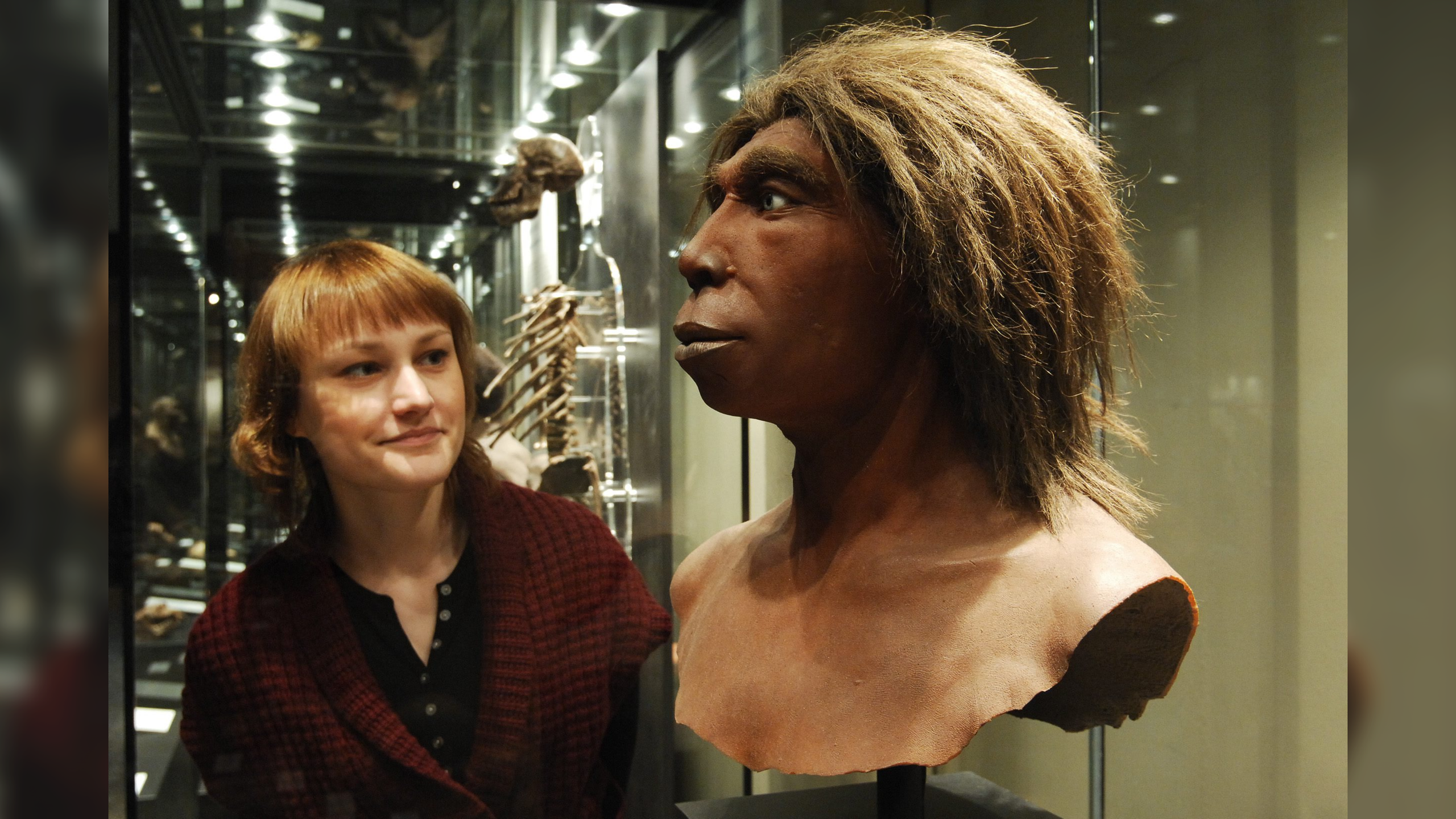
Recent analysis of ancient genomes suggests that when Neanderthals and modern humans interbred, pairings between Neanderthal men and Homo sapiens women were more common, a finding that helps explain the limited amount of Neanderthal DNA found in modern human populations today. The research, published Thursday in the journal Science, centers on puzzling patterns of Neanderthal ancestry within the human genome, specifically “Neanderthal deserts” – regions where Neanderthal genes are surprisingly rare.
For decades, scientists have debated the cause of these genetic gaps. Initial theories posited that certain Neanderthal genes might have been detrimental to humans, leading to natural selection purging them from the gene pool. However, the new study proposes a different explanation: mate preference.
Researchers, led by Alexander Platt, a population geneticist at the University of Pennsylvania, analyzed the genomes of 73 women from three modern-day African populations – the !Xoo, Ju|’hoansi, and Khoisan – which have no detectable Neanderthal ancestry. These genomes were compared to those of several Neanderthals. The analysis revealed a significantly higher proportion of modern human DNA on the Neanderthals’ X chromosomes than on their other chromosomes.
This finding suggests that the scarcity of Neanderthal genes on the human X chromosome isn’t due to incompatibility, but rather to a pattern of mating. Because females carry two X chromosomes while males have only one, a preference for mating between Neanderthal males and Homo sapiens females would result in fewer Neanderthal X chromosomes being passed down through the human lineage.
“For years, we just assumed these deserts existed because certain Neanderthal genes were biologically ‘toxic’ to humans,” Platt said in a statement. “But the most plausible explanation is actually mate preference.”
The study builds on previous research indicating interbreeding between Homo sapiens men and Neanderthal women, evidenced by traces of modern human Y chromosome DNA in Neanderthal remains. However, the new data suggests a stronger preference for pairings between Neanderthal males and human females.
“I have no idea whose preference is being expressed here,” Platt told Live Science in an email. The reasons behind this potential mate choice remain unknown.
Researchers note that the timeline for this interbreeding falls roughly 47,000 years ago, according to a separate analysis of ancient genomes from Eurasia, as reported in December 2024 by researchers at UC Berkeley. This period coincides with archaeological evidence showing that modern humans and Neanderthals coexisted in Eurasia for approximately 6,000 to 7,000 years before Neanderthals disappeared.
The study acknowledges that other evolutionary factors, such as natural selection, sex-specific migration patterns, and social structures, may have also played a role in shaping the distribution of Neanderthal DNA in modern humans. The researchers plan to investigate the social structures and gender roles within Neanderthal societies, hoping to gain further insight into the observed mating patterns.
The genomes analyzed from Ranis, Germany, and Zlatý kůň, Czechia, show that early modern humans already carried Neanderthal DNA approximately 45,000 to 49,000 years ago, indicating that admixture occurred before the common ancestor of all non-Africans. This suggests that modern human remains older than 50,000 years from outside Africa may represent distinct non-African populations.
The research team has not yet determined the extent to which Neanderthal genes influence human health, but understanding the timing and patterns of interbreeding is a crucial step in unraveling the complex relationship between our species and our closest extinct relatives.
